
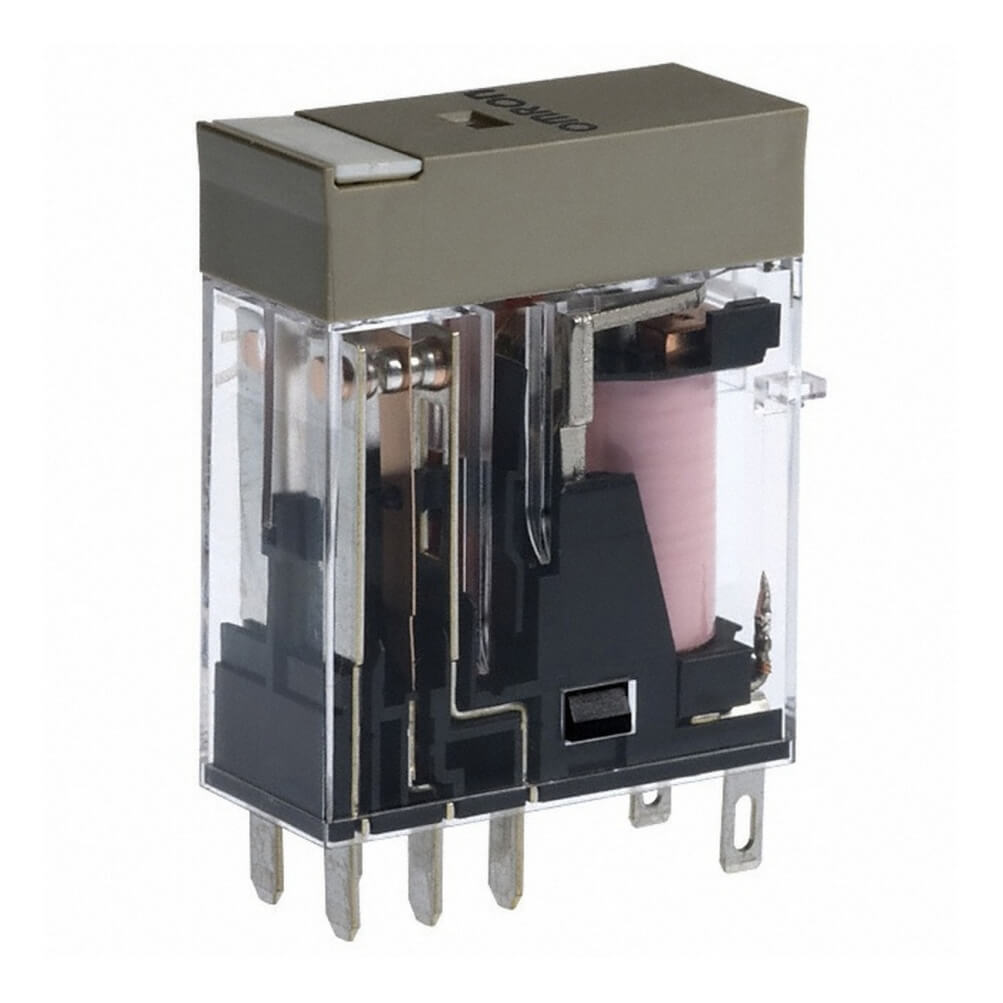
Omron G2R-2-S 230VAC (S) Relay Socket Details
The Omron G2R-2-S 230VAC (S) relay socket is a slim plug-in relay developed for control panels using 230 VAC control circuits. It combines a compact enclosure, DPDT contact structure, and socket-based installation for practical use in industrial automation and electrical panel systems.
Technical Specification Summary
The relay has 2-pole DPDT contacts and a rated carry current of 5 A. For 2-pole models, the maximum switching voltage is 380 VAC or 125 VDC. The 230 VAC coil has a rated current of approximately 4.4 mA at 50 Hz and 3.8 mA at 60 Hz. Its coil resistance is 27,172 ohms.
Use in 230VAC Control Panels
230 VAC control circuits are common in European industrial systems, building automation, machinery, and panel boards. The Omron G2R-2-S 230VAC (S) relay socket is suitable when designers need a plug-in relay that matches this voltage level while keeping the panel layout compact.
Serviceability and Panel Efficiency
Because it is a plug-in relay, replacement can be completed quickly when used with the correct socket. This helps reduce maintenance time and keeps wiring organized. For compatible Omron automation products and relay options, visit Omron control components.
Typical Applications
This relay is often used in HVAC control cabinets, lighting control systems, motor starter panels, industrial machinery, pump control, safety-related auxiliary circuits, and PLC interface applications. The mechanical indicator helps maintenance teams verify operation without additional test equipment.
Omron G2R-2-S 230VAC (S) FAQ
What is the coil voltage of this relay?
The Omron G2R-2-S 230VAC (S) uses a 230 VAC coil.
What contact form does it have?
It uses DPDT contacts, which means two changeover contacts are available in one relay.
What is the rated carry current?
The 2-pole version has a rated carry current of 5 A.
Why is socket mounting useful?
Socket mounting improves serviceability, supports cleaner wiring, and allows the relay to be replaced without disconnecting each wire.