
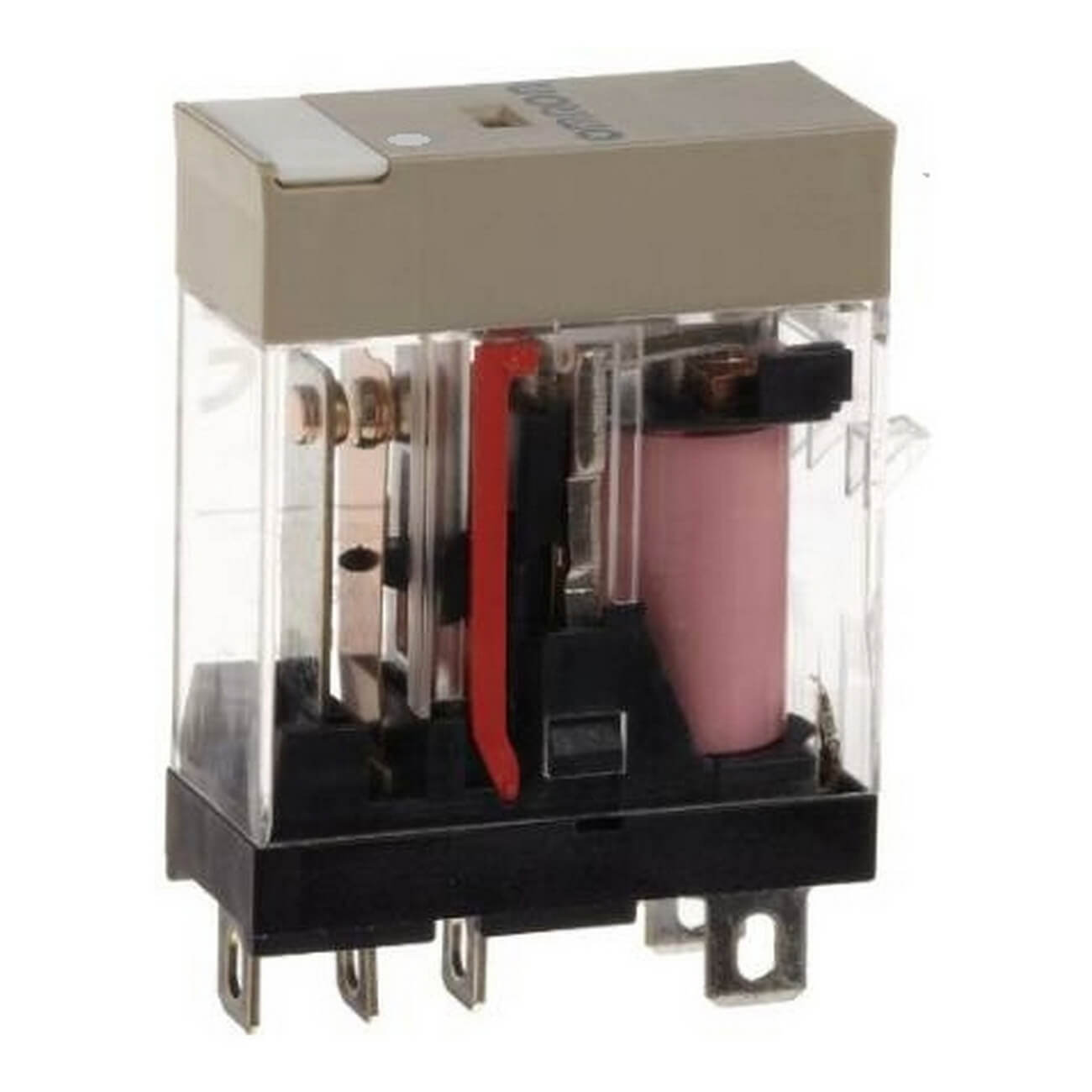
Omron G2R-1-S 110VAC (S) Relay Socket Technical Guide
The Omron G2R-1-S 110VAC (S) relay socket is a plug-in general-purpose relay designed for control panels, automation cabinets, and switching circuits where dependable isolation and clear maintenance access matter. With a 110 VAC coil, this model is especially relevant in systems built around low-voltage AC control architecture.
Key Technical Specifications
This relay uses a 110 VAC coil with an approximate coil current of 9.5 mA at 50 Hz and 8.2 mA at 60 Hz. The coil resistance is approximately 5,566 Ω. Its must-operate voltage is 80% max. of rated voltage, while the must-release voltage is 30% max. The maximum coil voltage is listed as 110% of rated voltage.
On the contact side, the unit provides a 1-pole SPDT contact structure. It supports 10 A at 250 VAC for resistive loads and 10 A at 30 VDC for resistive DC loads. For inductive loads, it is rated at 7.5 A at 250 VAC and 5 A at 30 VDC. Maximum switching values include 440 VAC, 125 VDC, 10 A current, and up to 2,500 VA or 300 W depending on load type.
Where It Is Commonly Used
The Omron G2R-1-S 110VAC (S) relay socket is often selected for control-panel switching, signal isolation, motor-control auxiliary circuits, HVAC panels, machinery interfaces, and industrial automation systems. Its plug-in design makes replacement easier during maintenance, reducing service time in operational environments.
Design Advantages
The relay includes a mechanical operation indicator and label facility, making circuit identification easier inside dense electrical panels. Its compact body, socket compatibility, and strong contact rating make it a practical choice for engineers who need a reliable relay without overcomplicating the panel layout.
For more Omron product information, visit Omron.
FAQ
What is the coil voltage of Omron G2R-1-S 110VAC (S)?
It has a 110 VAC coil. This makes it suitable for AC control circuits where 110 VAC is the standard control voltage.
Is Omron G2R-1-S 110VAC (S) suitable for resistive loads?
Yes. It is rated for 10 A at 250 VAC and 10 A at 30 VDC for resistive loads, making it suitable for many control and switching applications.
What contact form does this relay use?
It uses an SPDT contact form, also known as 1 Form C. This allows one common contact to switch between normally open and normally closed paths.
Can it be used in industrial control panels?
Yes. Its socketable structure, clear indicator, and strong switching rating make it suitable for control panels, automation cabinets, and machine-control systems.
Why choose a plug-in relay socket type?
A plug-in relay is easier to replace during maintenance. Technicians can remove the relay from its socket without rewiring the whole circuit, which helps reduce downtime.