
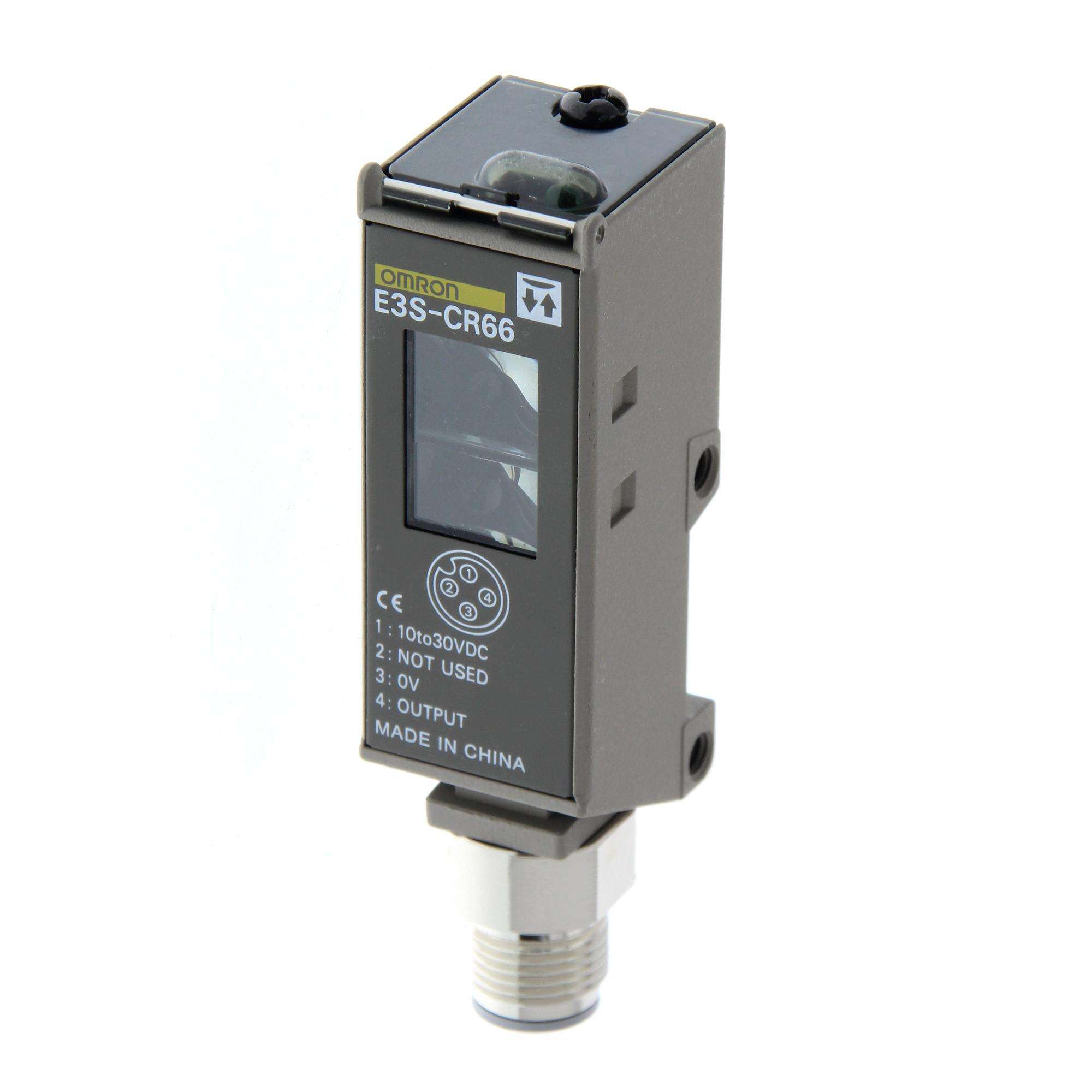
Omron E3S-CR66 Retro-Reflective Photoelectric Sensor (Relay Output): Technical Guide and Application Manual
The Omron E3S-CR66 is a Retro-Reflective Photoelectric Sensor (Relay Output) developed for engineers who understand that the cost of an unplanned stop far exceeds the cost of a quality sensor. Operating voltage 100-240V AC, it addresses real challenges in direct AC load switching.
Many engineers working with this product also specify other Omron Omron Sensor models on the same project. The shared ecosystem means cable standards and mounting accessories are compatible.
Understanding the Omron E3S-CR66 Retro-Reflective Photoelectric Sensor (Relay Output)
The Omron E3S-CR66 is a Retro-Reflective Photoelectric Sensor (Relay Output) rated at 100-240V AC designed to reliably handle direct AC load switching applications. Key engineering features include relay output, direct load control, sensing distance 4 m, ip67.
Technically, the Omron E3S-CR66 delivers relay output, direct load control, sensing distance 4 m, ip67. 100-240V AC voltage rating simplifies system integration.
Core Specifications
The table below summarises the main technical parameters of the Omron E3S-CR66. For complete specifications, refer to the official Omron product datasheet.
| Parameter | Value |
|---|---|
| Product Type | Retro-Reflective Photoelectric Sensor (Relay Output) |
| Operating Voltage | 100-240V AC |
| Output Type | Relay output 3 A |
| Output Current | 3 A relay |
| Key Features | Relay output, direct load control, sensing distance 4 m, IP67 |
| Mounting | Screw mount |
| Lifetime | Relay 100,000 operations |
| Operating Temperature | -25°C to +55°C |
| Compatible Accessory | Reflector, mounting bracket |
Application Scenarios
The Omron E3S-CR66 Retro-Reflective Photoelectric Sensor (Relay Output) is commonly specified for the following applications:
- Direct ac load switching
- Conveyor control
- Industrial automation
Across these use cases, the consistent requirement is reliable detection — often in environments where an unplanned fault would create significant disruption. The Omron E3S-CR66 is designed with exactly those conditions in mind.
Getting It Right at Installation
Commissioning the Omron E3S-CR66 Retro-Reflective Photoelectric Sensor (Relay Output) is easy. Attach to the mounting bracket, make cable connections, and verify polarity. During the first test, move the target in and out of the sensing area and observe that the LED indicator responds stably.
For ongoing maintenance, keep the sensor lens clean, check cable connections, and periodically test that the LED indicator functions correctly. Early intervention avoids the much larger cost of an unplanned production stop.
Why Engineers Choose Omron
Specifying the Omron E3S-CR66 Retro-Reflective Photoelectric Sensor (Relay Output) also means specifying into an ecosystem. Omron’s portfolio covers sensors, relays, PLCs, power supplies, and more — all engineered to work together.
Frequently Asked Questions
What applications is the Omron E3S-CR66 designed for?
The Omron E3S-CR66 Retro-Reflective Photoelectric Sensor (Relay Output) is designed primarily for direct AC load switching, conveyor control, industrial automation.
What voltage does the Omron E3S-CR66 operate at?
The Omron E3S-CR66 operates at 100-240V AC supply voltage.
What is the sensing distance of the Omron E3S-CR66?
Sensing distance depends on target material and environmental conditions. The nominal sensing distance for the Omron E3S-CR66 Retro-Reflective Photoelectric Sensor (Relay Output) is stated in the datasheet. In actual applications, 80% safe operating margin is recommended.
What protection rating does the Omron E3S-CR66 have?
The Omron E3S-CR66 Retro-Reflective Photoelectric Sensor (Relay Output) has IP67 protection rating, meaning it is protected against dust and temporary water immersion.
Where can I source the Omron E3S-CR66 in Europe?
The Omron E3S-CR66 Retro-Reflective Photoelectric Sensor (Relay Output) is available through Omron’s authorised European distributors.