
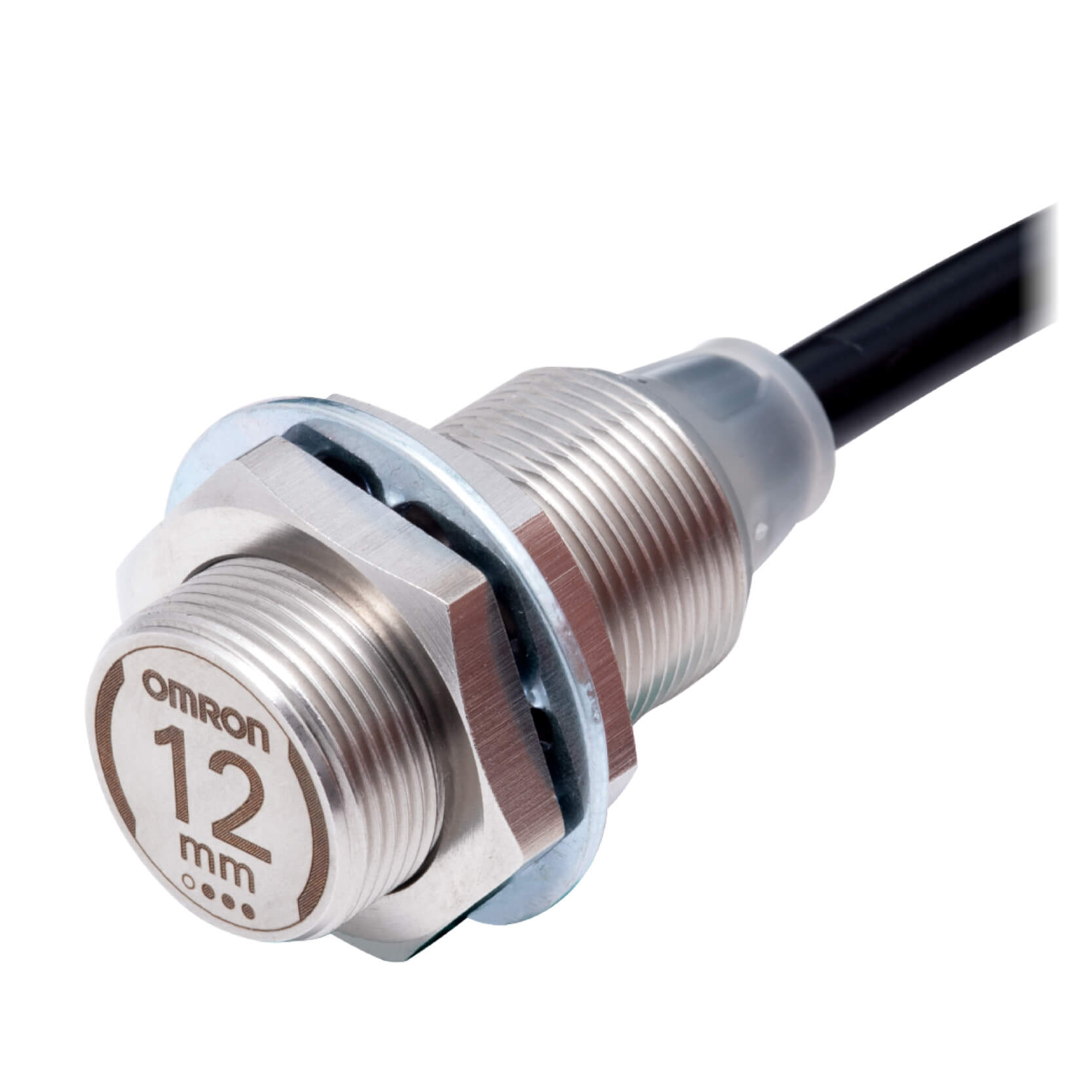
Omron E2EW-QX1R5D18 2M Inductive Proximity Sensor
| Feature | Value |
|---|---|
| Manufacturer | Omron |
| Series | E2EW |
| Sensor Type | Inductive Proximity Sensor |
| Housing Size | M18 Threaded |
| Mounting Style | Quasi-flush |
| Sensing Distance | 1.5 mm |
| Output Type | 2-wire DC |
| Connection Method | 2 m Integral Cable |
| Housing Material | Stainless Steel (SUS303) with Fluororesin Coating |
| Sensing Face | Metal Face |
| Protection Rating | IP67 |
| Cable Length | 2 m |
| Thread Length | 30 mm |
The Omron E2EW-QX1R5D18 2M Inductive Proximity Sensor is designed for precise, non-contact detection of metallic objects in industrial automation systems. This model belongs to the Omron E2EW Series, which is developed for applications requiring a durable sensing solution capable of operating in environments exposed to machining fluids, metal particles, and demanding mechanical conditions. Equipped with a compact sensing distance of 1.5 mm, a two-wire DC interface, and an integral 2-meter cable, the sensor supports straightforward integration into a wide variety of machine designs.
Technical Description
The Omron E2EW-QX1R5D18 2M Inductive Proximity Sensor incorporates a stainless-steel threaded housing protected by a fluororesin coating to improve resistance against contaminants commonly found in manufacturing environments. Its metal sensing face enhances durability in applications where repeated exposure to metallic workpieces, welding spatter, or abrasive particles may occur.
The M18 quasi-flush housing allows flexible installation while maintaining stable sensing performance. The integrated two-meter cable enables direct wiring into machine control panels without requiring an additional connector assembly.
Operating Principle
The sensor operates by generating a high-frequency electromagnetic field from its sensing face. When a conductive metallic target enters the specified 1.5 mm sensing range, eddy currents are induced within the target material. These currents alter the internal oscillation characteristics.
The electronic circuitry continuously monitors these changes and switches the two-wire DC output once the detection threshold is reached. Since the sensing method does not rely on physical contact, the sensor reduces mechanical wear and provides repeatable switching performance throughout continuous machine operation.
Typical Applications
- Precision positioning systems
- CNC machining centers
- Automated assembly equipment
- Metal processing machinery
- Industrial conveyors
- Transfer mechanisms
- Packaging machines
- General factory automation
Industrial Applications
Machine Tool Automation
The sensor monitors machine components, reference positions, and actuator movements to support accurate machining sequences.
Metal Fabrication
Forming, cutting, and processing equipment use inductive sensors to detect metallic components without introducing mechanical contact into the process.
Assembly Automation
Production cells integrate proximity sensors to verify the presence and position of metal fixtures before automated assembly operations continue.
Material Transport Systems
Conveyor lines and transfer units use the sensor to confirm carrier positions and coordinate synchronized movement between production stations.
Advantages
- Compact 1.5 mm sensing distance for precise detection
- Two-wire DC connection simplifies wiring
- M18 threaded quasi-flush housing
- Stainless-steel construction with fluororesin coating
- Metal sensing face for improved durability
- Integral 2-meter cable
- IP67 environmental protection
- Suitable for continuous industrial operation
Additional information about compatible sensing technologies can be found within the Omron sensor product series.
Industry Examples
In precision machining systems, the sensor can verify spindle fixture positioning before machining begins. Within automated assembly equipment, it detects the arrival of metallic carriers prior to component insertion. Material handling systems use the sensor to monitor stop positions, while inspection equipment employs it to confirm the presence of metallic fixtures before measurement cycles are initiated.
Factors to Consider When Selecting the Sensor
- Ensure that a 1.5 mm sensing distance matches the required detection range.
- Verify compatibility with a two-wire DC control circuit.
- Confirm that the M18 threaded housing fits the available mounting space.
- Evaluate cable routing requirements for the integrated 2-meter cable.
- Review environmental exposure to coolant, dust, vibration, and metal particles.
- Follow the installation clearances recommended by the manufacturer.
Omron E2EW-QX1R5D18 2M Frequently Asked Questions
1. What type of sensor is this?
It is an inductive proximity sensor designed for non-contact detection of metallic objects.
2. What is the rated sensing distance?
The sensor has a rated sensing distance of 1.5 mm.
3. What output configuration does it use?
This model operates with a two-wire DC output configuration.
4. How is the sensor connected?
It includes a permanently attached 2-meter cable for direct installation.
5. Is the sensor suitable for industrial environments?
Yes. Its stainless-steel housing, fluororesin coating, metal sensing face, and IP67 protection rating make it suitable for demanding industrial applications.
6. Where is the Omron E2EW-QX1R5D18 2M Inductive Proximity Sensor commonly used?
The Omron E2EW-QX1R5D18 2M Inductive Proximity Sensor is commonly installed in CNC machines, transfer systems, automated production equipment, conveyors, and metalworking machinery.
7. Why is non-contact sensing important?
It minimizes mechanical wear, improves service life, and delivers repeatable detection performance during continuous operation.
8. What should be evaluated before selecting this sensor?
Review the sensing distance, electrical interface, mounting configuration, environmental conditions, wiring method, and available installation space to ensure compatibility with the application.