
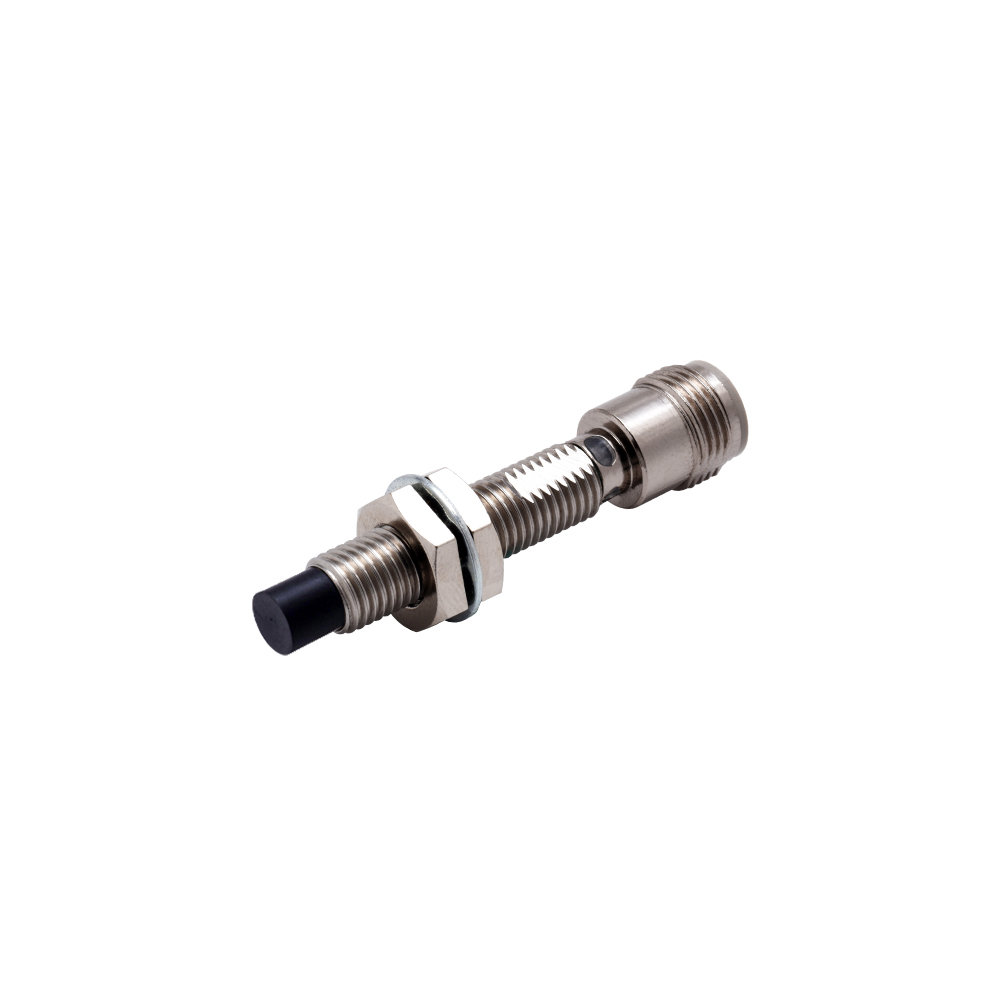
Omron E2E-X4MC2L8-M1 Inductive Proximity Sensor
| Feature | Value |
|---|---|
| Manufacturer | Omron |
| Product Series | E2E |
| Product Type | Inductive Proximity Sensor |
| Sensing Method | Inductive Detection |
| Sensing Distance | 4 mm |
| Housing Style | Cylindrical |
| Mounting Type | Non-Flush (Unshielded) |
| Connection Type | M12 Connector |
| Protection Rating | IP67 / IP69K Series Protection |
| Housing Material | Nickel-Plated Brass |
| Operating Principle | Electromagnetic Induction |
The Omron E2E-X4MC2L8-M1 Inductive Proximity Sensor is designed for reliable non-contact detection of metallic objects in industrial automation systems. As part of the established E2E sensor family, this model utilizes electromagnetic induction technology to identify the presence of conductive metal targets without physical contact. This detection method helps reduce mechanical wear while improving the consistency of machine monitoring processes.
In modern manufacturing environments, proximity sensors are frequently integrated into production equipment, assembly systems, conveyors, packaging machinery, and automated handling equipment. The Omron E2E-X4MC2L8-M1 Inductive Proximity Sensor is intended for applications where stable metal detection is required under varying environmental conditions.
Technical Overview
The Omron E2E-X4MC2L8-M1 Inductive Proximity Sensor belongs to the cylindrical sensor category and provides a nominal sensing distance of 4 mm. The sensor is designed with a durable metal housing and industrial-grade protection characteristics suitable for demanding factory environments.
Its M12 connector configuration simplifies installation and replacement procedures, particularly in equipment where maintenance efficiency is important. The sensor can be integrated into machine control systems, PLC architectures, and distributed automation networks using standard industrial wiring practices.
The Omron E2E-X4MC2L8-M1 Inductive Proximity Sensor is engineered specifically for metallic target detection and can be applied wherever repeatable position sensing is required.
Working Principle
Inductive proximity sensors operate by generating a high-frequency electromagnetic field at the sensing face. When a metallic object enters this field, eddy currents are induced within the target material.
These eddy currents absorb energy from the oscillator circuit inside the sensor. The sensor continuously monitors changes in the oscillator amplitude. Once the detected variation reaches a predefined threshold, the output state changes, indicating the presence of a target.
This non-contact operating principle eliminates mechanical switching components, reducing wear and improving long-term operational stability.
Detection Characteristics
- Non-contact metal detection
- No physical wear during operation
- Stable switching performance
- Suitable for repetitive machine cycles
- Reliable operation in industrial environments
Typical Areas of Use
The Omron E2E-X4MC2L8-M1 Inductive Proximity Sensor is commonly deployed in systems where accurate metal presence detection is required.
- Conveyor position monitoring
- Automated assembly stations
- Packaging machinery
- Material transfer systems
- Machine tool positioning
- Industrial robotics
- Automated inspection equipment
- Metal component counting systems
Because inductive sensing is unaffected by color, transparency, or surface printing, it is particularly useful in applications involving metallic components moving through automated processes.
Industrial Applications
Manufacturing facilities frequently use proximity sensors to monitor machine sequences and verify component locations. In automotive assembly operations, the sensor can detect metal brackets, fasteners, or fixture positions before subsequent production steps begin.
In packaging systems, the sensor may verify the position of metal machine elements such as actuators, indexing mechanisms, or guide components. Food and beverage production equipment can also employ inductive sensing for machine status monitoring where non-contact operation is preferred.
The Omron E2E-X4MC2L8-M1 Inductive Proximity Sensor is also suitable for warehouse automation systems where metallic carriers, transfer mechanisms, or lift components require position confirmation.
Advantages of Inductive Detection Technology
- Non-contact operation reduces mechanical wear
- Consistent detection of metallic targets
- Resistance to vibration-related issues
- Suitable for high-cycle applications
- Long operational service life
- Compact installation footprint
- Reliable switching performance
- Compatibility with PLC-based control systems
These characteristics make inductive sensing technology a preferred solution for many industrial automation tasks involving metal object detection.
Sector-Specific Examples
Automotive Manufacturing
The sensor can verify fixture positioning and detect metallic workpieces during assembly operations.
Packaging Industry
Packaging machines may use the sensor to monitor indexing components and actuator positions.
Material Handling Systems
Automated transfer equipment can employ the sensor to confirm carrier location and movement sequences.
Machine Building
OEM machine manufacturers often integrate proximity sensors into custom automation solutions for position monitoring.
Important Selection Considerations
When selecting an inductive proximity sensor, several engineering factors should be evaluated to ensure proper performance.
- Required sensing distance
- Target material characteristics
- Available installation space
- Connector or cable preference
- Environmental protection requirements
- Control system compatibility
- Mechanical mounting constraints
- Maintenance accessibility
Proper mounting practices and adherence to manufacturer installation recommendations contribute to stable long-term operation.
Engineers evaluating additional sensing solutions can review Omron sensor products for related proximity sensing technologies and industrial automation applications.
Frequently Asked Questions
What type of sensor is the Omron E2E-X4MC2L8-M1?
It is an inductive proximity sensor designed for non-contact detection of metallic objects.
What is the nominal sensing distance?
The sensor provides a nominal sensing distance of 4 mm.
Can it detect non-metallic materials?
Inductive sensors are intended primarily for conductive metallic targets and are generally not used for non-metallic object detection.
What connection method does this model use?
The sensor utilizes an M12 connector interface for installation and wiring.
Where is this sensor commonly installed?
It is commonly used in conveyors, assembly equipment, packaging machinery, and automated manufacturing systems.
Why is non-contact sensing beneficial?
Non-contact operation eliminates physical wear between the sensor and the detected object, supporting longer service life.
Can the sensor operate in industrial environments?
Yes. The E2E series is designed for industrial automation environments and incorporates protective housing construction suitable for demanding conditions.
What factors should be evaluated before selecting this sensor?
Engineers should consider sensing distance, target material, mounting requirements, environmental conditions, and control system compatibility.