
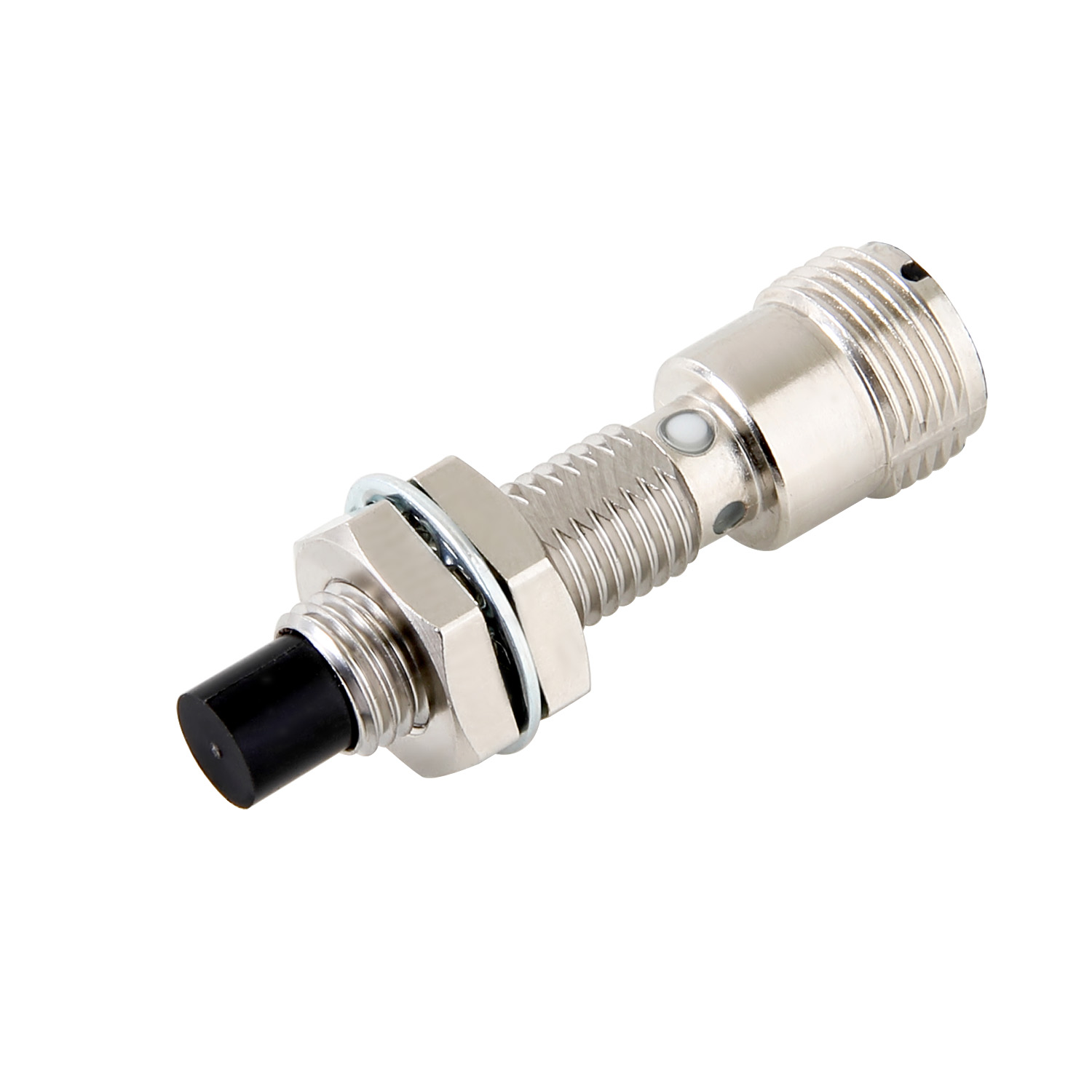
Omron E2E-X4MC18-M1 Inductive Proximity Sensor
| Feature | Value |
|---|---|
| Sensor Type | Inductive Proximity Sensor |
| Series | E2E NEXT |
| Housing Size | M8 |
| Mounting Type | Non-flush (Unshielded) |
| Sensing Distance | 4 mm |
| Output Type | NPN |
| Operation Mode | Normally Open (NO) |
| Connection Type | M12 Connector |
| Connector Orientation | Straight |
| Supply Voltage | 10 to 30 VDC |
| Response Frequency | 1 kHz |
| Housing Material | Stainless Steel |
| Protection Rating | IP67 / IP67G / IP69K |
| Operating Temperature | -40°C to +85°C |
| Overall Length | 50 mm |
Technical Description
Modern production systems frequently require reliable position sensing technologies that can operate continuously without physical contact. The Omron E2E-X4MC18-M1 Inductive Proximity Sensor is designed to detect metallic objects within a 4 mm sensing range while maintaining stable performance under demanding industrial conditions.
Belonging to the E2E NEXT sensor family, this model combines an M8 threaded stainless-steel housing with a straight M12 connector interface. The connectorized design simplifies installation, replacement, and maintenance procedures in machine automation projects where quick sensor exchange is important.
The Omron E2E-X4MC18-M1 Inductive Proximity Sensor supports NPN normally open output operation and is compatible with a wide variety of PLCs, controllers, and industrial I/O systems.
How the Sensor Works
The sensor generates an electromagnetic field at its sensing surface through an internal oscillator circuit. When a conductive metal target enters the sensing zone, eddy currents develop inside the target material.
These currents influence the oscillator amplitude, allowing the electronics inside the sensor to identify the presence of the target. Once the switching threshold is reached, the output changes state and provides a signal to the automation controller.
This non-contact operating principle eliminates mechanical wear and contributes to consistent performance in repetitive manufacturing processes.
Main Characteristics
- Compact M8 cylindrical housing
- 4 mm sensing distance
- Three-wire NPN output
- Normally open switching function
- M12 connector connection
- High environmental protection ratings
- Wide temperature operating range
- Stainless-steel construction
The Omron E2E-X4MC18-M1 Inductive Proximity Sensor is engineered to withstand vibration, moisture, dust, and cleaning procedures commonly encountered in industrial environments.
Application Areas
Inductive sensing technology is widely used where metallic object detection must occur repeatedly and accurately. The connectorized configuration of this model is particularly useful in modular machine designs.
- Automated assembly stations
- Machine tool systems
- Packaging equipment
- Conveyor monitoring applications
- Industrial robotics
- Material transfer systems
- Production line automation
- Mechanical positioning systems
Its compact housing allows installation in areas where larger sensors cannot be accommodated.
Industrial Applications
In food processing equipment, the sensor may be used to monitor metallic machine components while maintaining reliable operation during regular cleaning cycles. In logistics facilities, it can detect pallet carrier positions and automated transport equipment movement.
Manufacturing plants often install the Omron E2E-X4MC18-M1 Inductive Proximity Sensor to confirm the position of machine slides, clamps, actuators, and transfer mechanisms. In electronics production lines, it can assist in fixture verification and automated handling processes.
Engineers seeking additional sensing technologies may explore Omron sensor series for complementary industrial automation solutions.
Advantages
- Reliable non-contact metal detection
- Fast connector-based installation
- Reduced maintenance requirements
- Resistance to industrial contaminants
- Compact dimensions for flexible mounting
- Suitable for washdown environments
- High switching frequency capability
- Long operational lifespan
Sector-Specific Usage Examples
Electronics Manufacturing
The sensor can verify fixture positioning before automated assembly operations begin.
Logistics Automation
Automated transport carts and transfer systems can utilize the sensor for position confirmation.
Packaging Industry
Metal guide mechanisms and machine elements can be monitored throughout packaging cycles.
Industrial Machinery
The sensor can provide feedback regarding actuator travel limits and machine positions.
Selection Considerations
When selecting an inductive sensor, engineers should evaluate target size, installation space, sensing distance requirements, electrical interface compatibility, and environmental exposure conditions.
- Required sensing range
- PLC input compatibility
- Connector versus cable preference
- Protection requirements
- Machine vibration levels
- Operating temperature conditions
- Target material characteristics
- Available mounting space
The Omron E2E-X4MC18-M1 Inductive Proximity Sensor is often selected for installations where connector-based maintenance and compact dimensions are important design factors.
Frequently Asked Questions
What is the sensing distance of this sensor?
The rated sensing distance is 4 mm.
Which objects can it detect?
The sensor is designed for metallic target detection.
Does it use a connector or cable?
This model features a straight M12 connector connection.
What output type does it provide?
It provides an NPN normally open output.
Can it be used in wet environments?
Yes. Its IP67, IP67G, and IP69K protection ratings support demanding industrial environments.
What voltage range is supported?
The sensor operates from 10 to 30 VDC.
Is it suitable for automated machinery?
Yes. It is commonly used in machine automation, positioning, and presence detection applications.
What material is the housing made from?
The housing is constructed from stainless steel.
Can the sensor be replaced quickly during maintenance?
Yes. The M12 connector design allows fast sensor replacement.
What industries commonly use this sensor?
Manufacturing, logistics, packaging, machinery building, and electronics production frequently use inductive sensing technology.