
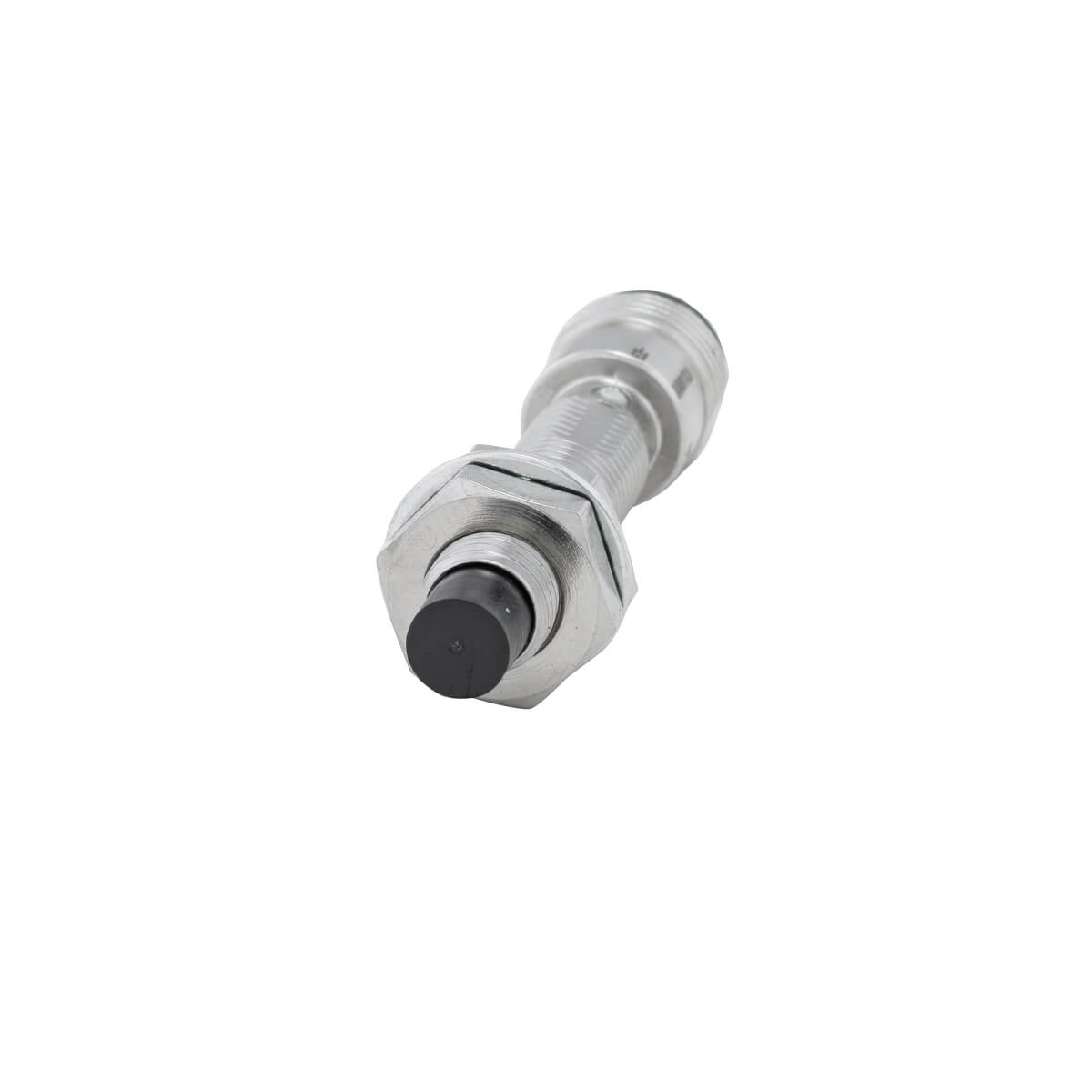
Omron E2E-X4MB1TL8 2M Inductive Proximity Sensor
| Feature | Value |
|---|---|
| Sensor Type | Inductive Proximity Sensor |
| Series | E2E NEXT |
| Sensing Distance | 4 mm |
| Housing Size | M8 |
| Mounting Type | Non-flush (Unshielded) |
| Output Type | PNP Normally Closed (NC) |
| Communication | IO-Link COM3 |
| Supply Voltage | 10 to 30 VDC |
| Cable Length | 2 m |
| Housing Material | Stainless Steel |
| Protection Rating | IP67, IP69K |
| Operating Temperature | -40°C to +85°C |
| Response Frequency | 1 kHz |
Technical Description
Industrial automation systems frequently require compact sensing devices capable of operating reliably under demanding environmental conditions. The Omron E2E-X4MB1TL8 2M Inductive Proximity Sensor is developed for metal object detection tasks where stable switching performance and diagnostic communication are required.
This model belongs to the E2E NEXT family and combines a compact M8 cylindrical body with a 4 mm sensing range. The sensor incorporates IO-Link communication technology while maintaining compatibility with conventional discrete control architectures.
The stainless-steel construction and high environmental protection ratings allow deployment in applications exposed to moisture, dust, vibration, and routine cleaning procedures.
Working Principle
The Omron E2E-X4MB1TL8 2M Inductive Proximity Sensor detects conductive metallic targets through electromagnetic induction. An oscillator inside the sensing head generates a magnetic field extending beyond the sensing surface.
When a metal object approaches the sensing area, eddy currents are produced within the target material. These currents alter the oscillation characteristics of the sensor. The internal electronics evaluate this change and switch the output state accordingly.
The normally closed output configuration maintains a signal under normal conditions and changes state when a target is detected. This arrangement can be useful in monitoring applications where fault detection and wire-break diagnostics are important considerations.
Key Application Areas
- Automated packaging machinery
- Industrial conveyor systems
- Assembly line positioning systems
- Machine tool monitoring
- Automated warehousing equipment
- Robotic material transfer systems
- Metal processing machinery
- Production line control systems
The compact housing enables installation in equipment where space limitations influence component selection.
Industrial Applications
Automated Assembly Stations
Manufacturing lines often require confirmation of fixture positions, mechanical stops, and component carriers. The sensor provides non-contact verification without introducing mechanical wear.
Warehouse Automation
Automated storage systems use proximity sensing to monitor transfer mechanisms, pallet carriers, and positioning elements. Consistent detection helps support accurate movement sequences.
Packaging Equipment
Packaging machinery can utilize the sensor for detecting metal guides, indexing components, and machine positions during high-speed operation.
Production Machinery
Industrial equipment frequently requires position feedback for moving assemblies, clamping mechanisms, and machine actuators. The sensor’s response characteristics support such monitoring tasks.
Omron E2E-X4MB1TL8 2M Advantages
- Compact M8 cylindrical housing
- 4 mm sensing distance
- PNP normally closed output configuration
- Integrated IO-Link communication
- IP67 and IP69K environmental protection
- Stainless-steel housing design
- Wide operating temperature range
- Suitable for modern digital automation systems
The Omron E2E-X4MB1TL8 2M Inductive Proximity Sensor offers flexibility for installations that require both conventional switching signals and access to digital process information.
Sector-Specific Examples
- Fixture verification in automotive assembly lines
- Carrier detection in electronics manufacturing
- Position sensing in automated logistics systems
- Transfer mechanism monitoring in packaging plants
- Machine position confirmation in metalworking operations
- Actuator feedback in process automation equipment
Omron E2E-X4MB1TL8 2M Selection Considerations
Before specifying an inductive sensor, engineers should evaluate target material characteristics, available installation space, required sensing distance, and output logic requirements.
Since this model uses a non-flush design, sufficient clearance around the sensing area should be maintained to achieve expected performance. Installation guidelines from the manufacturer should always be followed.
For applications incorporating predictive maintenance and advanced diagnostics, IO-Link compatibility with the selected controller architecture should be verified during system design.
Additional sensor technologies and related devices can be explored through Omron sensor series.
The Omron E2E-X4MB1TL8 2M Inductive Proximity Sensor is commonly implemented in automation systems where compact dimensions, environmental durability, and communication capabilities are required.
By combining inductive sensing with IO-Link diagnostics, the Omron E2E-X4MB1TL8 2M Inductive Proximity Sensor supports efficient integration into both established and modern industrial control environments.
Frequently Asked Questions
1. What sensing technology does this sensor use?
It uses inductive sensing technology for detecting metallic objects without contact.
2. What is the nominal sensing distance?
The sensor provides a 4 mm sensing distance.
3. What output configuration is available?
This model uses a PNP normally closed (NC) output.
4. Does the sensor support IO-Link communication?
Yes, it supports IO-Link COM3 communication.
5. What protection ratings are provided?
The sensor is rated IP67 and IP69K.
6. Which materials can it detect?
It is designed primarily for conductive metallic targets.
7. Can it operate in demanding industrial environments?
Yes, the stainless-steel housing and environmental protection ratings support use in harsh industrial settings.
8. Which industries typically use this sensor?
Automotive, logistics, machinery manufacturing, packaging, and industrial automation sectors commonly implement this sensor.