
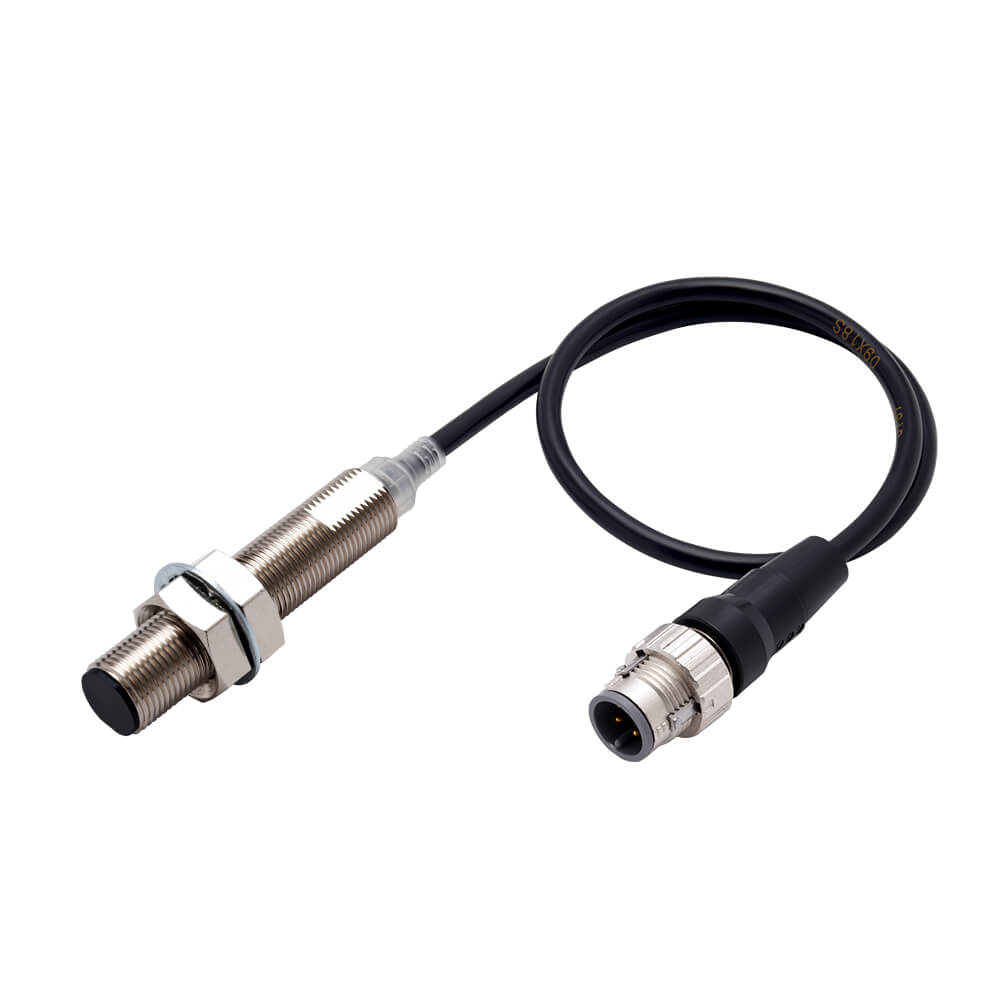
Omron E2E-X4B1TL12-M1TJ 0.3M Inductive Proximity Sensor
| Feature | Value |
|---|---|
| Sensor Type | Inductive Proximity Sensor |
| Series | E2E NEXT |
| Housing Size | M12 |
| Sensing Distance | 4 mm |
| Mounting Type | Quasi-flush |
| Output Type | PNP, IO-Link |
| Operation Mode | Normally Open (NO) |
| Connection Method | M12 Pigtail Smartclick Connector |
| Cable Length | 0.3 m |
| Cable Material | Oil-resistant PVC |
| Housing Material | Nickel-plated Brass |
| IO-Link Baud Rate | COM3 (230.4 kbps) |
| Overall Length | 69.1 mm |
| Thread Length | 55 mm |
| Protection Rating | IP67 / IP67G / IP69K |
The Omron E2E-X4B1TL12-M1TJ 0.3M Inductive Proximity Sensor is designed for reliable metal object detection in industrial automation systems. As part of the E2E NEXT family, this sensor combines compact M12 dimensions with IO-Link communication capabilities, allowing both switching and diagnostic data to be integrated into modern control architectures. Its rugged nickel-plated brass housing and high ingress protection ratings make it suitable for demanding production environments.
Omron E2E-X4B1TL12-M1TJ 0.3M Technical Overview
The sensor features a 4 mm sensing distance and a shielded sensing structure intended for stable operation in installations where mounting space is limited. The device utilizes a PNP normally open output and supports IO-Link COM3 communication, enabling parameterization and process data exchange through compatible IO-Link masters.
The Omron E2E-X4B1TL12-M1TJ 0.3M Inductive Proximity Sensor incorporates a Smartclick M12 pigtail connector with a 0.3-meter oil-resistant PVC cable. This configuration simplifies installation while maintaining reliable electrical connectivity in automated machinery.
Working Principle
Inductive proximity sensors operate by generating a high-frequency electromagnetic field at the sensing face. When a conductive metal target enters this field, eddy currents are induced within the target material. These currents alter the oscillation characteristics of the sensor circuit, allowing the electronics to detect the presence of the object.
Because the sensing process is contactless, there is no mechanical wear between the sensor and the detected component. This principle makes the Omron E2E-X4B1TL12-M1TJ 0.3M Inductive Proximity Sensor suitable for continuous operation in automated systems requiring repetitive detection cycles.
Typical Applications
- Position detection in automated assembly stations
- Metal component presence verification
- Machine tool positioning systems
- Transfer line monitoring
- Conveyor-based part tracking
- Robotic end-effector positioning
- Packaging machine sequencing
- Automated storage and retrieval systems
Industrial Applications
In automotive manufacturing, inductive sensors are frequently used to verify the presence of metallic brackets, fasteners, and chassis components before the next production stage begins. The sensor’s compact body allows integration into fixtures where installation space is restricted.
Within material handling systems, the device can monitor metal carriers and pallets moving through conveyor networks. Its robust housing construction supports operation in environments exposed to vibration and contaminants.
Food and beverage equipment manufacturers often require sensors with enhanced environmental protection. The IP69K rating enables the sensor to withstand washdown procedures commonly found in hygienic production facilities.
For additional industrial sensing solutions, engineers can explore Omron sensor products that support various automation requirements.
Advantages of the Sensor
- Compact M12 cylindrical design
- Integrated IO-Link communication capability
- High-speed COM3 communication support
- Durable nickel-plated brass housing
- Resistance to industrial washdown environments
- Reliable detection of metallic targets
- Simplified installation through Smartclick connectivity
- Suitable for advanced diagnostic and monitoring systems
Industry-Specific Usage Examples
Automotive Production
The sensor can confirm the presence of stamped metal parts before robotic welding operations begin, reducing the risk of incomplete manufacturing sequences.
Machine Building
Equipment manufacturers can integrate the sensor into actuator monitoring systems to verify mechanical positions during machine cycles.
Logistics Automation
Metal transport carriers moving through automated warehouses can be identified and tracked using inductive sensing technology.
Packaging Equipment
The sensor may be used to detect metallic machine components during indexing operations to ensure proper synchronization of packaging processes.
Omron E2E-X4B1TL12-M1TJ 0.3M Considerations When Selecting an Inductive Sensor
Several factors should be evaluated before selecting an inductive proximity sensor. Required sensing distance, mounting conditions, communication requirements, environmental exposure, and connection methods all influence suitability for a particular application.
Engineers implementing IO-Link architectures may benefit from the communication capabilities offered by the Omron E2E-X4B1TL12-M1TJ 0.3M Inductive Proximity Sensor, particularly when predictive maintenance and diagnostic visibility are important project objectives.
Frequently Asked Questions
What type of targets can this sensor detect?
The sensor is designed to detect metallic objects using inductive sensing technology.
What is the nominal sensing distance?
The specified sensing distance is 4 mm.
Does the sensor support IO-Link communication?
Yes. It supports IO-Link communication with COM3 transmission speed.
What output configuration does the sensor use?
The device provides a PNP normally open output.
Is the sensor suitable for washdown environments?
Yes. The IP69K protection rating supports use in demanding cleaning environments.
Omron E2E-X4B1TL12-M1TJ 0.3M What housing material is used?
The housing is manufactured from nickel-plated brass for mechanical durability.
Can the sensor be used in automated assembly lines?
Yes. It is commonly applied for position verification and metal part detection in assembly processes.
What connection method is provided?
The sensor uses an M12 pigtail Smartclick connector with a 0.3-meter oil-resistant PVC cable.
Why is IO-Link beneficial in industrial systems?
IO-Link enables process data exchange, parameter management, diagnostics, and condition monitoring through a standardized communication interface.