
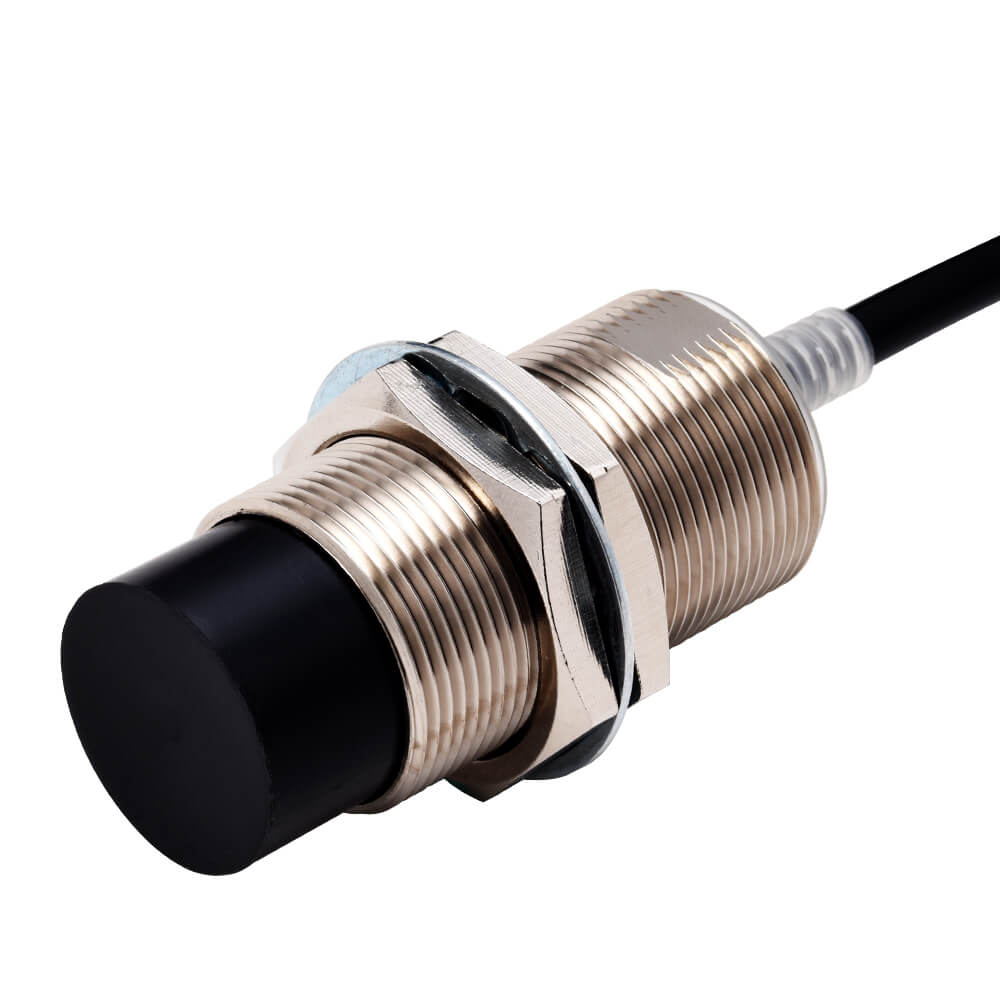
Omron E2E-X40MB2L30 2M Inductive Proximity Sensor
| Specification | Value |
|---|---|
| Manufacturer | Omron |
| Product Type | Inductive Proximity Sensor |
| Sensing Distance | 40 mm |
| Output Type | NPN Normally Open |
| Supply Voltage | 10 to 30 VDC |
| Housing Diameter | M30 |
| Housing Design | Threaded Cylindrical |
| Connection Method | 2 m Cable |
| Shield Type | Unshielded |
| Protection Rating | IP67 |
| Operating Temperature | -25°C to +70°C |
| Target Material | Ferrous Metal |
Modern industrial automation systems rely on accurate object detection to maintain process consistency and equipment synchronization. The Omron E2E-X40MB2L30 Inductive Proximity Sensor is engineered for detecting metallic objects without physical contact, making it suitable for applications where durability and reliable switching performance are important operational requirements.
As a member of the Omron E2E sensor family, this model combines a long 40 mm sensing distance with a rugged M30 cylindrical housing. The sensor is designed for installation in manufacturing equipment, automated transport systems, assembly machinery, and industrial processing lines where metallic target detection is required.
The Omron E2E-X40MB2L30 Inductive Proximity Sensor provides stable operation under demanding environmental conditions while minimizing maintenance requirements through non-contact sensing technology.
Technical Description
The Omron E2E-X40MB2L30 Inductive Proximity Sensor uses electromagnetic induction to detect conductive metallic targets. An internal oscillator generates a magnetic field at the sensing face. When a metal object enters the detection zone, eddy currents are induced within the target material, altering the characteristics of the oscillating field.
The sensor electronics monitor these changes and switch the output accordingly. This model features an NPN normally open output configuration and operates from a 10 to 30 VDC supply. Its unshielded construction enables a longer sensing distance compared with equivalent shielded sensor designs.
The durable housing and IP67 protection rating allow the sensor to operate in environments where dust, moisture, vibration, and industrial contaminants may be present.
Working Principle
The sensing process begins with the generation of a high-frequency electromagnetic field around the active sensing surface. As a metallic object approaches the sensor, the magnetic field interacts with the conductive material and creates eddy currents.
These eddy currents absorb energy from the oscillator circuit, causing measurable changes in amplitude. The internal circuitry evaluates these changes and activates the output when the predefined switching threshold is reached.
Because no mechanical contact occurs between the sensor and the target, the detection process remains consistent even during continuous machine operation and high-speed production cycles.
Key Features
- 40 mm sensing distance for extended detection range.
- NPN normally open output configuration.
- M30 threaded cylindrical housing.
- Integrated 2-meter connection cable.
- IP67 environmental protection.
- Non-contact sensing operation.
- Wide 10 to 30 VDC operating voltage range.
- Suitable for industrial automation systems.
Common Areas of Use
The Omron E2E-X40MB2L30 Inductive Proximity Sensor is widely used in industrial systems requiring dependable metal object detection and position feedback.
- Automated conveyor systems
- Production machinery
- Packaging equipment
- Metalworking machines
- Industrial robots
- Transfer and indexing systems
- Material handling equipment
- Automated storage installations
The sensor can be integrated into both new machine designs and retrofit automation projects where reliable metal sensing is required.
Industrial Applications
Automated Assembly Lines
Assembly systems often require verification of component presence before initiating the next manufacturing step. The sensor can detect metallic fixtures, carriers, and workpieces throughout the production cycle.
Material Transportation Systems
Conveyor networks use proximity sensors to monitor the movement and positioning of metal pallets, transport carriers, and machine interfaces.
Industrial Robotics
Robotic cells frequently depend on position confirmation signals generated by inductive sensors to verify tooling locations and workpiece placement.
Metal Processing Facilities
Fabrication equipment can use proximity sensors to detect sheet metal, structural components, and machine positions during processing operations.
Advantages of Non-Contact Detection
- Reduced mechanical wear.
- Minimal maintenance requirements.
- Consistent switching performance.
- Reliable operation in harsh environments.
- Resistance to vibration and shock.
- Improved equipment uptime.
- Simple integration with PLC systems.
- Long operational service life.
Engineers evaluating additional sensing technologies may also review Omron sensor products for broader automation requirements.
Factors to Consider During Product Selection
Several technical considerations should be evaluated before selecting an inductive proximity sensor for an application.
- Required sensing distance.
- Available mounting space.
- Target material characteristics.
- Electrical output requirements.
- Environmental exposure conditions.
- Temperature requirements.
- Cable routing preferences.
- System compatibility.
The Omron E2E-X40MB2L30 Inductive Proximity Sensor is commonly selected when long sensing range and NPN output compatibility are required within industrial automation systems.
Maintenance Recommendations
Routine maintenance is generally limited to inspection of cable integrity, mounting stability, and sensor alignment. The sensing face should remain free from excessive contamination that could interfere with installation clearances.
Periodic testing can help verify proper switching behavior and maintain system reliability over time.
Omron E2E-X40MB2L30 Frequently Asked Questions
What type of sensor is the Omron E2E-X40MB2L30?
It is an inductive proximity sensor designed for detecting metallic objects without physical contact.
What is the nominal sensing distance?
The sensor provides a 40 mm sensing distance.
What output configuration does it use?
This model features an NPN normally open output.
What voltage range is supported?
The sensor operates from 10 to 30 VDC.
Can it detect non-metallic materials?
Inductive sensing technology is intended primarily for conductive metallic targets.
Is the sensor suitable for industrial environments?
Yes. The IP67 rating supports operation in environments exposed to dust and moisture.
Where is this sensor commonly installed?
Typical applications include conveyors, robotic systems, packaging machines, and manufacturing equipment.
Why use a non-contact sensor?
Non-contact sensing reduces mechanical wear and provides consistent detection performance during continuous operation.