
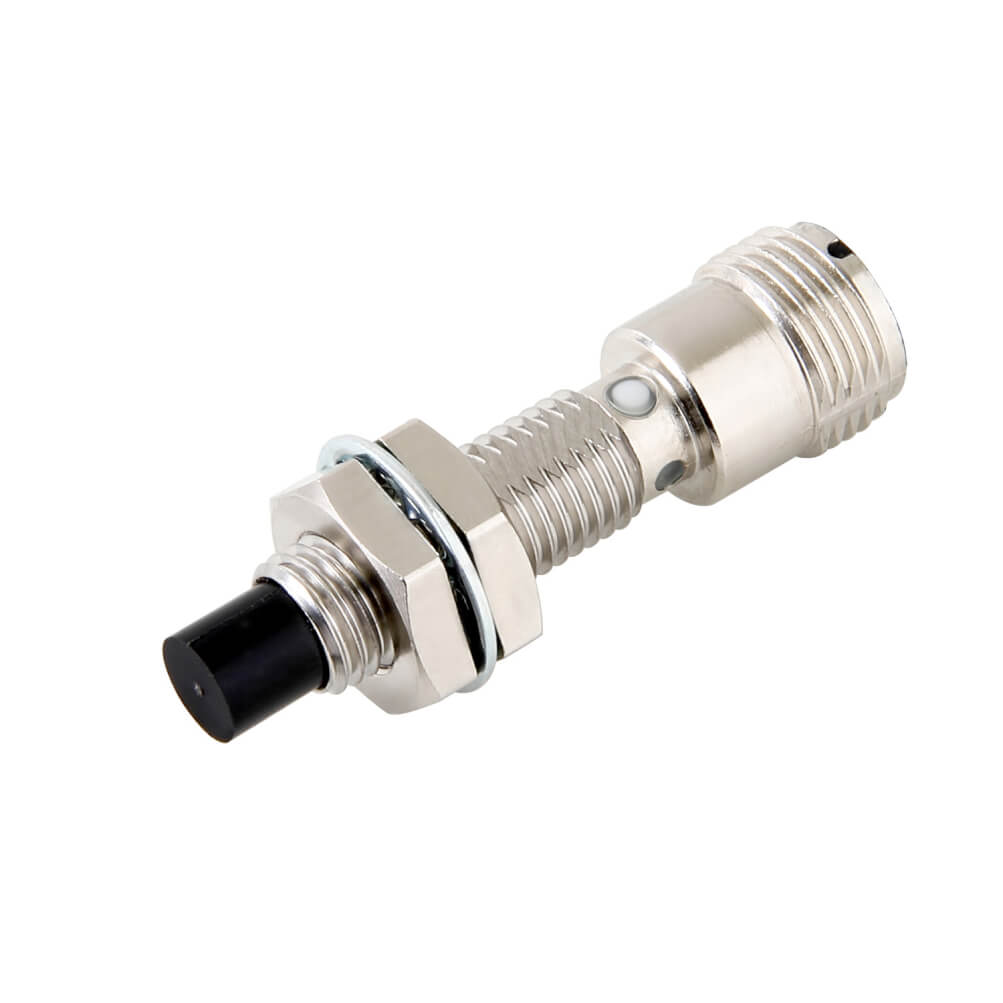
Omron E2E-X2MC28-M1 Inductive Proximity Sensor
| Feature | Value |
|---|---|
| Sensor Type | Inductive Proximity Sensor |
| Series | Omron E2E NEXT |
| Housing Size | M8 |
| Mounting Type | Non-flush (Unshielded) |
| Sensing Distance | 2 mm |
| Output Type | NPN Normally Closed (NC) |
| Supply Voltage | 10 to 30 VDC |
| Response Frequency | 1 kHz |
| Connection Type | M12 Connector |
| Connector Orientation | Straight Connector |
| Housing Material | Stainless Steel |
| Operating Temperature | -40°C to +85°C |
| Protection Rating | IP67, IP67G, IP69K |
| Body Diameter | M8 |
| Threaded Housing | Yes |
Modern automation systems require dependable object detection devices that can operate continuously in demanding industrial environments. The Omron E2E-X2MC28-M1 Inductive Proximity Sensor is designed to detect metallic targets without physical contact while supporting efficient installation through its integrated M12 connector interface.
As part of the Omron E2E NEXT family, this sensor combines compact dimensions, environmental durability, and stable detection performance. The M8 cylindrical housing allows integration into compact machinery, while the connector-based design simplifies replacement and maintenance procedures within automated systems.
Technical Overview
The Omron E2E-X2MC28-M1 Inductive Proximity Sensor is a three-wire DC inductive sensor featuring an NPN normally closed output configuration. It is intended for short-range metallic object detection with a rated sensing distance of 2 mm.
The sensor body is manufactured from stainless steel and incorporates multiple protection ratings that support operation in environments exposed to dust, water, lubricants, and industrial cleaning processes. The straight M12 connector provides a practical connection method for machine builders and maintenance teams seeking modular wiring solutions.
The Omron E2E-X2MC28-M1 Inductive Proximity Sensor is frequently integrated into production equipment where reliability, compact dimensions, and serviceability are important engineering considerations.
How the Sensor Operates
The sensing mechanism is based on electromagnetic induction. During operation, an oscillator generates a high-frequency magnetic field from the sensor face. When a conductive metallic object enters the sensing zone, eddy currents are induced within the target.
These currents absorb energy from the oscillator circuit, causing a detectable change in amplitude. Internal electronics continuously monitor this condition and switch the output when the target reaches the sensing distance.
Since no physical contact occurs between the sensor and the detected object, wear is minimized and long-term operational stability can be maintained even in high-cycle applications.
Advantages of the Connector Version
- Quick replacement without rewiring.
- Simplified maintenance procedures.
- Reduced machine downtime during servicing.
- Compact M8 housing for restricted installation spaces.
- Reliable metallic target detection.
- IP67, IP67G, and IP69K environmental protection.
- Stainless-steel housing suitable for industrial conditions.
- Fast response frequency up to 1 kHz.
Typical Applications
The sensor is suitable for industrial automation tasks that require repeatable and accurate metal object detection.
- Machine positioning systems
- Automated assembly lines
- Robotic workstations
- Packaging machinery
- Conveyor control systems
- Pneumatic actuator monitoring
- Manufacturing process automation
- Material transfer equipment
Industrial Application Examples
Robotic Manufacturing Cells
Robotic systems often require confirmation of gripper positions, fixture status, and workpiece presence. The sensor can provide reliable detection feedback for these operations.
Packaging Automation
In packaging equipment, the sensor can monitor metallic machine components and verify the position of moving mechanisms throughout production cycles.
Assembly Equipment
Automated assembly stations frequently use inductive sensors to detect metallic components before proceeding to the next manufacturing step.
Warehouse Automation
Automated transport systems may utilize the sensor for carrier positioning, shuttle detection, and mechanical stop monitoring.
Omron E2E-X2MC28-M1 Sector-Specific Usage Scenarios
- Fixture position verification in automotive manufacturing.
- Actuator stroke monitoring in packaging facilities.
- Carrier detection in logistics automation systems.
- Metal component verification in electronics assembly.
- Position monitoring in pharmaceutical production equipment.
- Transfer mechanism detection in distribution centers.
Important Selection Factors
Choosing an inductive sensor requires evaluation of sensing distance, output type, installation constraints, and environmental exposure. Because the Omron E2E-X2MC28-M1 Inductive Proximity Sensor uses a non-flush sensing structure, installation spacing should comply with manufacturer recommendations.
Connector-based models can provide advantages in systems requiring regular maintenance or rapid replacement. Engineers should also verify compatibility with PLC inputs, machine wiring standards, and available connector infrastructure.
Additional sensing technologies and related products can be reviewed through Omron sensor solutions used throughout industrial automation projects.
Maintenance Guidelines
Periodic maintenance should include inspection of the connector interface, mounting hardware, and sensing face. Any buildup of contamination near the sensing area should be removed to maintain reliable operation.
Routine verification of electrical connections can help prevent unexpected interruptions and support stable communication with control systems.
Omron E2E-X2MC28-M1 Frequently Asked Questions
What is the sensing distance of this sensor?
The rated sensing distance is 2 mm.
What type of output does the sensor provide?
The device uses an NPN normally closed output configuration.
What connection method is used?
The sensor is equipped with a straight M12 connector.
Can the sensor detect non-metallic materials?
No. Inductive sensors are designed primarily for metallic target detection.
What protection ratings are available?
The sensor supports IP67, IP67G, and IP69K protection classes.
What supply voltage is required?
The operating voltage range is 10 to 30 VDC.
Where is the Omron E2E-X2MC28-M1 Inductive Proximity Sensor commonly used?
It is commonly installed in robotics, packaging machinery, assembly systems, conveyors, and industrial automation equipment.
What is the housing material?
The housing is manufactured from stainless steel.
What is the maximum switching frequency?
The response frequency is rated at 1 kHz.
Why choose a connector version instead of a cable version?
Connector models simplify installation, maintenance, and replacement procedures while reducing wiring effort.