
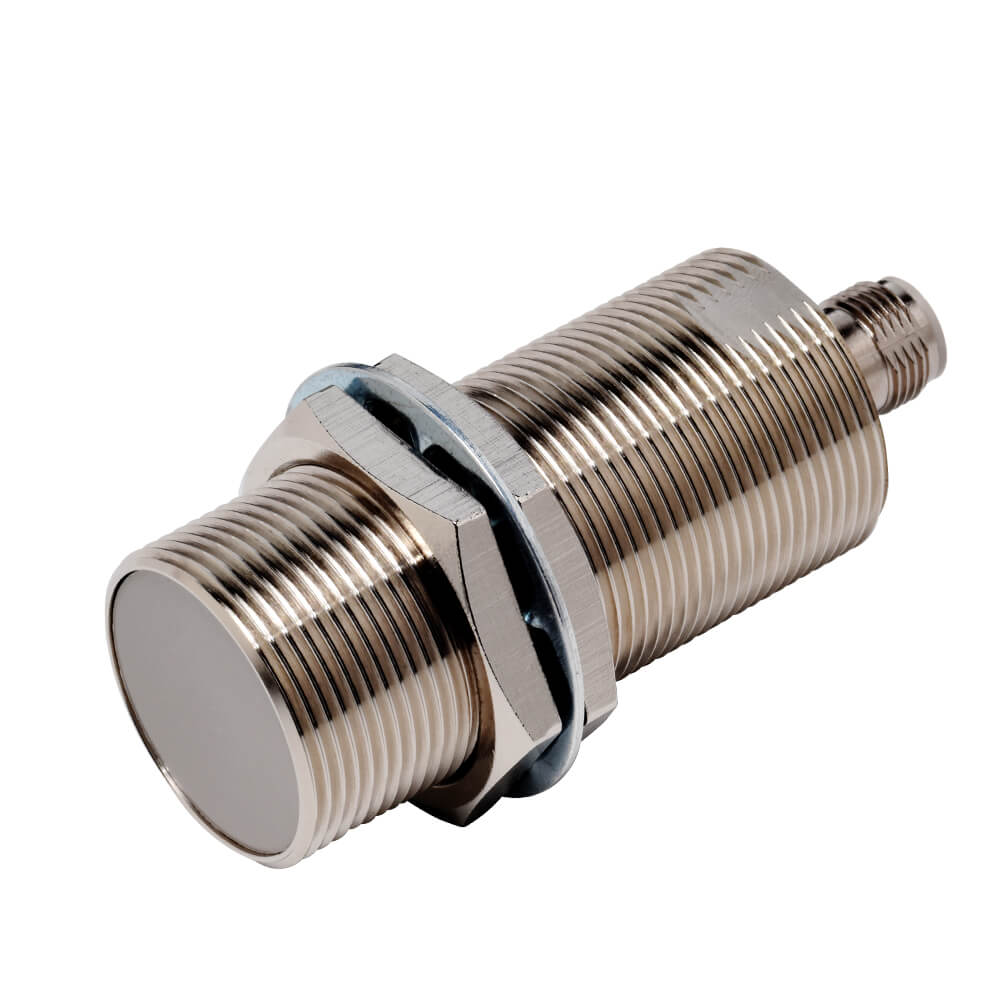
Omron E2E-X10B1TL30 5M Inductive Proximity Sensor
| Feature | Value |
|---|---|
| Sensor Type | Inductive Proximity Sensor |
| Series | E2E NEXT |
| Housing Size | M30 |
| Body Type | Long Housing |
| Mounting Type | Flush |
| Sensing Distance | 10 mm |
| Output Type | PNP Normally Open (NO) |
| Supply Voltage | 10 to 30 VDC |
| Connection Method | Pre-wired Cable |
| Cable Length | 5 m |
| Response Frequency | 400 Hz |
| Housing Material | Nickel-Plated Brass |
| Protection Rating | IP67 / IP67G / IP69K |
| Operating Temperature | -25°C to +70°C |
| Wiring Configuration | 3-Wire |
Industrial sensing systems frequently require reliable detection capabilities across extended installation distances. The Omron E2E-X10B1TL30 Inductive Proximity Sensor is designed to provide dependable metal object detection while offering the flexibility of a longer connection cable. This configuration is particularly useful in large machinery, conveyor installations, and production environments where control panels may be positioned far from the sensing point.
Technical Description
The Omron E2E-X10B1TL30 Inductive Proximity Sensor belongs to the E2E NEXT series and is engineered for industrial automation applications requiring stable non-contact detection of metallic objects. The sensor features a rated sensing distance of 10 mm and incorporates a PNP normally open output configuration.
The long-body M30 housing provides secure installation within industrial equipment while maintaining robust mechanical protection. The nickel-plated brass enclosure offers resistance to impact, vibration, and exposure to industrial contaminants.
A distinguishing characteristic of this version is its integrated 5-meter cable, which supports installations where extended wiring runs are necessary without requiring additional connection extensions.
Working Principle
The Omron E2E-X10B1TL30 Inductive Proximity Sensor generates an electromagnetic field at the sensing face through an internal oscillator circuit. When a conductive metallic target enters the sensing zone, eddy currents are induced within the target material.
These induced currents absorb energy from the oscillator and alter the electromagnetic field characteristics. The sensor’s detection circuitry continuously monitors these changes and activates the output once the switching threshold is reached.
This sensing method eliminates physical contact between the sensor and the detected object, reducing mechanical wear and supporting long-term operational stability.
The Omron E2E-X10B1TL30 Inductive Proximity Sensor is commonly deployed in applications requiring continuous object detection throughout repetitive industrial processes.
Areas of Use
- Automated manufacturing systems
- Conveyor and transport equipment
- Large-scale packaging machinery
- Automotive production lines
- Industrial material handling systems
- Warehouse automation installations
- Machine tool applications
- Robotic production cells
Industrial Applications
Conveyor Networks
Extended conveyor systems often require sensors positioned far from control cabinets. The integrated 5-meter cable helps simplify installation while reducing additional wiring requirements.
Warehouse Automation
Automated storage and retrieval systems use proximity sensors to verify the position of metallic carriers, racks, and transport mechanisms.
Industrial Processing Equipment
Production machines can use inductive sensors to confirm actuator positions and monitor mechanical movement during operation.
Robotic Manufacturing Cells
Robotic systems frequently require accurate feedback regarding fixture positions, pallet locations, and tooling status before executing programmed movements.
Advantages
- Reliable 10 mm sensing distance
- Extended 5-meter cable length
- Long-body M30 construction
- Flush mounting capability
- PNP normally open output configuration
- IP67, IP67G, and IP69K protection levels
- Suitable for demanding industrial environments
- Non-contact sensing reduces maintenance requirements
- Stable operation in repetitive machine cycles
The Omron E2E-X10B1TL30 Inductive Proximity Sensor provides a practical solution for applications where sensor locations are significantly separated from electrical control equipment.
Industry-Specific Usage Examples
- Position monitoring in automated warehouses
- Metal carrier detection on conveyor systems
- Fixture verification in automotive assembly plants
- Actuator position sensing in packaging lines
- Detection of machine component positions in CNC systems
- Transfer station monitoring in logistics facilities
Additional sensing technologies and related products can be explored through Omron sensor solutions.
The Omron E2E-X10B1TL30 Inductive Proximity Sensor is particularly beneficial in installations where extended cable length simplifies electrical integration and reduces additional wiring components.
Considerations When Selecting This Sensor
- Verify that a 10 mm sensing distance satisfies application requirements.
- Ensure compatibility with PNP input modules.
- Confirm sufficient space for the M30 long-body housing.
- Consider routing requirements for the 5-meter cable.
- Evaluate environmental exposure against the IP69K protection rating.
- Confirm that the target material is suitable for inductive sensing technology.
Frequently Asked Questions
What is the sensing distance of this sensor?
The rated sensing distance is 10 mm.
What output configuration is provided?
The sensor uses a PNP normally open output.
How long is the integrated cable?
This version is supplied with a 5-meter pre-wired cable.
Can the sensor be mounted flush with metal surfaces?
Yes. The shielded construction supports flush mounting installations.
Is this sensor suitable for outdoor industrial environments?
The environmental suitability depends on application requirements, but the sensor offers IP67, IP67G, and IP69K protection ratings.
Which industries commonly use this model?
Automotive manufacturing, logistics, packaging, warehousing, and industrial automation sectors commonly use this sensor.
Does the sensor require physical contact with the target?
No. Detection occurs through electromagnetic induction without physical contact.
Why would a 5-meter cable be beneficial?
The extended cable can simplify installation when control cabinets or connection points are located far from the sensing location.