
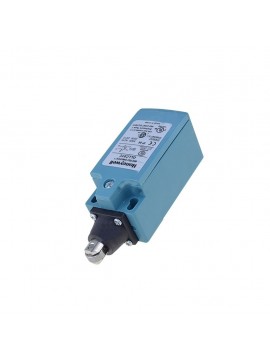
Honeywell ZLEC01D Limit Switch: Top Roller Arm Design, Application Notes, and Lifecycle Context
The Honeywell ZLEC01D limit switch is associated with Honeywell’s snap-action and limit-switch product category and is commonly described in distributor listings as a top roller arm limit switch. For engineers working with legacy systems, replacement programs, or installed machinery that still relies on mechanical position detection, the Honeywell ZLEC01D limit switch is especially relevant because it combines a familiar mechanical format with straightforward application logic.
What is Honeywell ZLEC01D?
Available distributor references identify the Honeywell ZLEC01D limit switch as a limit switch from Honeywell Sensing and Productivity Solutions, while some reseller descriptions specifically call it a top roller arm model. Other listings classify it more generally under snap-action and limit switches. One source also flags the product as obsolete or end-of-life in the market, which is useful context for maintenance planning and long-term support strategy.
Why top roller arm limit switches are still useful
A Honeywell ZLEC01D Honeywell limit switch with a top roller arm is well suited to machinery where an actuator needs to be triggered by passing cams, slides, guided surfaces, or moving machine members that do not approach the switch in a perfectly linear path. The roller helps reduce friction and supports smoother mechanical engagement. In real equipment, that can help lower wear at the contact point and improve consistency across repeated cycles.
Application logic and system role
The Honeywell ZLEC01D limit switch is best understood as a mechanical position-sensing component used to verify motion or travel. In practical terms, that means it can serve as an end-of-stroke detector, a guard-position confirmation device, or a machine-sequencing input. Applications may include older packaging lines, transfer mechanisms, machine doors, access panels, and custom automation equipment where mechanical proof of motion is preferred over non-contact sensing.
This is one reason the Honeywell ZLEC01D limit switch still matters in industry. Many facilities continue to operate installed equipment with long service lives, and those machines often depend on proven mechanical switch formats. Even when a product is nearing the end of its market lifecycle, documentation and replacement awareness remain important for sustaining operational continuity.
Technical and sourcing considerations
Because public technical summaries for the Honeywell ZLEC01D limit switch are less detailed than for some newer or more actively stocked Honeywell models, engineers should verify actuator geometry, contact arrangement, and mounting compatibility carefully during replacement selection. This is particularly important if the switch is being cross-referenced in a maintenance environment rather than specified for an entirely new design. Where a product is identified as obsolete, the practical question is often not just “What are the original specs?” but also “What is the closest functional path forward?”
Why lifecycle context matters
One listing notes end-of-life status for Honeywell ZLEC01D, which means maintenance teams should treat it as part of a broader lifecycle management discussion. That does not automatically make the product unusable in existing installations, but it does mean planners should consider stocking strategy, interchangeability, and validation of replacement candidates. In industrial operations, lifecycle planning is not just procurement housekeeping; it is part of risk management.
For this reason, the Honeywell ZLEC01D top roller arm limit switch is often most useful as a reference point in installed-base maintenance. Engineers should document the actuator path, mounting pattern, and control logic before replacing it. For more information about Honeywell, reviewing related Honeywell switch families can support a more resilient replacement roadmap.
Practical maintenance advice
If a machine still uses the Honeywell ZLEC01D limit switch, routine checks should include roller wear, spring return quality, alignment with the moving target, and wiring condition. Mechanical switches usually tell a visible story: if the trigger path is misaligned or the roller is worn unevenly, the problem can often be seen before it becomes a full failure. That visibility is part of why these devices have remained valuable in real industrial maintenance for so long.
FAQ
What type of product is Honeywell ZLEC01D?
The Honeywell ZLEC01D is identified in distributor references as a limit switch and is also described by some sellers as a top roller arm model.
What is the main use of the Honeywell ZLEC01D limit switch?
It is used for position detection, end-of-travel sensing, and machine status confirmation in electromechanical systems that depend on physical movement to trigger control logic.
Is Honeywell ZLEC01D obsolete?
At least one distributor listing marks the product as obsolete or end-of-life. That makes replacement planning and interchange validation particularly important for ongoing maintenance support.
Why is a top roller arm design helpful?
A top roller arm can improve engagement with moving machine parts by reducing friction and accommodating cam-style or guided actuation paths more smoothly than a fixed contact point.
Should engineers use Honeywell ZLEC01D in new designs?
For new designs, teams usually prefer currently supported models with fully available datasheets and sourcing continuity. For existing equipment, however, ZLEC01D remains important as a maintenance and replacement reference.
What should be checked before replacing a Honeywell ZLEC01D limit switch?
Key checks include actuator style, mounting pattern, contact logic, wiring arrangement, travel path, and the functional role of the switch in the machine sequence. These details are essential for a smooth and safe replacement decision.