
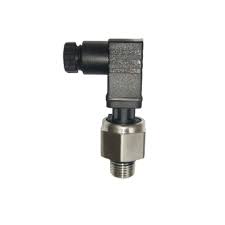
Honeywell PX3CG1BS050BSCHX 50 Bar Pressure Transducer Guide
The Honeywell PX3CG1BS050BSCHX pressure transducer is a higher-range member of the PX3 heavy-duty sensor family, commonly aligned with a 50 bar pressure range. Within industrial automation, that makes it a strong fit for applications where lower-range sensors would not provide enough headroom. The PX3 series is known for piezoresistive sensing, ASIC signal conditioning, brass housing, and broad environmental capability, and the Honeywell PX3CG1BS050BSCHX industrial pressure sensor builds on that foundation.
Why a 50 Bar Sensor Is Important
Many industrial systems operate in pressure bands where 10 bar or 25 bar is not sufficient. Certain compressor stages, hydraulic support loops, refrigeration architectures, and process packages need a sensor with a higher measurement ceiling. The Honeywell PX3CG1BS050BSCHX 50 bar pressure transducer is relevant in those situations because it combines a more robust range with the PX3 platform’s established heavy-duty design.
Choosing the correct pressure range is not just about maximum survivability. It also affects measurement quality, alarm setpoints, and controller response. A properly matched sensor supports cleaner data and better process visibility.
PX3 Series Design Strengths
The PX3 series is described by Honeywell as calibrated and temperature compensated from -40°C to 125°C, using a rugged package intended for industrial environments. Honeywell also notes broad media compatibility within the PX2/PX3 family, including common industrial fluids such as refrigerants, oils, hydraulic fluids, and dry compressed air where the exact configuration is suitable.
From an engineering standpoint, the real advantage is consistency. Pressure sensors often fail selection reviews because the environment, not the nominal pressure, was underestimated. The PX3 family addresses that concern by focusing on ruggedness as well as measurement.
Mechanical and Output Considerations
The Honeywell PX3CG1BS050BSCHX brass pressure transducer follows the familiar PX3 configuration logic associated with brass body construction and industrial connection options such as DIN/G1/4. It is also aligned with current output, which remains highly attractive in industrial control architecture because of its reliable signal behavior across cable runs and electrically noisy environments.
For plant engineers, these details simplify integration. A sensor that fits existing pipework, sealing practice, and control input expectations is easier to commission and easier to replace.
Application Relevance
The Honeywell PX3CG1BS050BSCHX pressure transducer can be relevant in higher-pressure industrial automation, refrigerant monitoring, compressor management, process skids, and utility systems where rugged feedback is necessary. In modern operations, pressure data is not only used for control. It is also valuable for diagnostics, performance analysis, and early fault detection.
Search demand continues to be strong for terms like 50 bar pressure transducer, industrial current output pressure sensor, and Honeywell PX3 pressure transducer because these are not niche requirements. They are part of mainstream industrial instrumentation planning.
For more information about Honeywell, comparing pressure ranges and output types across the sensor portfolio can help prevent costly over- or under-specification.
FAQ
What pressure range is associated with Honeywell PX3CG1BS050BSCHX?
This model is commonly aligned with a 50 bar pressure range.
What sensor technology does the PX3 series use?
The PX3 family uses piezoresistive sensing technology with ASIC signal conditioning.
Why is current output useful in industrial environments?
Current output is often preferred because it offers robust transmission over distance and can perform well in electrically noisy settings.
Is the PX3 family intended for harsh environments?
Yes. The PX3 family is positioned as a heavy-duty pressure transducer platform with wide temperature capability and rugged mechanical design.
What media can PX3 sensors typically work with?
The family is described as compatible with several industrial media such as refrigerants, oils, hydraulic fluids, and dry compressed air, subject to exact configuration and application validation.
How should engineers choose between 25 bar and 50 bar variants?
They should review normal operating pressure, pressure spikes, safety margin, controller scaling, and the desired resolution within the process.