
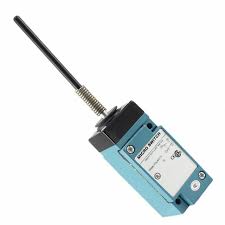
Honeywell LSJ3K-7A Limit Switch: HDLS Series Technical Guide
The Honeywell LSJ3K-7A limit switch is part of Honeywell’s heavy-duty switch portfolio and is often associated with industrial environments where rugged mechanical detection is essential. As a Honeywell LSJ3K-7A heavy-duty limit switch, it is relevant for applications that need dependable actuation, strong mechanical construction, and practical field use across equipment that operates in demanding conditions.
What Is the Honeywell LSJ3K-7A?
The Honeywell LSJ3K-7A switch belongs to the HDLS series, a family developed for heavy-duty industrial service. This model uses SPDT switching and a spring rod actuator, a combination that can work well in machinery where robust contact with moving components is required. The Honeywell LSJ3K-7A limit switch is commonly evaluated for equipment that needs clear mechanical feedback without relying on delicate sensing arrangements.
Main Technical Features
From a specification perspective, the Honeywell LSJ3K-7A heavy-duty limit switch is listed with SPDT circuitry, 10 A AC current handling, 800 mA DC current handling, a 120 V AC rating, and a 115 V DC rating. It is built for chassis mounting and uses screw terminal connections, which can be beneficial in industrial installations where serviceability matters. The actuator is described as a spring rod type, and the switch is associated with a pretravel value of 1.000 inch.
Its operating temperature range makes it appropriate for many industrial settings, particularly where equipment is exposed to moderate thermal variation. More broadly, the HDLS family is known for modular heavy-duty construction and a range of actuator and head options, which explains why it appears in technical searches tied to machinery, materials handling, and outdoor-capable installations.
Industrial Applications
A Honeywell LSJ3K-7A limit switch can be relevant in conveyors, machine tools, material handling systems, agricultural equipment, valves, transportation infrastructure, and outdoor electromechanical structures. In environments with shock, vibration, dust, splashing water, or coolant exposure, heavy-duty switch architecture becomes especially important. That is where a heavy-duty limit switch like this model is often considered.
Engineers typically search the full phrase LSJ3K-7A limit switch when they need a technical match for an existing installation or when they want a rugged switch from a known industrial series.
Why the LSJ3K-7A Matters in Maintenance and Design
In maintenance operations, exact replacement accuracy can prevent expensive downtime. A switch may look similar on the surface, yet differ in actuator style, force, mounting, or electrical behavior. That is why the full product reference Honeywell LSJ3K-7A heavy-duty limit switch is important. For designers, the same precision helps maintain predictable machine response and more reliable lifecycle planning.
For more information about Honeywell, it is worth reviewing related heavy-duty switch families and industrial control components.
FAQ
What type of switch is the Honeywell LSJ3K-7A?
The Honeywell LSJ3K-7A is a heavy-duty industrial limit switch from the HDLS series. It is intended for applications where moving equipment must trigger a reliable electrical response.
What makes the Honeywell LSJ3K-7A different from lighter-duty switches?
Its series background, heavy-duty mechanical construction, and industrial-style mounting and termination make it better suited to harsh operating environments than lighter, more compact switch types.
Where is the Honeywell LSJ3K-7A commonly used?
It is commonly associated with conveyors, machine tools, material handling systems, outdoor electromechanical equipment, agricultural machinery, and other industrial applications where rugged mechanical sensing is needed.
Why does actuator style matter for the Honeywell LSJ3K-7A?
Actuator style directly affects how the switch interacts with moving machine parts. The spring rod format can be useful in applications where a flexible but reliable mechanical engagement method is preferred.
Is the Honeywell LSJ3K-7A only useful for new installations?
No. It is also relevant for repair, maintenance, and retrofit work. Many users search this exact code because they need to preserve the original switch behavior and installation characteristics of existing equipment.