
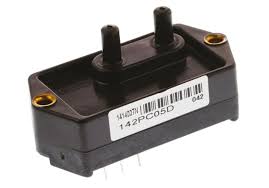
Honeywell 142PC05D MEMS Pressure Sensor Guide
The Honeywell 142PC05D MEMS pressure sensor is a board-mount pressure sensing component designed for applications that need stable differential pressure measurement in a compact footprint. As a Honeywell 142PC05D pressure sensor, it is commonly discussed in engineering projects where repeatable analog output, temperature compensation, and dependable board-level integration matter more than marketing language or unnecessary complexity.
What Is the Honeywell 142PC05D Pressure Sensor?
The Honeywell 142PC05D MEMS pressure sensor belongs to Honeywell’s 140PC series. It is a differential pressure sensor with a 5 PSI operating range, making it suitable for designs that compare two pressure points rather than measuring only ambient or sealed pressure. This matters in systems where airflow restriction, filter loading, pneumatic control behavior, or fluid path changes must be tracked accurately.
The device is known for its analog voltage output, through-hole mounting, and amplified, temperature-compensated design. In practical terms, that means engineers can integrate the Honeywell 142PC05D pressure sensor into control boards without needing a highly complex compensation routine at the first stage of development.
Key Technical Characteristics
The Honeywell 142PC05D differential pressure sensor is specified for 5 PSI (34.47 kPa) operating pressure. It uses a 7 V to 16 V supply and provides an analog output of 1 V to 6 V. Accuracy is typically listed at ±1.5%, while maximum pressure is rated at 20 PSI. The sensor includes dual barbless tube ports, PC pin termination, and an operating temperature range of -40°C to 85°C.
Where the Honeywell 142PC05D Fits Best
A Honeywell 142PC05D pressure sensor is often relevant in air handling equipment, medical and laboratory airflow paths, pneumatic instrumentation, and process monitoring systems that require differential measurement. Because it compares two pressure inputs, it can help detect flow resistance, blockage trends, or pressure drop across an element such as a filter or chamber.
Another reason engineers choose a Honeywell 142PC05D MEMS pressure sensor is packaging simplicity. The 3-SIP module format helps reduce mechanical design friction during prototyping, while the conditioned analog output can simplify signal acquisition for control electronics.
Design Considerations
When evaluating the Honeywell 142PC05D pressure sensor, it is worth reviewing pressure media compatibility, hose routing, electrical headroom, and expected transient loads. Even a well-specified pressure sensor performs best when the tubing layout is stable and the board design protects the analog signal path from avoidable noise.
For design teams seeking a practical differential sensing option in the low-pressure range, the Honeywell 142PC05D differential pressure sensor remains a strong technical choice because it balances board-level convenience with clear, usable output behavior. For more information about Honeywell, it is helpful to review related sensing solutions and integration options.
FAQ
Is the Honeywell 142PC05D a differential or absolute pressure sensor?
The Honeywell 142PC05D MEMS pressure sensor is a differential pressure sensor. It is designed to measure the pressure difference between two input ports rather than referencing sealed absolute pressure.
What is the pressure range of the Honeywell 142PC05D pressure sensor?
The operating pressure range is 5 PSI, which is approximately 34.47 kPa. This makes it suitable for low-pressure differential sensing tasks where precision is more important than extreme pressure capacity.
What output does the 142PC05D provide?
The sensor provides an analog voltage output from 1 V to 6 V. This is useful in designs that rely on analog signal conditioning, controller inputs, or standard measurement circuitry.
What supply voltage does the Honeywell 142PC05D require?
The typical supply range is 7 V to 16 V. Designers should confirm system compatibility and ensure the power rail remains stable under real operating conditions.
What kinds of applications use the 142PC05D MEMS pressure sensor?
Typical uses include airflow monitoring, filter pressure drop measurement, pneumatic instrumentation, industrial control boards, and other low-pressure systems where the difference between two pressure points must be measured consistently.
Why do engineers choose the 142PC05D pressure sensor?
Engineers often consider this part because it combines a compact board-mount package, amplified analog output, temperature compensation, and a practical low-pressure differential range. That combination can shorten development time and improve signal usability in embedded systems.