
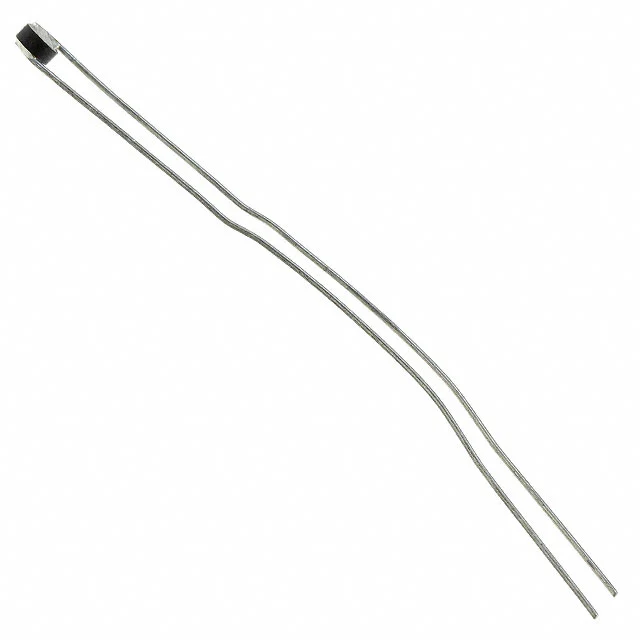
Honeywell 140-103LAG-RB1 Temperature Sensor Thermistor Guide
The Honeywell 140-103LAG-RB1 temperature sensor thermistor is part of Honeywell’s established 140 Series of NTC disc thermistors, a product family widely used in temperature measurement, compensation, and control circuits. In practical applications, this type of component is selected when engineers need a dependable response to changing temperatures without adding unnecessary complexity to the design.
What Is the Honeywell 140-103LAG-RB1?
The Honeywell 140-103LAG-RB1 temperature sensor is commonly used in systems where thermal feedback matters for stability, safety, and performance. Because it is an NTC thermistor, its resistance decreases as temperature rises. That behavior makes it useful in control boards, HVAC assemblies, industrial electronics, refrigeration-related designs, and general-purpose temperature monitoring applications.
For manufacturers and maintenance teams, the value of the Honeywell 140-103LAG-RB1 thermistor is not just in measurement accuracy. It also supports straightforward integration into designs that require compact sensing components with leaded construction and consistent thermal behavior.
Key Technical Characteristics
This Honeywell 140-103LAG-RB1 temperature sensor thermistor is associated with a 10 kOhm resistance value at 25°C, making it relevant for many established sensing and compensation circuits. As part of the 140 Series, it belongs to a disc-style thermistor range with leaded construction, broad resistance options, and usage across multiple thermal control environments.
In real engineering terms, that means the component can help maintain operating consistency in systems exposed to variable ambient temperatures. Whether it is used to monitor airflow conditions, surface temperature, or enclosure heat trends, the part fits applications where predictable thermal response is a priority.
Where This Honeywell Temperature Sensor Is Used
Common use cases include HVAC equipment, power control assemblies, instrumentation, consumer appliances, and industrial monitoring modules. Designers often look for a Honeywell temperature sensor thermistor like this when they want a proven passive sensing element that supports reliable signal interpretation over time.
It can also be useful in repair and replacement scenarios, especially when older systems depend on a defined thermistor curve and a known nominal resistance value. In those environments, product-code-level accuracy matters, which is why the full naming format Honeywell 140-103LAG-RB1 temperature sensor thermistor should always be referenced during sourcing and specification checks.
For more information about Honeywell, it is worth reviewing broader product families and compatibility options before selecting a replacement or integrating a new sensor into a design.
FAQ
What type of component is the Honeywell 140-103LAG-RB1?
It is an NTC disc thermistor designed for temperature sensing and thermal compensation tasks. NTC means the resistance drops as temperature rises, which is a common and useful behavior in control and monitoring circuits.
Why is the full product code important?
The complete code helps identify the exact resistance class, family configuration, and physical format. Even similar Honeywell thermistors may differ in tolerance, curve behavior, or packaging details, so using the exact code reduces sourcing errors.
Is the Honeywell 140-103LAG-RB1 suitable for HVAC systems?
It can be relevant for HVAC-related sensing and control designs where thermal feedback is needed. Exact suitability depends on the electrical design, target temperature range, and calibration requirements of the final system.
What makes this Honeywell temperature sensor useful in electronics?
Its passive design, predictable thermal response, and established product family make it practical for engineers who need stable temperature-related input in compact assemblies.
Can this part be used as a replacement thermistor?
Yes, but only after checking the nominal resistance, circuit behavior, mechanical fit, and the required response curve in the original design. Matching the part number is the safest approach.