
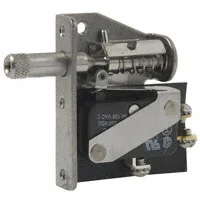
Honeywell 13AC1 Basic Switch: A Practical Guide to Door Interlock Reliability
The Honeywell 13AC1 basic switch is widely recognized in applications where a service door, equipment panel, or access point must be monitored with dependable mechanical feedback. As a Honeywell 13AC1 basic switch and compact door interlock component, it is designed for systems that need a clear electrical response when a door is opened, closed, or intentionally placed into a service position.
What Is the 13AC1 Basic Switch?
The Honeywell 13AC1 basic switch belongs to Honeywell’s AC Series door switch family. This product type is not just a simple on/off device. It is engineered for interlock-style functions where equipment safety, service access, and controlled power behavior matter. In many installations, the switch is used to disconnect electrical power when a panel or service door is opened, helping technicians and operators work more safely.
From a construction perspective, the Honeywell 13AC1 basic switch uses an SPDT configuration with screw terminals and a threaded plunger. That makes it a practical fit for maintenance-friendly industrial environments where secure wiring and repeatable actuation are important.
Key Technical Characteristics of the Honeywell 13AC1 Basic Switch
One of the reasons engineers continue to specify the Honeywell 13AC1 basic switch is its straightforward mechanical behavior. It is commonly described as a two-position special door switch with push-momentary action and a push-and-twist maintained function. In real-world use, that means the switch can support both normal interlock logic and intentional servicing modes.
This matters in equipment such as vending service doors, truck trailer access panels, machine enclosures, and other controlled-access compartments. Instead of relying on a more complex sensing arrangement, the Honeywell 13AC1 basic switch gives designers a rugged, mechanical way to monitor access and influence power or signaling circuits.
Where the 13AC1 Basic Switch Fits Best
The Honeywell 13AC1 basic switch is often discussed in the context of industrial maintenance, machine servicing, and safety interlock design. It is especially useful where technicians need a switch that can both indicate access status and support supervised override behavior during diagnostics.
Because this is a Honeywell 13AC1 basic switch door switch format, it fits projects where reliability is valued over unnecessary complexity. It also works well when panel space is limited and designers still want a proven electromechanical switching solution.
For more information about Honeywell, it helps to review the broader AC Series portfolio alongside the exact application requirements.
FAQ About the Honeywell 13AC1 Basic Switch
Is the Honeywell 13AC1 basic switch the same as a standard limit switch?
Not exactly. A standard limit switch is often used for position sensing in motion systems, while the Honeywell 13AC1 basic switch is commonly associated with door and panel interlock duties. Its design focus is closer to controlled access monitoring and equipment service safety.
What makes the 13AC1 basic switch useful in interlock systems?
Its practical value comes from predictable mechanical actuation, secure screw-terminal wiring, and a door-switch style format that supports service-door logic. In many machines, that means simpler design, easier maintenance, and more intuitive behavior for technicians.
Can the Honeywell 13AC1 basic switch support maintenance override scenarios?
Yes, that is one of the defining reasons this product family is chosen. The switch architecture is often used in applications where equipment must react differently during normal operation versus controlled service access.
Why do engineers still choose a mechanical door switch like the 13AC1 basic switch?
Because mechanical interlock components remain highly practical. They are easy to understand, easy to wire, and dependable in industrial environments where clear physical actuation is preferred. The Honeywell 13AC1 basic switch continues to be relevant because it solves a real problem without overcomplicating the design.