
Honeywell 135-253LAG-J01 Temperature Sensor Guide
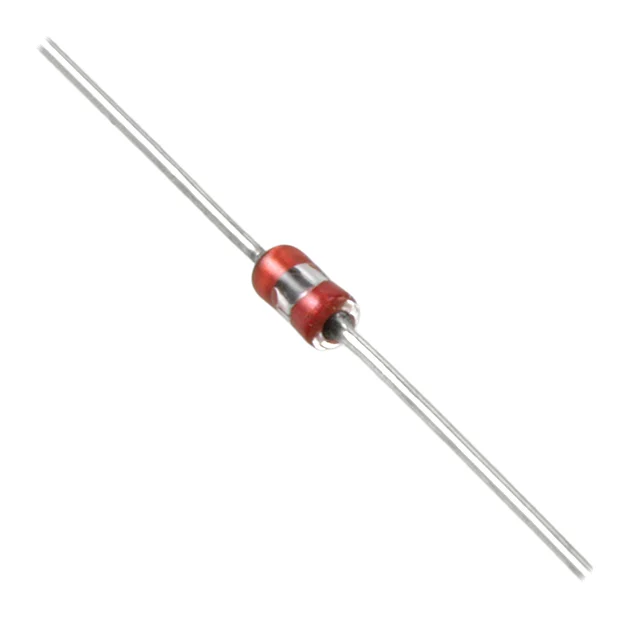
The Honeywell 135-253LAG-J01 temperature sensor is an NTC thermistor designed for dependable thermal measurement in compact electronic and industrial designs. As a Honeywell 135-253LAG-J01 thermistor temperature sensor, it combines a glass-encapsulated body, axial lead construction, and stable resistance behavior that makes it a practical choice for engineers who need repeatable temperature feedback over a wide range of operating conditions.
What Makes the Honeywell 135-253LAG-J01 Temperature Sensor Stand Out?
This model belongs to Honeywell’s 135 Series, a family known for hermetically sealed, glass-encapsulated thermistors built in a DO-35 style package. The Honeywell 135-253LAG-J01 NTC thermistor features 25 kOhm resistance at 25°C, ±10% resistance tolerance, a B25/85 value of 3974K, and an operating range of -60°C to 300°C. That combination is useful when designers need a compact sensing component that can remain stable in demanding temperature environments.
The axial lead format also helps in through-hole assembly, prototyping, and service-friendly board designs. Because it is part of the broader Honeywell thermistor portfolio, the part is often considered for HVAC controls, industrial monitoring circuits, laboratory instruments, and temperature compensation tasks inside electronic systems.
Typical Applications for Honeywell 135-253LAG-J01 Thermistor Temperature Sensor
The Honeywell 135-253LAG-J01 temperature sensor is often relevant in applications where temperature must be measured accurately without using a bulky probe. Typical use cases include power supply monitoring, thermal management in industrial controllers, medical instrumentation, and embedded electronics that need dependable temperature response in a small footprint.
Because this is an NTC device, its resistance decreases as temperature rises. That behavior is widely used in control boards, sensing circuits, and compensation networks. Engineers looking for a Honeywell 135-253LAG-J01 temperature sensor usually value both its compact package and the proven construction of the 135 Series platform.
For more information about Honeywell products, it is helpful to review related product families and compatible sensing solutions.
Why This Part Is Useful in Modern Designs
Many temperature sensing components work well in controlled environments but become less practical when space is tight or thermal stress increases. The Honeywell 135-253LAG-J01 temperature sensor addresses that gap with a rugged glass-encapsulated structure and a broad operating temperature span. In real-world engineering work, that matters because reliability is not only about reading temperature correctly on day one, but also about maintaining consistent behavior after long-term exposure to heat cycles.
FAQ
What type of product is the Honeywell 135-253LAG-J01?
It is an NTC thermistor used as a compact temperature sensing component. It is commonly described as a Honeywell temperature sensor or Honeywell thermistor temperature sensor.
What is the resistance of the Honeywell 135-253LAG-J01 at 25°C?
This model is rated at 25 kOhm at 25°C, which places it in a common range for electronic temperature measurement and compensation circuits.
What package style does this part use?
The part uses a DO-35 style glass-encapsulated axial package, which supports through-hole mounting and suits compact board-level designs.
Where is the Honeywell 135-253LAG-J01 temperature sensor typically used?
It is suitable for industrial electronics, HVAC controls, instrumentation, thermal monitoring circuits, and embedded systems where durable and repeatable temperature sensing is required.
Why do engineers choose an NTC thermistor like this one?
NTC thermistors provide a predictable resistance change as temperature changes. That makes them valuable for sensing, compensation, control logic, and thermal protection functions.
Is the Honeywell 135-253LAG-J01 suitable for wide temperature environments?
Yes. Its broad operating temperature range makes it attractive for applications that face both low-temperature startup and elevated thermal loads during operation.