
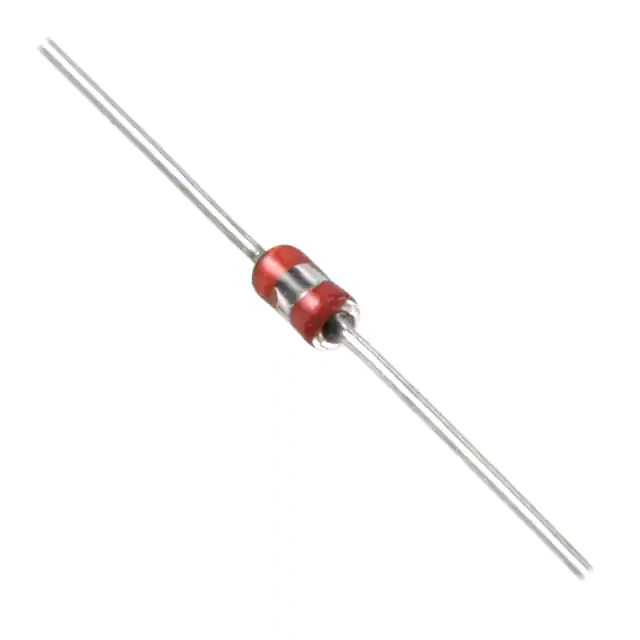
Honeywell 135-105QAG-J01 Temperature Sensor: A Practical Guide to a High-Resistance NTC Thermistor
The Honeywell 135-105QAG-J01 temperature sensor is a glass-encapsulated NTC thermistor designed for applications that need dependable temperature measurement across demanding environments. As a Honeywell 135-105QAG-J01 NTC thermistor, this component is widely considered for industrial electronics, control assemblies, environmental monitoring circuits, and embedded sensing designs where stability and repeatable response matter.
What Is the Honeywell 135-105QAG-J01?
The Honeywell 135-105QAG-J01 thermistor belongs to Honeywell’s 135 Series of discrete thermistors. This product type is known for its hermetically sealed glass package, axial lead format, and rugged construction. In practical terms, that means better durability in harsh conditions and a package style that fits many traditional through-hole designs. Because it is an NTC device, its resistance decreases as temperature rises, allowing engineers to translate resistance change into a readable temperature value.
Key Technical Characteristics
This Honeywell 135-105QAG-J01 temperature sensor has a nominal resistance of 1 MOhm at 25°C and a B25/85 value of 4261 K, making it suitable for precision-oriented designs that require a steep and measurable resistance curve. The part is built in a DO-35 / DO-204AH axial package and is used in through-hole mounting. One of the biggest practical advantages of the 135 Series is its broad operating temperature capability, which supports applications from very low temperatures up to high-heat environments.
Where Is the Honeywell 135-105QAG-J01 Used?
The Honeywell 135-105QAG-J01 temperature sensing thermistor can be integrated into HVAC controls, industrial instrumentation, battery monitoring assemblies, laboratory equipment, thermal compensation circuits, and power electronics that need reliable temperature feedback. Engineers often prefer glass-encapsulated thermistors for environments where moisture resistance, long-term stability, and repeatable thermal behavior are important.
Another reason this Honeywell 135-105QAG-J01 thermistor sensor stands out is its mechanical robustness. The tinned copper-clad steel leads support soldering and welding processes, which is useful in automated assembly environments or applications where consistent interconnect quality matters over time.
Why the Product Type Matters
When people search for a Honeywell 135-105QAG-J01 temperature sensor, they are often trying to identify more than a part number. They want to know whether the product type is appropriate for their circuit design. In this case, the answer is that the device is best suited to systems that require a compact, highly stable Honeywell 135-105QAG-J01 thermistor with strong environmental resistance and predictable NTC behavior.
For more information about Honeywell, it is useful to compare this model with other Honeywell temperature sensing components used in industrial and electronic control applications.
FAQ
What kind of sensor is the 135-105QAG-J01?
The Honeywell 135-105QAG-J01 is an NTC thermistor. That means it is a temperature-sensitive resistor whose resistance goes down as temperature goes up. It is used for temperature measurement, compensation, and thermal control in electronic systems.
What makes the Honeywell 135-105QAG-J01 different from standard temperature sensors?
A major difference is its glass-encapsulated construction. This helps protect the sensing element from moisture, contamination, and mechanical stress. Compared with many basic sensing components, it is often chosen for designs where durability and stable long-term response are important.
Is the Honeywell 135-105QAG-J01 suitable for industrial environments?
Yes. Its wide operating temperature range and sealed construction make it well suited for demanding industrial use. It can be considered for measurement and compensation tasks in harsh environments, especially where thermal reliability is part of the design requirement.
Why would an engineer choose a 1 MOhm thermistor like the 135-105QAG-J01?
A higher nominal resistance can be useful in circuits that are designed around specific input impedance, sensitivity, or signal-conditioning requirements. It may also support accurate temperature response in applications that benefit from high-resistance sensing elements.
Can the 135-105QAG-J01 be used in automated manufacturing?
Yes. The axial lead configuration and consistent dimensions of the 135 Series make these parts suitable for automated assembly workflows. This is one of the reasons they remain relevant in established electronic manufacturing processes.