
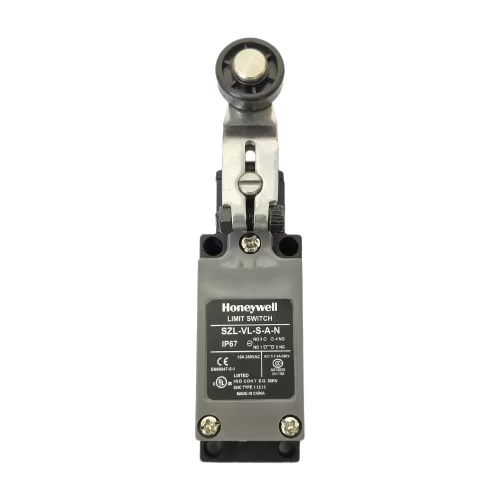
Honeywell 12CX200ME Limit Switch Technical Guide
The Honeywell 12CX200ME limit switch is part of Honeywell’s CX Series, a family developed for demanding industrial environments where reliable position detection matters. In practical terms, this model is used when equipment needs a durable electromechanical limit switch that can respond consistently under exposure to dust, moisture, and mechanically intensive duty cycles. Engineers often look for product references such as Honeywell 12CX200ME limit switch, Honeywell 12CX200ME electromechanical switch, and Honeywell CX Series limit switch when specifying industrial safety and motion feedback components.
Core Design and Switching Characteristics
The Honeywell 12CX200ME is built as a chassis-mount limit switch with a SPDT x 2 contact configuration. That makes it suitable for applications where dependable switching logic and positional feedback are required within control systems. The side rotary actuator design without a lever gives engineers flexibility when integrating the switch into custom mechanical assemblies. Because the switching function is momentary, the unit is well suited to machine travel limits, gate position monitoring, and other repeatable movement-based tasks.
Electrical and Environmental Performance
One of the reasons the Honeywell 12CX200ME limit switch remains relevant in technical searches is its robust electrical profile. It is rated for 20 A AC and 500 mA DC, with 120 V AC and 125 V DC ratings. It also carries IP66 protection, which is important in installations where dust-tight sealing and resistance to water ingress are expected. In industrial operations, these factors help support stable performance in exposed areas where ordinary switches may not be the right fit.
Mechanical Suitability in Industrial Systems
This Honeywell 12CX200ME limit switch uses screw terminal connections and a chassis-mount format, both of which are familiar to maintenance teams working in process industries, material handling, and heavy-duty equipment. With side rotary actuation and a defined angular travel profile, it can be integrated into mechanisms that depend on consistent mechanical motion. That makes the product relevant for machine builders who prioritize repeatability over unnecessary complexity.
Typical Use Cases
In real-world use, a Honeywell 12CX200ME electromechanical limit switch may be considered for industrial enclosures, machinery travel endpoints, conveyor-related motion sensing, and systems requiring a rugged CX Series switch platform. It is especially useful when an application benefits from a sealed, industrial-grade switch body rather than a lightweight general-purpose device.
For more information about Honeywell, it is worth reviewing the broader product family and related industrial switching solutions.
FAQ
What type of switch is the Honeywell 12CX200ME?
The Honeywell 12CX200ME is an industrial limit switch in the CX Series. It is an electromechanical device designed to detect motion or position changes in machinery through physical actuation.
Where is the Honeywell 12CX200ME limit switch commonly used?
This model is typically associated with industrial machinery, motion control assemblies, mechanical travel monitoring, and equipment that needs dependable positional feedback in harsh operating conditions.
Why does IP66 matter for this Honeywell limit switch?
IP66 indicates strong protection against dust ingress and resistance to water exposure. For industrial users, that matters because switch reliability is often affected by contamination, washdown conditions, or outdoor installation challenges.
Is the Honeywell 12CX200ME still a useful reference for maintenance and replacement planning?
Yes. Even where lifecycle status is important, the Honeywell 12CX200ME remains a valuable technical reference for maintenance teams, replacement mapping, and understanding legacy CX Series configurations already installed in the field.