
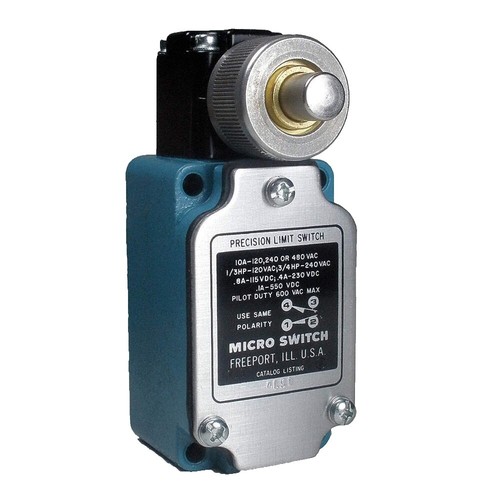
Honeywell 120HM7-1 Sealed Switches Explained
The Honeywell 120HM7-1 sealed switch is generally researched by engineers who need a compact switch format that aligns with harsh-environment reliability expectations. As part of Honeywell’s HM Series sealed switches portfolio, the Honeywell 120HM7-1 sealed switch sits in a category known for hermetic sealing, miniature snap-action performance, and stable operation in applications where contamination, vibration, and temperature variation cannot be ignored.
Understanding the Product Type
When people search for Honeywell 120HM7-1 sealed switches, they are usually comparing it with other hermetic micro switches used in aerospace controls, industrial machinery, and high-dependability electromechanical systems. The HM platform is not positioned as a consumer-grade switching solution. It is engineered for applications where the switch may be exposed to dust, moisture, corrosive gas, or extreme thermal conditions, yet still needs to maintain predictable switching behavior.
Core Technical Platform of the HM Series
The HM Series technical framework includes a hermetic sealed miniature snap-action design, 300 series stainless-steel housing, SPDT circuitry, and contact options such as silver, silver alloy, gold, and gold bifurcated depending on listing. Honeywell also states that the family supports up to 4 A at 28 Vdc, offers minimum mechanical and electrical endurance of 25,000 operations, and is sealed to MIL-PRF-8805 requirements. These are not small details; they define why the Honeywell 120HM7-1 sealed switch category is frequently studied for mission-critical environments.
Environmental and Mechanical Relevance
The series also specifies vibration performance at symbol 2, 15 g from 10 Hz to 2000 Hz, and mechanical shock performance identified as shock type M at 100 G. In addition, Honeywell highlights broad temperature capability, with standard ranges and optional high/low temperature configurations. That makes the Honeywell 120HM7-1 sealed switch relevant in discussions around rugged switch design, environmental isolation, and dependable position detection.
Where This Kind of Switch Fits Best
Typical HM Series use cases include aircraft door and hatch position monitoring, valve position sensing, ground support equipment, spacecraft systems, and internal switch elements in pressure, flow, or temperature switches. The reason this matters for the Honeywell 120HM7-1 sealed switch is straightforward: in technical procurement, application fit is often just as important as electrical values.
For more information about Honeywell, you can review additional product information here.
FAQ
What is the Honeywell 120HM7-1 used for?
The Honeywell 120HM7-1 is typically researched as a sealed switch solution for systems that need compact, reliable position detection or control switching under demanding environmental conditions. It belongs to a product family often associated with aerospace, industrial, and rugged electromechanical applications.
Why is hermetic sealing important in the Honeywell 120HM7-1 sealed switch category?
Hermetic sealing helps protect the internal switching mechanism from contamination and atmospheric exposure. In real operating environments, that can support more stable switching performance and help reduce the risk of issues caused by moisture, particles, or corrosive gases.
Does the HM family support both low-energy and power-duty switching?
Yes. Honeywell states that HM Series switches are available with different contact materials, including gold-based options for low-energy loads and silver-based options for power-duty loads. This flexibility is one reason the family appears in many specialized technical applications.
Is the Honeywell 120HM7-1 a compact switch?
Yes. The HM Series is explicitly presented as a miniature switch family designed for installations where available space is limited but reliability expectations remain high. The compact package is part of the platform’s practical value in equipment design.
What should engineers confirm before final selection?
They should verify the exact listing, contact material, electrical rating code, operating temperature range, actuator arrangement, and termination style. Those details determine whether a sealed switch will align with both the circuit requirements and the physical integration needs of the equipment.