
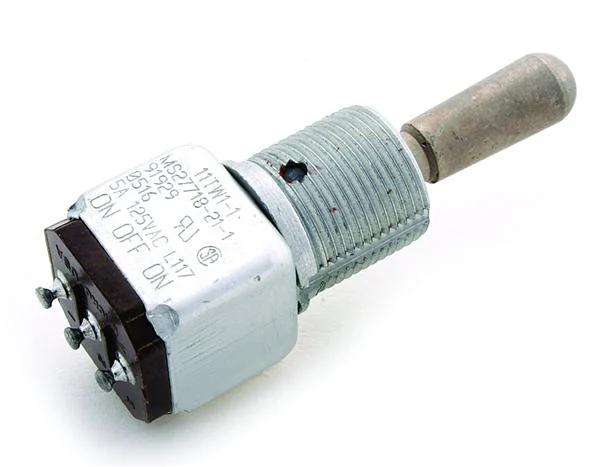
Honeywell 11TW1-5M Operator Control Accessory Explained
The Honeywell 11TW1-5M operator control accessory is one of the more distinctive options in the TW Series because it is commonly associated with a locking lever design. For engineers and technical buyers searching for a Honeywell 11TW1-5M toggle switch, that detail is often the starting point. A locking lever can help reduce unintended actuation, which is especially valuable in equipment where an accidental switch movement could interrupt a process or trigger an unwanted function.
What the Honeywell 11TW1-5M Offers
The Honeywell 11TW1-5M is generally listed as a TW Series SPDT panel-mount toggle switch with on-off-momentary switching. It is also associated with a locking lever actuator, solder termination, and an operating structure designed for demanding environments. Compared with basic utility toggle switches, this model is aimed at applications where deliberate operator action matters.
Technical Features
Technical listings for the 11TW1-5M operator control accessory commonly show a 15 A current rating, 125 V AC rating, 28 V DC maximum voltage rating, and an operating temperature range of -65°C to 71°C. It is also described with an actuator length of 29.46 mm, silver contact material, silver contact plating, and an environment-proof design. Those details make it relevant when durability, visibility, and controlled manual switching are all part of the specification discussion.
Why the Locking Lever Is Important
In many control environments, the best switch is not always the fastest one to move. It is the one that demands clear intent from the operator. That is where the locking lever concept becomes valuable. It supports safer operation logic in systems where a casual bump, vibration event, or rushed maintenance interaction should not result in an unwanted state change. This is one reason the 11TW1-5M toggle switch continues to attract attention in rugged equipment categories.
Typical Applications
This model can suit control panels, transport-related equipment, machinery interfaces, and specialized industrial systems that need a more intentional switching action. It is also relevant in retrofit projects where standard lever switches may not provide enough operational control confidence.
For more information about Honeywell, reviewing broader product families can help clarify compatibility and application fit.
FAQ
What is the main difference between the 11TW1-5M and standard toggle switches?
The biggest difference is the locking lever concept. This feature helps reduce accidental operation and supports more deliberate user interaction, which is important in rugged or safety-conscious equipment designs.
Is the 11TW1-5M a high-current operator control accessory?
Compared with some other compact toggle switches in the same family, it is commonly listed with a 15 A current rating. That makes it notable for applications where both compactness and stronger electrical capability are required.
Why would a locking lever be preferred in industrial panels?
Because not every switch should move easily. In vibration-heavy or operator-dense environments, the locking lever helps ensure that an action is intentional. That can improve process stability and reduce unnecessary service events.
Can the 11TW1-5M be used in harsh environments?
Yes. Its product family and technical descriptions point to rugged-duty use, including strong temperature tolerance and environment-proof construction. Those qualities make it suitable for more demanding installations than ordinary light-duty panel switches.
Is the Honeywell 11TW1-5M useful for retrofit work?
Yes. It is particularly relevant in retrofit situations where an older control panel needs a more secure manual interface without changing the basic operator experience.