
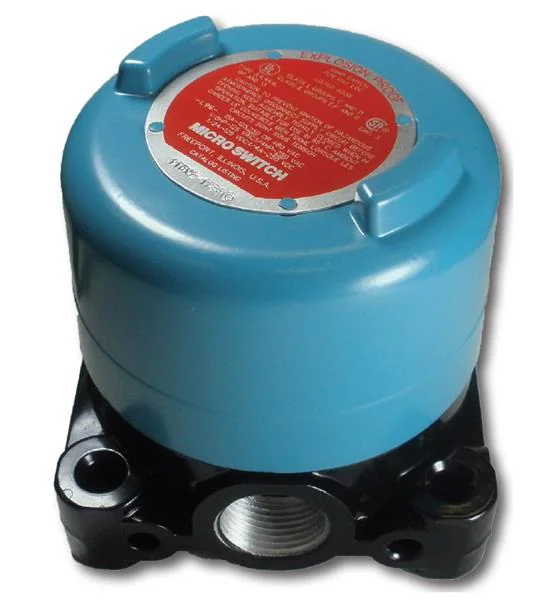
Honeywell 11CX2E Hazardous Location Limit Switch
The Honeywell 11CX2E hazardous location limit switch is part of the MICRO SWITCH CX Series, a rugged switch family developed for outdoor and severe-duty industrial environments. Public technical listings describe the Honeywell 11CX2E as a side rotary, momentary hazardous location switch with two single-pole double-throw (SPDT) basic switches, a 15 A rating, IP66 sealing, and 3/4 in – 14 NPT conduit entries. That profile makes it a strong fit for industrial systems that need dependable position detection in harsh and potentially explosive environments.
What Honeywell 11CX2E Is Designed to Do
The Honeywell 11CX2E hazardous location switch is built for mechanical position monitoring. In real applications, that usually means confirming valve position, tracking travel limits, monitoring actuator movement, or supporting machine interlocks. Because it belongs to the CX Series, it is not just a standard industrial switch. It is intended for locations where weather exposure, contamination, and hazardous atmosphere requirements all influence product selection.
Technical Features of the Honeywell 11CX2E
Available product data associates the Honeywell 11CX2E limit switch with a short epoxy-coated aluminum housing, side rotary actuation, momentary operation, and dual SPDT outputs. Listings also connect it with NEMA 1, 3, 4, 4X, 6, 6P, and 13 enclosure ratings, plus an operating temperature range of about -25 °C to 85 °C. Honeywell’s CX Series literature further explains that this product family is designed for hazardous atmospheres and built to withstand internal explosion pressure while maintaining sealing integrity.
Why Honeywell 11CX2E Matters in Industry
Searches for Honeywell 11CX2E hazardous location limit switch, explosion-proof limit switch, industrial rotary limit switch, and dual SPDT hazardous switch often come from maintenance and engineering teams working on installed systems. In these environments, the correct switch does more than fit the mounting holes. It needs to preserve the original control logic, environmental protection, and compliance expectations of the application.
Selection Guidance
Before replacing the Honeywell 11CX2E hazardous location limit switch, it is important to check the actuator style, switching logic, conduit format, enclosure requirements, and the original installation documentation. Hazardous-area components should always be matched carefully because an approximate substitute may not provide the same environmental or operational performance.
FAQ
What type of switch is Honeywell 11CX2E?
It is a Honeywell hazardous location limit switch from the MICRO SWITCH CX Series, designed for severe-duty industrial applications.
Does Honeywell 11CX2E use SPDT contacts?
Yes. Public technical listings describe it as using two SPDT basic switches, which supports more advanced control logic than a single-output design.
What ingress protection is associated with 11CX2E?
Available product data connects the switch with an IP66 sealing level, which supports dust-tight and water-resistant industrial use.
What temperature range is linked to Honeywell 11CX2E?
Published listings associate it with an operating range of about -25 °C to 85 °C, which suits a broad range of industrial applications.
Why is 11CX2E used in hazardous areas?
Because the CX Series is engineered for hazardous atmospheres and outdoor service, combining rugged housing design with industrial switch performance.
What should be checked before ordering 11CX2E?
You should verify actuation type, conduit entry, contact arrangement, environmental approvals, and original equipment requirements before replacement.
For more information about Honeywell, related CX Series products, and industrial switch references, this page is a useful starting point.