
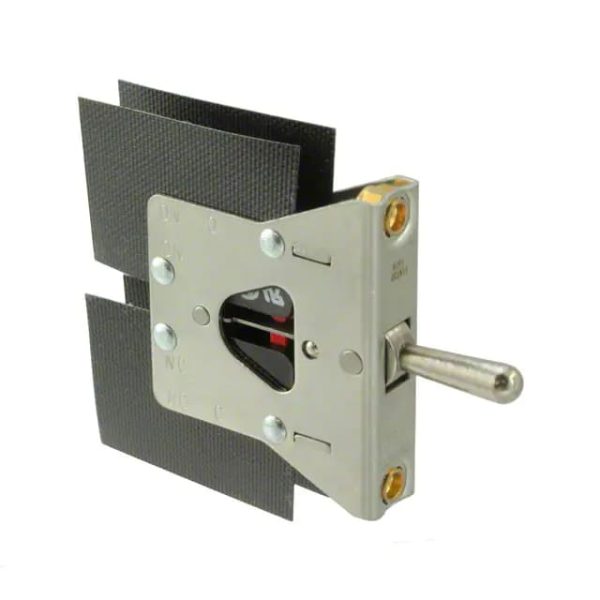
Honeywell 11AT20 AT Series Toggle Switch Overview
The Honeywell 11AT20 toggle switch is part of the long-established MICRO SWITCH AT Series, a family known for compact multi-pole design and durable metal construction. Public product data identifies the Honeywell 11AT20 operator control accessory as a DPDT, 2-position toggle switch with screw terminals and a standard lever. That specification profile makes it relevant for panels, machinery controls, industrial interfaces, and applications where robust manual switching is preferred over lighter consumer-grade hardware.
Core Technical Features of the Honeywell 11AT20
The Honeywell 11AT20 AT Series toggle switch is consistently described as a double-pole, double-throw design. In practical terms, that means it can switch two circuits simultaneously between two positions. Public catalog data also confirms a screw-terminal connection style, which is often valued in industrial settings because it simplifies secure wiring and field servicing. The standard lever format supports manual actuation in assemblies where positive tactile control matters.
Why the AT Series Still Matters
Honeywell describes the AT Series as a compact multi-pole toggle switch line with more than 50 years of application history. The series is offered in multiple pole configurations and uses a metal toggle lever, metal bushing, and metal housing for durability. That broader series context helps explain why the Honeywell 11AT20 operator control toggle switch continues to appear in maintenance searches, retrofit projects, and control-panel documentation. It belongs to a product family designed for mechanical longevity and stable switching behavior.
Typical Applications for Honeywell 11AT20
Because the Honeywell 11AT20 DPDT toggle switch combines manual control with a rugged hardware format, it can suit industrial operator panels, instrumentation racks, power-routing subsystems, vehicle or specialty equipment controls, and machine interfaces where a dependable hand-operated switch is needed. It is especially useful when engineers want a clear mechanical action, serviceable terminal arrangement, and a known industrial switch family.
What to Check Before Specifying 11AT20
Before selecting the Honeywell 11AT20 toggle switch, engineers generally confirm electrical ratings, panel mounting compatibility, lever style, terminal requirements, and switching logic. Even within one switch family, small code changes can indicate meaningful differences in position behavior, sealing, pole count, or momentary versus maintained action. That is why exact part-number validation is standard practice in repair and new-build documentation.
FAQ
What type of switch is Honeywell 11AT20?
It is a Honeywell AT Series DPDT 2-position toggle switch with screw terminals and a standard lever, intended for operator control and manual switching tasks.
What does DPDT mean on Honeywell 11AT20?
DPDT stands for double-pole, double-throw. It means the switch can control two separate circuits and route each between two states.
Why are screw terminals important on the Honeywell 11AT20?
Screw terminals are widely used in industrial and maintenance environments because they support secure wiring, clear servicing, and practical field replacement work.
Is 11AT20 part of a larger switch family?
Yes. It belongs to the MICRO SWITCH AT Series, a Honeywell family known for compact multi-pole toggle switches with metal construction and a long service history.
Where is Honeywell 11AT20 commonly used?
It is commonly associated with industrial control panels, instrumentation systems, machinery interfaces, and equipment where reliable hand-operated switching is required.
What should buyers verify before replacing a Honeywell 11AT20?
They should verify switch function, lever style, terminal type, mounting fit, and the original circuit logic. Exact matching is important because visually similar switches may not perform the same way in service.
For broader switch-family references and related documentation, more information about Honeywell can be useful during specification review.