
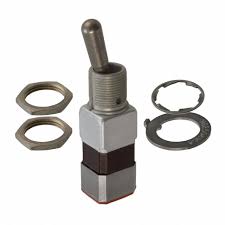
Honeywell 112TW1-1L Toggle Switch: Features, Locking Action, and Applications
The Honeywell 112TW1-1L toggle switch is a specialized member of the Honeywell MICRO SWITCH TW Series, developed for applications where switching reliability and controlled actuation are essential. In many technical environments, a standard toggle is not always enough. That is where a 112TW1-1L toggle switch becomes relevant, especially when the switching point should be protected against accidental movement.
Understanding the Honeywell 112TW1-1L
The Honeywell 112TW1-1L toggle switch is generally associated with the same durable TW Series platform used across aerospace, industrial, and defense-oriented installations. It is typically described as a two-pole, three-position configuration with IWTS termination and a locking lever option. What makes the “L” version notable is the locking configuration, which is intended to provide more deliberate operator control in one part of the switch travel.
Why the Locking Configuration Matters
For many control panels, the issue is not simply whether a switch can turn a circuit on or off. The bigger question is whether the switch can help prevent an unintended action. The Honeywell 112TW1-1L operator control toggle switch addresses that concern by using a pull-to-unlock style approach tied to a specific locking pattern. That can be useful in machines, vehicles, and specialist equipment where a single accidental movement may disrupt a process or require unnecessary troubleshooting.
Because this model sits within the Honeywell TW family, it also benefits from the rugged design language associated with the series. Compact behind-panel fit, environmental resistance, and long-term durability all contribute to why the Honeywell 112TW1-1L toggle switch remains relevant in professional use.
Typical Use Cases
A Honeywell 112TW1-1L toggle switch may be considered for aviation support equipment, industrial operator stations, maintenance panels, defense electronics, and laboratory-grade control assemblies. In these settings, engineers often prioritize predictable tactile feel and mechanical confidence over low-cost commodity switching.
The IWTS arrangement also makes this Honeywell 112TW1-1L toggle switch appealing where maintainability matters. Service teams often prefer hardware that supports easier connection management, particularly in equipment with dense wiring layouts.
FAQ
What is the main advantage of the 112TW1-1L toggle switch?
The biggest advantage is controlled actuation. This model is chosen when designers want a rugged toggle switch with a locking function that helps reduce accidental switching in sensitive or mission-critical equipment.
Is the 112TW1-1L suitable for industrial panels?
Yes. It is well suited to industrial panels that need a durable manual switch with a professional-grade feel. Its TW Series background makes it especially attractive in applications exposed to vibration, temperature changes, and mechanical stress.
Why is IWTS important on a Honeywell 112TW1-1L toggle switch?
IWTS can support easier serviceability and organized wiring management. In complex control assemblies, that can improve maintenance efficiency and reduce the disruption associated with repair work.
How is the Honeywell 112TW1-1L different from a standard lever toggle?
The difference lies mainly in the locking behavior. A standard lever is designed for straightforward switching, while the locking configuration on the Honeywell 112TW1-1L adds an extra level of deliberate control for the operator.
Where can I find more information about Honeywell switches?
For more information about Honeywell, you can explore related product categories and compare switch options used in industrial and technical environments.