
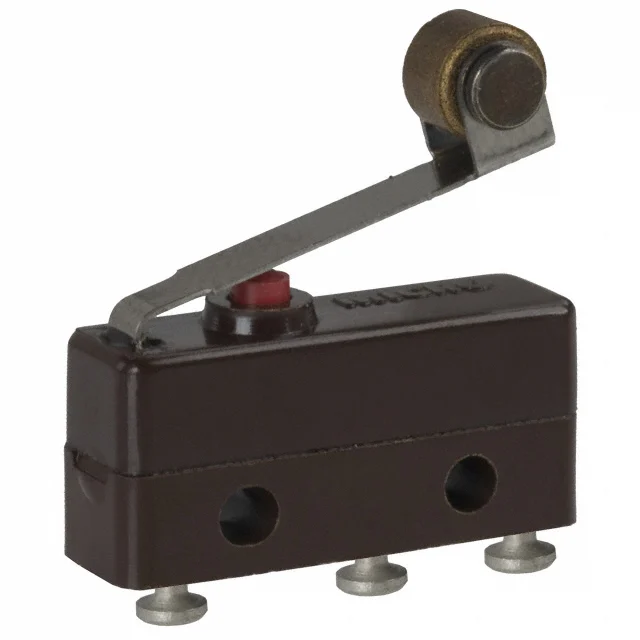
Honeywell 111SM2-T Basic Switch Overview
The Honeywell 111SM2-T basic switch is a subminiature snap-action switch in the SM Series, built for applications where compact size must be matched with clean mechanical response. This variant is commonly linked to a roller lever actuator and solder-style connection, making it a practical choice for assemblies in which a moving part repeatedly engages the switch along a controlled path. The Honeywell 111SM2-T basic switch is therefore best understood as a compact mechanical-electrical interface rather than simply a small on/off part.
Technical Profile of the Honeywell 111SM2-T Basic Switch
Available technical listings describe the Honeywell 111SM2-T basic switch as an SPDT chassis-mount switch rated at 5 A and 250 V AC, with DC capability commonly referenced around 30 V. It is associated with a roller lever actuator, solder termination, mechanical life around 10,000,000 cycles, and operating force near 1.95 N. Additional SM Series references linked to this model note operating temperature in the standard construction range around -65 °F to +250 °F, elongated mounting holes for easier alignment, and a wear-resistant phenolic base and cover. These features matter because they show the switch is intended for durable integration in equipment, not only for bench-level prototypes.
Why the 111SM2-T Version Matters in Real Designs
Roller lever switches are frequently preferred where mechanical motion is continuous or repetitive. Instead of forcing direct sliding contact against a plain lever or plunger, the roller helps guide actuation more smoothly. In equipment with cams, guides, or passing linkages, that can be a meaningful advantage. The Honeywell 111SM2-T basic switch combines that actuator style with the compact SM body, which is a useful balance in crowded designs.
This is also one reason the model appears in discussions around compact automation hardware, instrumentation, and control assemblies. For more about Honeywell, the broader SM Series is worth reviewing because actuator and terminal variations often determine which part number ultimately fits the application best.
FAQ
What actuator does the Honeywell 111SM2-T basic switch use?
It is typically listed with a roller lever actuator. That format helps when the switch is triggered by moving parts that benefit from smoother mechanical contact and lower sliding resistance.
Is the Honeywell 111SM2-T basic switch suitable for repeated cycling?
Yes. Its commonly published mechanical life is around 10,000,000 operations, which makes it relevant for systems with regular, repeated actuation.
Why do installers care about the mounting design?
Because alignment directly affects switch behavior. SM Series references note features such as elongated mounting holes, which can help achieve more accurate placement during assembly or replacement.
What should be checked before replacement?
Users should confirm the actuator path, terminal layout, operating force, and load requirements. Even if the housing size looks similar, a mismatch in lever style or force can change how the machine behaves.