
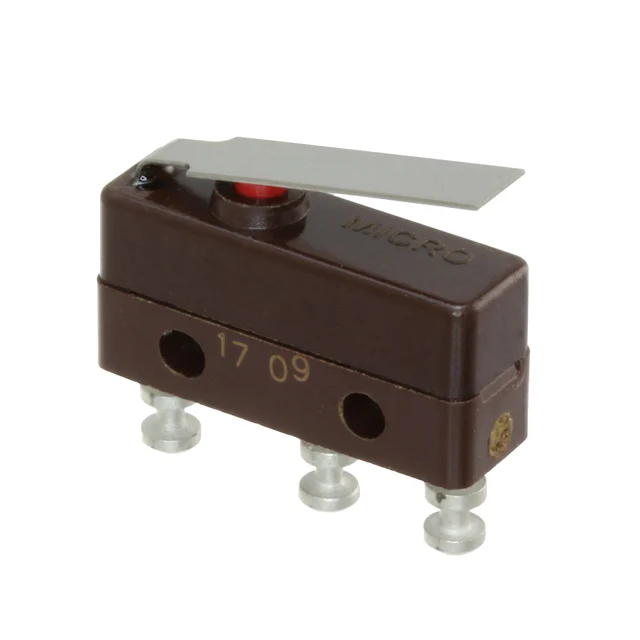
Honeywell 111SM1-T2 Snap Action Switch: Technical Overview and Uses
The Honeywell 111SM1-T2 snap action switch is a compact switching component designed for reliable on-off control in industrial and precision equipment. As a Honeywell 111SM1-T2 basic switch, it is often selected where consistent actuation, long mechanical life, and compact installation matter more than unnecessary complexity. Engineers and maintenance teams typically look at this type of device when they need a dependable Honeywell snap action switch for machinery, control panels, and electromechanical assemblies.
What Is the Honeywell 111SM1-T2?
The Honeywell 111SM1-T2 switch belongs to the MICRO SWITCH SM Series, a family known for combining small size with practical electrical capacity. This model uses an SPDT contact arrangement and a straight lever actuator, making it suitable for applications that require accurate switching response in a limited mounting space. Because it is a Honeywell 111SM1-T2 snap action switch, it can help improve signal repeatability in systems where mechanical movement must trigger a clear electrical change.
Key Technical Features
From a technical standpoint, the Honeywell 111SM1-T2 basic switch is rated for 5 A, supports up to 250 V AC and 30 V DC, and uses solder turret termination. It is built with a straight lever actuator and chassis-mount format, which makes integration easier in compact electromechanical designs. The switch also offers a long mechanical life, making it relevant for equipment that cycles frequently throughout normal operation.
Another practical advantage is its broad operating temperature capability. In demanding industrial environments, temperature tolerance can be just as important as electrical rating. That is why many designers compare the Honeywell 111SM1-T2 microswitch with other subminiature switch options when they need stable performance in changing ambient conditions.
Where the Honeywell 111SM1-T2 Is Commonly Used
The Honeywell 111SM1-T2 snap action switch can be used in control assemblies, machine interlocks, positioning systems, test equipment, and compact industrial devices. It is also relevant in applications where the switch must respond cleanly to lever movement without taking up much installation space. In many cases, a Honeywell 111SM1-T2 switch is chosen because it balances precision, size, and durability in a way that supports long service intervals.
For maintenance teams, this type of switch is often easier to evaluate because its form factor and operating characteristics are well suited to repeatable actuation. That matters in environments where downtime and mis-triggering can become expensive over time.
Why Engineers Search for This Switch
Search demand around terms like snap action switch, basic switch, industrial microswitch, and 111SM1-T2 snap action switch usually comes from buyers, designers, and technical staff looking for a dependable replacement or a component for a new build. This model stands out because it addresses practical requirements: compact design, SPDT switching, lever actuation, and long mechanical endurance.
For more information about Honeywell, it is useful to review broader product families and compatible industrial switching solutions.
FAQ
What type of switch is the Honeywell 111SM1-T2?
The Honeywell 111SM1-T2 is a snap action basic switch with SPDT circuitry. It is designed for applications where a small mechanical movement needs to produce a fast and reliable switching response.
Is the Honeywell 111SM1-T2 suitable for industrial equipment?
Yes. The switch is commonly associated with industrial and electromechanical applications because it combines compact dimensions, practical current handling, and long mechanical life. It is especially useful where space is limited but switching reliability remains important.
What makes the Honeywell 111SM1-T2 different from a standard microswitch?
In practice, the Honeywell 111SM1-T2 is itself a type of microswitch or basic snap action switch, but its value comes from the specific combination of SPDT contacts, straight lever actuation, chassis mounting, and robust operating life. Those details matter when matching a switch to a precise mechanical design.
Can the Honeywell 111SM1-T2 be used in high-cycle applications?
It is often considered for high-cycle environments because the model is built for long mechanical endurance. That makes it relevant in machinery or assemblies where repetitive switching is part of normal daily operation.
Why do technicians look for the 111SM1-T2 product code specifically?
Technicians and procurement teams often search by exact code when they need a form-fit-function match. Using the full part number helps reduce sourcing errors and makes it easier to confirm actuator style, mounting approach, and electrical rating before installation.