
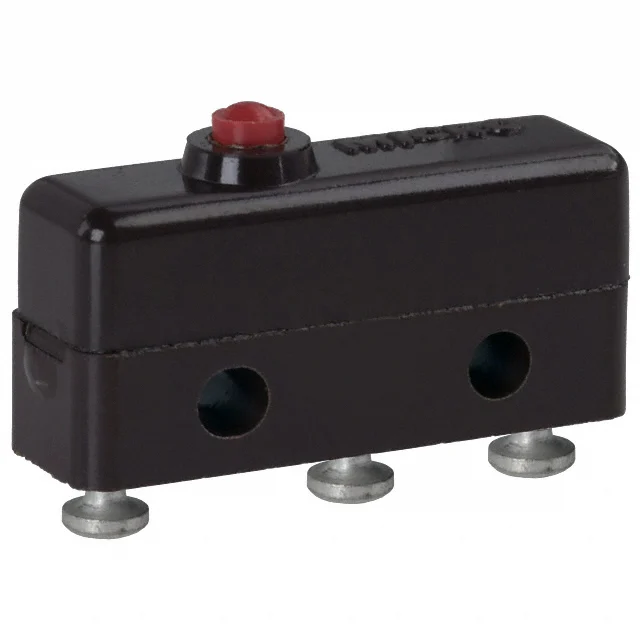
Honeywell 111SM1-T Basic Switches: Compact SPDT Switching with Solder-Terminal Flexibility
The Honeywell 111SM1-T Basic Switches model is a compact SM Series snap-action switch developed for precision and repeatability in tight mechanical spaces. Technical listings describe the Honeywell 111SM1-T basic switches version as an SPDT switch with a straight lever actuator, 5 A rating, 250 V AC / 30 V DC class, and solder turret termination. That combination makes it particularly relevant when engineers want durable switch performance together with controlled lead attachment.
Why Honeywell 111SM1-T Basic Switches Are Widely Relevant
In many compact devices, wire security is part of the performance story. A switch may operate correctly, yet still be a poor fit if the terminal strategy does not align with assembly or environmental demands. The Honeywell 111SM1-T basic switches model answers that need by pairing SM Series switching reliability with solder-style connectivity. For designs exposed to movement, repeated handling, or limited connector space, that can be a meaningful advantage.
This is why search terms such as solder terminal micro switch, Honeywell SPDT snap action switch, and basic switch straight lever continue to generate interest.
Technical Characteristics
The Honeywell 111SM1-T basic switches micro switch is listed with SPDT circuitry, On-Momentary function, 5 A current rating, 250 V AC, 30 V DC, and a straight lever actuator. Distributor data also notes 198 gf operating force, 57 gf release force, 0.350 in operating position, 0.218 in pretravel, 0.030 in differential travel, 0.030 in overtravel, 10 million mechanical cycles, and an operating temperature range of -55 °C to 125 °C.
Best Use Cases
The Honeywell 111SM1-T basic switches product is suitable for compact machinery, embedded electromechanical assemblies, control devices, instrumentation, and mechanisms that benefit from fixed soldered wiring. It is also a practical option where vibration or movement makes a more permanent lead connection desirable.
From a maintenance standpoint, this type of switch is often chosen when durability and known switch behavior are more important than rapid connector-based replacement.
Selection Strategy
Before choosing the Honeywell 111SM1-T basic switches model, review lever engagement, soldering process compatibility, motion profile, service expectations, and electrical duty. The switch itself may be compact, but the way it is integrated into the final system determines long-term performance.
For more information about Honeywell, it is helpful to compare solder-terminal and quick-connect variants within the SM family.
FAQ
What terminal type does Honeywell 111SM1-T Basic Switches use?
It is commonly listed with solder turret terminals, making it suitable for controlled wire attachment in compact assemblies.
Is Honeywell 111SM1-T Basic Switches an SPDT switch?
Yes. It is associated with an SPDT snap-action configuration within the Honeywell SM Series.
Why choose Honeywell 111SM1-T Basic Switches over a quick-connect version?
Solder termination can be preferable where secure fixed wiring, controlled assembly, or vibration resistance is more important than fast connector changes.
Where is Honeywell 111SM1-T Basic Switches typically used?
It is often used in instrumentation, compact machinery, sensing mechanisms, and electromechanical devices that need repeatable switching in a small form factor.
What should engineers verify before specifying Honeywell 111SM1-T Basic Switches?
They should check electrical load, terminal handling requirements, mechanical travel, actuator contact path, and installation constraints to ensure reliable operation.