
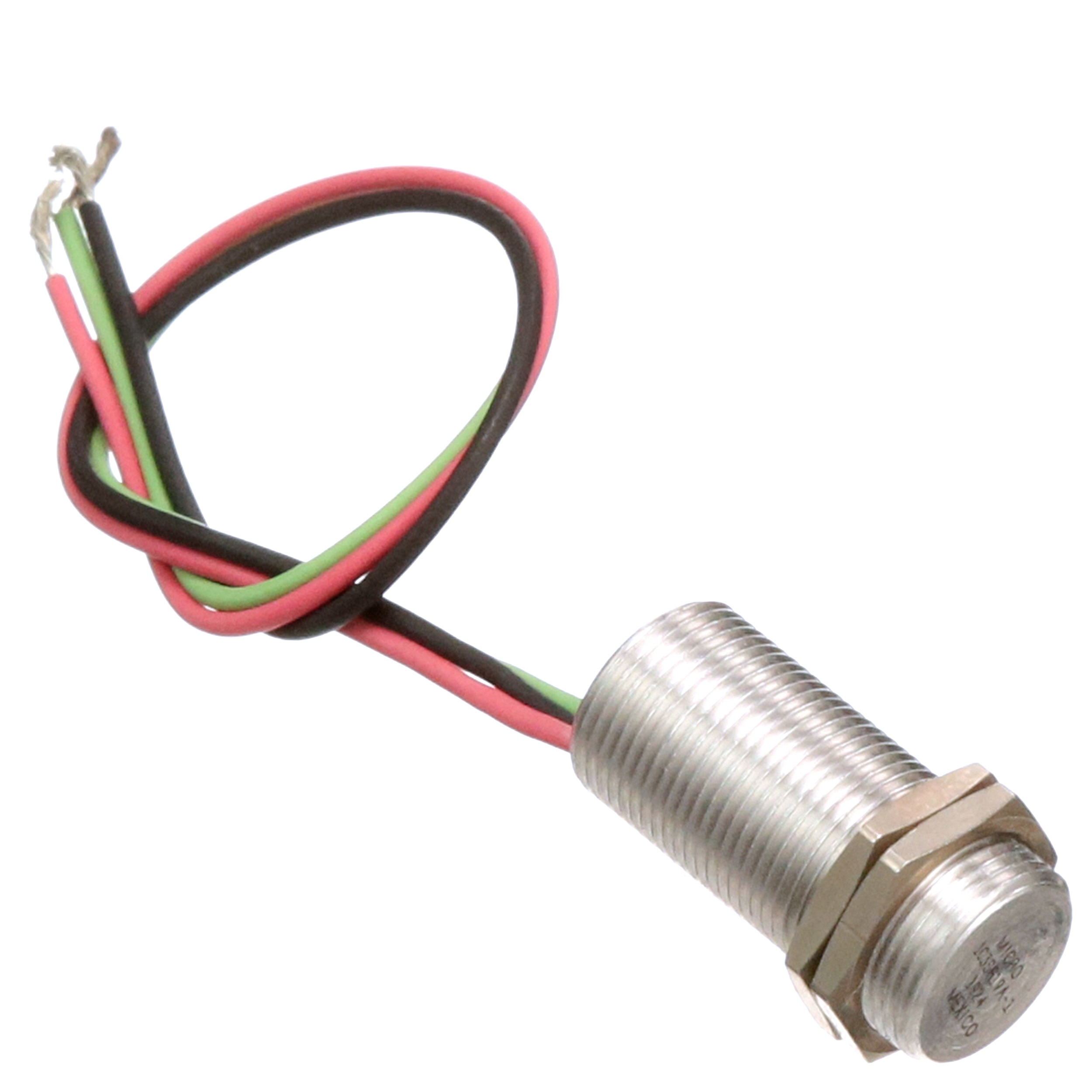
Honeywell 103SR19A-1 Linear Hall-Effect Sensor
The Honeywell 103SR19A-1 linear hall-effect sensor is designed for applications that need more than simple on/off detection. Instead of acting as a digital switch, this model delivers a linear push-pull output that reflects magnetic field strength across a defined measuring range. That makes it a strong option for engineers working on proportional position sensing, displacement measurement, and analog feedback systems.
Technical Characteristics of the Honeywell 103SR19A-1
The 103SR19A-1 hall-effect position sensor operates on a 4.5 Vdc to 10.5 Vdc supply and is specified as a linear magnetic sensor rather than a digital switching device. It uses a push-pull output and is suited for more detailed signal interpretation in control electronics. The 103SR19A-1 is also associated with a wide operating temperature capability up to 125°C, which is especially relevant in compact equipment where heat buildup can affect sensor choice.
Another important point is its linear measurement capability. In practice, that means the sensor is valuable when the objective is not just to know whether a magnet is present, but how position or field strength changes over a span. In automation, transport equipment, and embedded controls, that kind of analog-style magnetic feedback can support more precise movement and monitoring functions.
Where the 103SR19A-1 Fits Best
The Honeywell 103SR19A-1 linear hall-effect sensor is often relevant for displacement sensing, proportional control systems, actuator monitoring, and designs that rely on magnetic travel rather than simple threshold switching. It also works well in systems where designers want to reduce mechanical wear while still keeping signal detail high.
Because the device is housed in a sealed threaded body, installation remains practical in real machinery. The mounting format supports adjustment during setup, while the sealed construction helps protect the sensor in more demanding environments.
Why a Linear Magnetic Sensor Matters
A digital hall-effect device is excellent for switching events. A linear sensor, however, adds another layer of value by translating magnetic field change into a usable electrical output. That is why the 103SR19A-1 magnetic sensor is often considered in more advanced control designs where trend, travel, or relative magnetic position matters.
For more information about Honeywell, it is worth reviewing the broader magnetic sensing portfolio for application matching.
FAQ
Is the 103SR19A-1 a digital switch?
No. It is a linear hall-effect sensor with a push-pull output, intended for proportional magnetic sensing rather than simple switching.
What is the supply voltage for the Honeywell 103SR19A-1?
This model operates from 4.5 Vdc to 10.5 Vdc, which is narrower than the digital 103SR variants.
Why choose a linear hall-effect sensor?
A linear hall-effect sensor is useful when the application needs a changing signal that reflects magnetic field strength or position, not just on/off detection.
Is the 103SR19A-1 suitable for high-temperature environments?
Yes. It is specified for operation up to 125°C, making it attractive for more thermally demanding designs.
What applications are common for this sensor?
Typical uses include analog position sensing, travel feedback, displacement monitoring, actuator control, and embedded motion systems.