
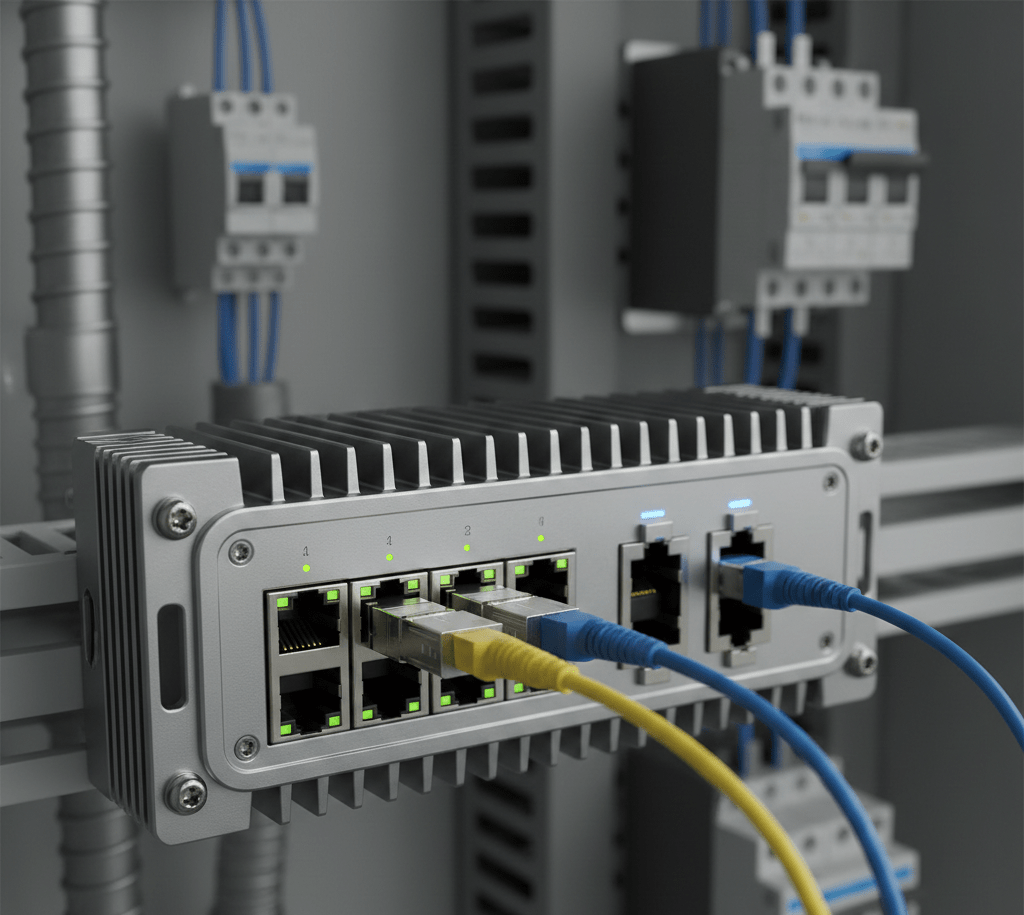
Gigabit and 10G Fiber Optic Industrial Ethernet Switch
Bandwidth demands increase as factories deploy more IP cameras, implement Industry 4.0 initiatives, and centralize data analytics. Advantech Gigabit and 10G fiber optic industrial Ethernet switches provide high-speed connectivity over distances exceeding copper cable limitations while offering immunity to electromagnetic interference.
Fiber Optic Advantages
Fiber optic cables transmit data using light pulses rather than electrical signals, providing complete immunity to EMI from motors, VFDs, and welding equipment. Single-mode fiber reaches 40+ kilometers enabling campus-wide networks without repeaters. Multi-mode fiber suits shorter distances (300-550 meters) at lower cost. Galvanic isolation prevents ground loops and protects against electrical surges.
Gigabit Ethernet Performance
1000BASE-SX (multi-mode) and 1000BASE-LX (single-mode) fiber interfaces provide 1 Gbps throughput adequate for most industrial applications. Copper ports (1000BASE-T) connect local devices while fiber uplinks aggregate traffic to core networks. Combo ports supporting both copper and fiber SFP modules provide deployment flexibility.
10 Gigabit Scalability
Video surveillance systems with 100+ high-resolution cameras, machine vision applications processing multiple camera feeds, and centralized data analytics benefit from 10G uplinks preventing network bottlenecks. 10GBASE-SR (multi-mode) and 10GBASE-LR (single-mode) fiber modules future-proof networks for bandwidth growth.
FAQ
When should I use fiber vs copper Ethernet?
Use fiber for distances >100 meters, electrically noisy environments, galvanic isolation requirements, or bandwidth >1 Gbps. Copper suits short distances <100m, lower costs, and PoE power delivery. Mix fiber uplinks with copper access ports for optimal cost/performance.
What’s the difference between single-mode and multi-mode fiber?
Single-mode fiber uses lasers, reaches 40+ km, costs more for transceivers. Multi-mode uses LEDs, reaches 300-550m, lower transceiver costs. Choose based on distance requirements – single-mode for campus networks, multi-mode for building backbones.