
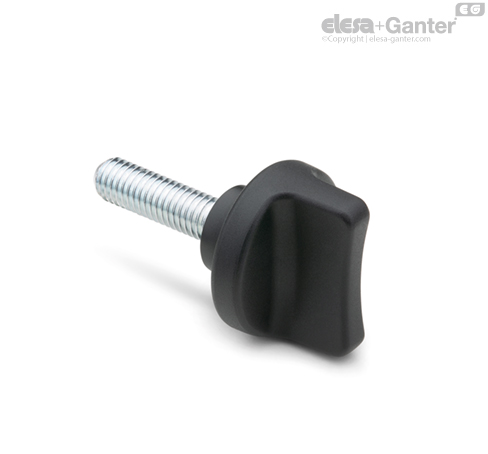
Elesa+Ganter CT-FG.30-SST-P-M8X25 Wing Knob Review
The Elesa+Ganter CT-FG.30-SST-P-M8X25 wing knob is a strong option for industrial users who need an M8 manual fastening solution with additional stud length and dependable corrosion resistance. When machine components require frequent adjustment or repeated opening and closing, the quality of the clamping knob matters more than it may seem at first glance.
A well-chosen wing knob supports smoother service work, more reliable manual tightening, and improved day-to-day usability. In this respect, the CT-FG design stands out thanks to its flanged grip profile and reinforced technopolymer body, while the stainless steel stud adds practical durability for demanding environments.
What Is the Elesa+Ganter CT-FG.30-SST-P-M8X25 Wing Knob?
The Elesa+Ganter CT-FG.30-SST-P-M8X25 wing knob is a manual clamping component in the CT-FG family. It combines a 30 mm wing knob body with an M8 stainless steel threaded stud measuring 25 mm in length. This specification makes it useful where stronger thread dimensions and deeper engagement are both required.
Key Reasons Professionals Choose This Model
- M8 threaded stud for secure industrial fastening
- 25 mm stud length for deeper installation needs
- Corrosion-resistant stainless steel construction at the threaded section
- Reinforced black technopolymer body
- Flange-assisted grip for comfortable manual use
Why M8x25 Can Be the Better Fit
Compared with shorter variants, the M8x25 version gives more installation flexibility when the fastening point includes thicker sections, accessory layers, or deeper receiving threads. In practical engineering terms, this can support a more secure fit without stepping up to an unnecessarily long stud.
That makes the Elesa+Ganter CT-FG.30-SST-P-M8X25 wing knob relevant for machine housings, service covers, frame-mounted accessories, adjustment brackets, clamping interfaces, and technical systems where easy hand operation must be matched with reliable thread engagement.
Built for Practical Industrial Use
The reinforced polyamide-based body provides strength together with a comfortable tactile feel, while the AISI 304 stainless steel stud supports long-term use in conditions where corrosion resistance is important. This type of material combination is especially useful in facilities that value durability, cleanliness, and standardized machine components.
For more information about Elesa+Ganter, it can be useful to compare related clamping and adjustment components for broader design consistency across equipment platforms.
Where It May Be Used
- Industrial guards and machine covers
- Adjustment and locking points
- Positioning fixtures and support structures
- Service-access assemblies
- Equipment using M8 threaded hardware standards
FAQ
Why choose the Elesa+Ganter CT-FG.30-SST-P-M8X25 wing knob over a shorter M8 version?
The longer 25 mm stud can provide better compatibility where the assembly needs more engagement depth. This is useful in designs with thicker materials, mounting brackets, or multi-part fastening arrangements.
Does the stainless steel stud make a real difference?
Yes. Stainless steel is widely valued in industrial environments because it helps improve resistance to corrosion and supports long-term reliability in equipment that may be exposed to moisture, cleaning routines, or demanding service conditions.
Is this product mainly for machinery manufacturers?
No. While it is certainly relevant to OEM machine builders, it is also useful for maintenance teams, retrofits, replacement programs, and technical workshops that need standardized hand-tightening components with predictable dimensions.
What type of user benefits most from a wing knob design?
Operators and technicians who perform frequent setup changes, inspections, or service interventions benefit greatly from wing knobs. They allow quick access and repeated manual adjustment without slowing work down with extra tools.
Can this component support a more professional machine finish?
Yes. Beyond function, standardized components like this help create a cleaner and more consistent equipment appearance. That matters in professional machine design, where usability, durability, and visual coherence often go hand in hand.