
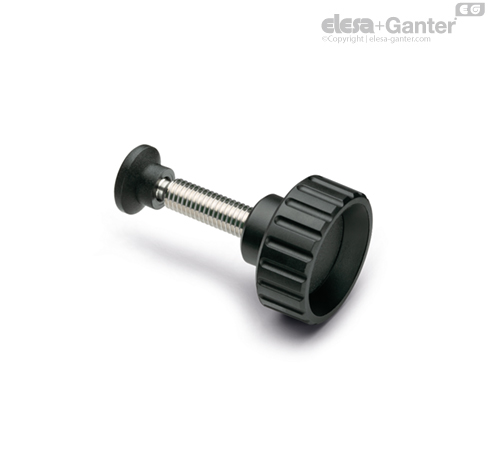
Elesa+Ganter BT.32-SST-P-M8X30-SV18 Fluted Knob Guide
The Elesa+Ganter BT.32-SST-P-M8X30-SV18 fluted knob is intended for manual locking tasks that require a slightly larger grip format, a stronger thread size, and a surface-conscious clamping interface. In industrial settings, this type of component is especially valuable where operators need repeatable hand tightening without exposing the mating surface to direct stud contact.
Elesa+Ganter BT.32-SST-P-M8X30-SV18 What Kind of Product Is BT.32-SST-P-M8X30-SV18?
This model is a fluted knob with locking thrust pad. It is part of a series developed for securing components manually while improving the contact conditions at the locking point. Compared with smaller BT.25 variants, the BT.32 format offers a larger external diameter and an M8 thread, which can make it more suitable for applications that need a more substantial grip and fastening interface.
Elesa+Ganter BT.32-SST-P-M8X30-SV18 Technical Features at a Glance
The knob body is made from black matte polyamide-based technopolymer. The threaded stud is made from AISI 303 stainless steel and has a spherical end. The thrust pad is manufactured from black matte POM-based technopolymer. For this exact code, the knob diameter is 32 mm, the thread is M8, the stud length is 30 mm, and the thrust pad size is SV18. This version also uses a 22 mm overall length reference in the technical data, supporting a compact but more substantial hand-operated profile.
Elesa+Ganter BT.32-SST-P-M8X30-SV18 Why Engineers Choose This Format
The Elesa+Ganter BT.32-SST-P-M8X30-SV18 fluted knob offers a sensible middle ground between compactness and grip authority. The larger diameter can improve hand feel and tightening control, while the M8 threaded stud supports applications that need more robust fastening than an M6 alternative. At the same time, the thrust pad helps preserve the quality of the locked surface.
Common Application Areas
This component is suitable for machine guards, adjustable supports, clamping brackets, setup systems, guide rails, tooling interfaces, and industrial assemblies that are repositioned regularly. It is particularly useful where a manual clamp point must feel secure in the hand while still being compatible with corrosion-aware material specifications.
Material and Performance Benefits
The combination of technopolymer and stainless steel supports good day-to-day usability. The knob remains comfortable to handle, the threaded stud offers corrosion resistance, and the thrust pad improves how locking force is transferred to the contact surface. In practice, that means cleaner operation in many manual adjustment tasks.
Broader Product Family Context
When comparing industrial hand knobs, designers often focus on thread size first. In reality, pad size, grip diameter, and stud length are just as important. For more information about Elesa+Ganter, reviewing related clamping components can help standardise selections across different machine assemblies.
FAQ
What is the advantage of choosing the BT.32 size?
The BT.32 size provides a larger diameter than smaller variants, which can improve grip comfort and control during manual tightening, especially in applications that need a stronger hand feel.
Why does this version use an M8 thread?
An M8 thread is often selected when the assembly requires a more robust fastening point than M6 can provide. It suits many industrial structures, brackets, and adjustment systems.
What does SV18 refer to?
SV18 refers to the thrust pad size associated with this exact version. That dimension influences how the knob meets and loads the clamped surface.
Is the stud corrosion resistant?
Yes. The stud is made from AISI 303 stainless steel, which makes the component more appropriate for environments where corrosion resistance is part of the specification.
Where can this fluted knob be used most effectively?
It is effective on manually adjustable machine elements, setup points, support frames, tooling fixtures, enclosure hardware, and industrial modules where surface protection and easy hand tightening are both important.