
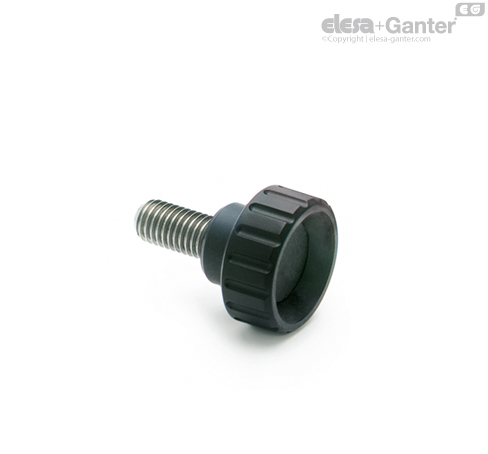
Elesa+Ganter BT.20-SST-P-M6X30 Fluted Knob Details
The Elesa+Ganter BT.20-SST-P-M6X30 fluted knob is a compact industrial knob with a longer stainless steel threaded stud, intended for assemblies that need manual fastening plus extra reach. As part of the BT fluted grip knob range, it combines ergonomic handling with a black PA technopolymer body and an AISI 303 stainless steel stud, making it suitable for machinery and equipment where clean performance and corrosion-aware design are both relevant.
Construction and Official Specification Profile
This version belongs to the BT-SST-p configuration. In the BT family documentation, that means the body is produced in polyamide-based technopolymer with a matte black finish and the threaded stud is AISI 303 stainless steel with a chamfered flat end in line with UNI 947 / ISO 4753. The exact series entry for this model lists a 20 mm knob diameter, M6 thread, 15 mm knob height, 11.5 mm upper diameter, 11 mm lower diameter, 30 mm stud length, and a 6 mm reference with a 9 mm final value in the dimensional row.
Core Technical Data
- Brand: Elesa+Ganter
- Code: BT.20-SST-P-M6X30
- Product type: Fluted knob
- Knob diameter: 20 mm
- Thread size: M6
- Stud length: 30 mm
- Body material: PA technopolymer
- Stud material: AISI 303 stainless steel
- Finish: Black matte body
- BT series operating range: -30°C to +130°C
Why Engineers Choose the 30 mm Version
Thread length has a direct effect on compatibility. The Elesa+Ganter BT.20-SST-P-M6X30 fluted knob gives designers more usable reach in applications with thicker brackets, sandwich constructions, mounted guards, deep threaded inserts, or assemblies that include washers and slotted interfaces. That makes it especially useful where a shorter stud could limit thread engagement or reduce adjustment range.
At the same time, the 20 mm knob diameter keeps the user-facing side compact. This balance matters in machines where clearance is tight and the operator still needs dependable grip during frequent repositioning.
Typical Application Context
This model can be relevant in light-to-medium duty clamping tasks across packaging machines, inspection devices, OEM equipment, food-processing support assemblies, laboratory systems, and modular frames. The stainless steel stud is a practical advantage in spaces where hardware may be exposed to humidity or routine cleaning cycles.
Elesa+Ganter BT.20-SST-P-M6X30 For more information about Elesa+Ganter, the broader product range includes many complementary machine elements for manual adjustment and fixture design.
Elesa+Ganter BT.20-SST-P-M6X30 FAQ
Why would someone choose the M6 x 30 version instead of a shorter one?
The longer stud is useful when the assembly includes thicker panels, spacers, or deeper threaded engagement points. It can also help preserve adequate engagement length in applications where dimensional stack-up reduces the effective working thread.
Is this knob intended for outdoor use?
The stainless steel stud improves resistance to corrosion, but final suitability for outdoor exposure depends on the full application environment, including contaminants, cleaning chemicals, and long-term weather conditions. Engineers typically assess the whole assembly, not just one component.
Does the technopolymer body offer practical advantages?
Yes. Technopolymer bodies are valued in industrial design because they reduce weight, feel comfortable in the hand, resist many common shop-floor contaminants, and maintain a consistent surface finish.
Can this fluted knob be used in equipment that requires frequent adjustment?
That is one of its strongest use cases. The fluted geometry supports repeated manual tightening and loosening, making it well suited to setups, access points, and adjustment zones where operators regularly interact with the hardware.
Is the product more about precision or heavy locking force?
It is generally more associated with controlled manual clamping and positioning than with maximum-force locking. Where very high clamp loads are necessary, engineers often move toward larger diameters or alternative operating elements.