
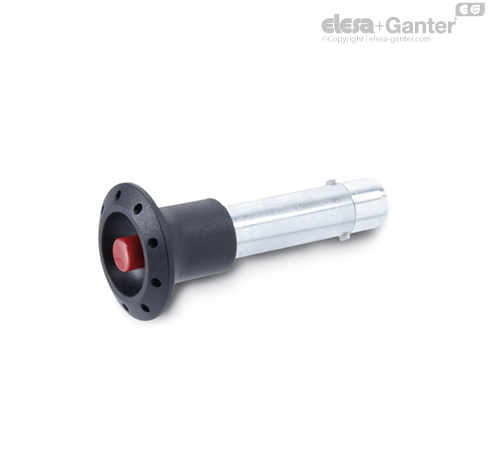
Elesa+Ganter 114.2-10-25 Industrial Standard Component
The Elesa+Ganter 114.2-10-25 industrial standard component is developed for machinery systems requiring reliable mechanical integration, durable construction, and stable operational performance. Industrial machine components play a critical role in production environments where operational continuity and assembly precision directly affect manufacturing efficiency.
In modern industrial systems, even small machine components contribute significantly to overall equipment reliability. Standardized industrial parts help manufacturers maintain compatibility across machinery while supporting efficient maintenance and long-term operational consistency.
Technical Features of the Elesa+Ganter 114.2-10-25
The Elesa+Ganter 114.2-10-25 is designed for industrial applications where mechanical stability and dependable performance are essential. The component is suitable for use in production machinery, machine frames, automation systems, and industrial assemblies requiring reliable integration.
Industrial facilities often prioritize machine components that support repetitive operation while maintaining structural consistency over long operational cycles. The 114.2-10-25 is manufactured to meet industrial expectations regarding durability and functionality.
Its standardized dimensions and practical structure support efficient installation and compatibility with multiple industrial systems. This helps simplify machine assembly procedures while reducing unnecessary operational interruptions.
Applications in Industrial Machinery
The Elesa+Ganter 114.2-10-25 industrial standard component can be used in packaging systems, conveyor technology, automation machinery, industrial production lines, processing equipment, and mechanical engineering projects.
Machine builders and maintenance teams frequently rely on standardized industrial components to improve equipment reliability and simplify future servicing operations. Standard machine parts also help maintain consistent mechanical performance across different production systems.
For more industrial product information, visit Elesa+Ganter industrial components.
Benefits of Standardized Industrial Components
Industrial standard components help reduce machine downtime by supporting easier replacement and maintenance procedures. Because standardized parts are developed for broad compatibility, they contribute to more efficient spare part management within production facilities.
Reliable components also help improve machine safety and operational consistency. In industrial environments where machinery operates continuously, dependable mechanical parts are essential for maintaining production efficiency.
Importance of Reliable Machine Components
Production systems depend on the quality of both large mechanical systems and smaller integrated parts. While small components may appear simple, they often support critical machine functions related to positioning, stability, movement, and structural integrity.
The Elesa+Ganter 114.2-10-25 supports industrial operations by contributing to dependable machine assembly and practical maintenance efficiency.
Frequently Asked Questions
What is the Elesa+Ganter 114.2-10-25 used for?
It is used as an industrial standard component in machinery systems, automation equipment, and production assemblies.
Which industries commonly use this component?
Manufacturing, automation, packaging, conveyor technology, processing, and industrial engineering sectors commonly use standardized machine components.
Why are industrial standard components important?
They improve compatibility, simplify maintenance, and help maintain reliable machine operation.
Can this component support continuous industrial use?
Yes. It is designed for industrial environments where equipment operates under repetitive and demanding conditions.
How do standardized machine parts help maintenance teams?
They simplify replacement procedures, improve spare part compatibility, and reduce servicing complexity.