
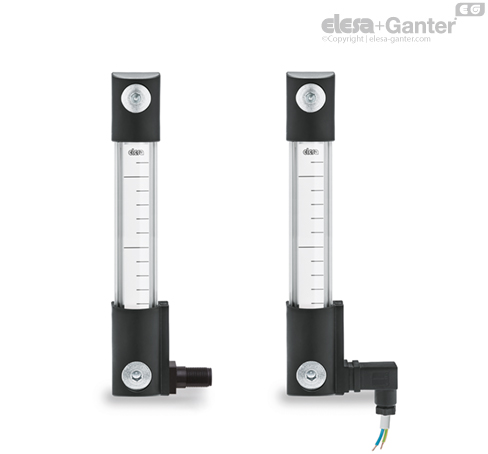
Elsa+Ganter 113357 HCK.127-SST-M12-NBR-GL-P-E-SW Electrical Level Indicator
Product Overview
The Elesa+Ganter 113357 electrical level indicator is an HCK.127 column level indicator with a minimum level sensor and SW change-over contact. It is designed for hydraulic tanks, oil reservoirs and industrial fluid systems where operators need both visible level reading and flexible electrical signalling.
Technical Configuration
This model has a 127 mm hole centre distance and M12 fixing format. SST indicates stainless steel hardware, using AISI 303 screws and AISI 304 nuts and washers. The NBR sealing ring supports continuous use up to 100°C. The GL transparent tube is made from borosilicate glass and is suitable for oil, water and water/glycol-based solutions up to 50%. The P front guard is transparent polycarbonate and removable for cleaning.
SW Contact Function
The SW version uses a change-over electrical contact. Instead of only opening or closing one circuit, the contact switches between terminals when the minimum level condition is reached. This gives engineers more flexibility when designing alarm, control or machine safety logic around fluid level status.
Why It Matters in Hydraulic Systems
The Elesa+Ganter 113357 HCK.127-SST-M12-NBR-GL-P-E-SW electrical level indicator is especially useful when a system needs more than a simple low-level alarm. It can support alternative signal paths, control panel feedback or integration into PLC logic. The visual column also helps technicians verify real fluid level during daily checks.
Elesa+Ganter 113357 For more information, visit Elesa+Ganter.
Elesa+Ganter 113357 FAQ
What does SW mean in this model?
SW means change-over contact. The electrical contact switches between terminals when the minimum level condition is reached.
Where is this product typically used?
It is used in hydraulic power units, oil tanks, lubrication systems, industrial reservoirs and machines that require fluid level monitoring.
Is this model suitable for harsh industrial environments?
The stainless steel fixing hardware, borosilicate glass tube and protected front design make it suitable for many demanding industrial applications, provided the operating conditions are verified.
Why choose SW instead of NO or NC?
SW is useful when the control system needs a change-over signal rather than a single normally open or normally closed contact. This can simplify integration with certain alarm or PLC circuits.