
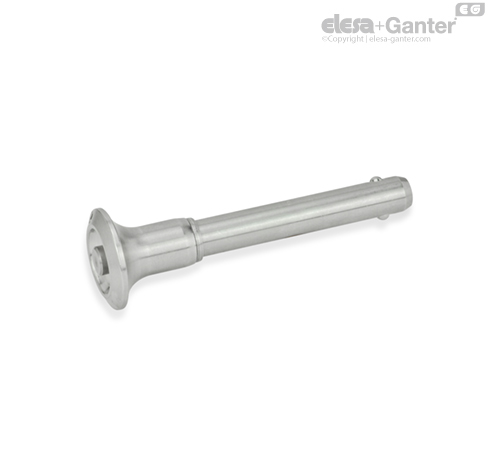
Elesa+Ganter 113.9-12-50 Locking Pin: Stainless Steel Quick-Release Solution
The Elesa+Ganter 113.9-12-50 locking pin is a stainless steel quick-release locking pin designed for strong, repeatable fastening in mechanical and industrial systems. It is suitable for applications where parts must be locked securely but still released quickly when adjustment, servicing or repositioning is required.
Product Design and Function
This model is part of the GN 113.9 ball lock pin range. The code 12-50 refers to a 12 mm plunger diameter and 50 mm working length. Its stainless steel body, knob design and locking ball system make it a practical choice for robust machine assemblies.
Technical Features
The Elesa+Ganter 113.9-12-50 locking pin includes a stainless steel plunger, 12 mm pin diameter, 50 mm working length, 87 kN shearing force and 31 mm knob diameter. The model is supplied with a knob and locking function, making it easier to handle during repeated use.
Where It Is Used
This locking pin is commonly used in industrial machinery, production fixtures, modular frames, transport equipment and adjustable mechanical structures. It helps engineers create secure connections without relying on slow threaded fasteners.
Operational Benefits
In production environments, speed and repeatability matter. A quick-release locking pin reduces downtime during changeovers and simplifies maintenance. The stainless steel material also supports use in demanding environments where corrosion resistance and mechanical reliability are important.
For more information about standard machine elements, visit Elesa+Ganter.
FAQ
What is the Elesa+Ganter 113.9-12-50 locking pin?
It is a stainless steel ball lock pin used for quick fastening, locking and repositioning of mechanical components.
What does 12-50 mean in the code?
It indicates a 12 mm pin diameter and 50 mm working length.
Is this model suitable for high-load applications?
Yes. Its listed shearing force is 87 kN, making it suitable for stronger locking requirements within proper application limits.
Why choose this instead of a bolt?
It allows faster removal and installation without tools, which is valuable in fixtures, modular systems and frequently adjusted assemblies.