
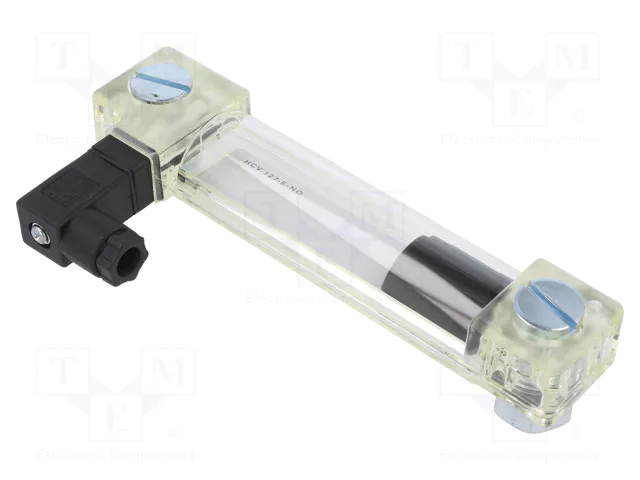
Elesa+Ganter 11115-KN HCV.127-E-ST-NO-M12-KN Oil Level Indicator
The Elesa+Ganter 11115-KN HCV.127-E-ST-NO-M12-KN oil level indicator is a column-style level indicator for hydraulic and lubrication systems. It is designed to provide both visual oil level reading and electrical low-level monitoring in demanding industrial environments.
Technical Structure
This model has a 127 mm mounting distance and an M12 connector. Its normally open contact configuration means the electrical circuit closes when the monitored minimum level condition is reached. This makes it suitable for signal lamps, PLC inputs and machine alarm systems.
Materials and Reliability
The transparent technopolymer body offers good resistance to mechanical impact, oils, additives and hydrocarbons. The float is produced from reinforced technopolymer and includes a magnetic element that activates the electrical contact. Sealing is supported by NBR rubber rings to help maintain reliable installation on the tank wall.
Why It Matters in Maintenance
Oil level is one of the most important indicators of hydraulic system health. A low level can lead to overheating, cavitation, poor lubrication and component wear. By combining visual inspection with an electrical signal, this indicator supports proactive maintenance and safer operation.
Best-Fit Applications
The Elesa+Ganter 11115-KN HCV.127-E-ST-NO-M12-KN oil level indicator is suitable for hydraulic power packs, presses, lubrication reservoirs, industrial machines, automation equipment and gear oil tanks.
For more information, visit Elesa+Ganter.
FAQ
What is the product type of Elesa+Ganter 11115-KN?
It is an oil level indicator with electrical monitoring capability.
What does the 127 value indicate?
It refers to the 127 mm mounting distance used for this column-style indicator.
How does the NO contact work?
The contact is normally open and closes when the minimum oil level condition is detected.
Why is this product useful for hydraulic systems?
It helps operators detect low oil level early, supporting better maintenance planning and reducing risk of equipment damage.