
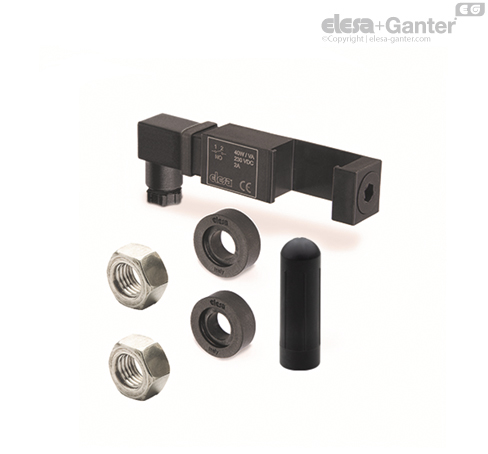
Elesa+Ganter 110086-R SLCK-HT-NO-NC Fluid Level Control Kit for High-Temperature Systems
The Elesa+Ganter 110086-R SLCK-HT-NO-NC fluid level control kit is intended for industrial systems where fluid level monitoring must remain reliable even in elevated temperature conditions. This version belongs to the SLCK-HT family, which is specifically intended for applications up to 120°C. Like other SLCK assemblies, it works with HCK and HCK-GL column level indicators, allowing the user to combine visual level observation with an electrical switching signal triggered at a chosen point along the indicator.
Why Choose the High-Temperature Version?
Standard fluid monitoring components are not always ideal when process temperatures rise. The Elesa+Ganter 110086-R SLCK-HT-NO-NC fluid level control kit answers that need with a configuration designed for demanding thermal conditions. In the HT range, the float is made of polyamide-based technopolymer and is intended for use up to 120°C. This makes the model relevant for hydraulic systems, heated fluid circuits, industrial process equipment, and machinery where fluid temperature can exceed the standard 80°C range.
Technical Highlights of the 110086-R SLCK-HT-NO-NC
This model uses one normally open contact and one normally closed contact, which provides flexible control logic for alarms, level thresholds, or machine status outputs. The electrical sensing function is based on a reed contact system, while the float contains a magnetic element to activate the signal at the intervention point. The sensor holder can be moved along the axis of the indicator and locked in the desired position, allowing application-specific adjustment. According to the SLCK technical data, the series supports AC/DC power supply compatibility, a maximum applicable voltage of 230 Vac/Vdc, maximum current of 2 A, and maximum commutable power of 40 W/VA. The standard connector version in this code uses the DIN 43650 C male connector.
Elesa+Ganter 110086-R SLCK-HT-NO-NC How This Kit Supports More Stable Maintenance Planning
In industrial environments, temperature and fluid condition often influence service intervals and equipment reliability. A component such as the Elesa+Ganter 110086-R SLCK-HT-NO-NC fluid level control kit can help teams detect level changes before they turn into larger operational issues. Because the switching threshold is adjustable, the same product concept can be adapted to different tank geometries and monitoring policies. That makes it suitable for engineers seeking a high temperature fluid level sensor, hydraulic oil level switch, or process tank monitoring component with both visual and electrical feedback.
This dual-function approach is often more practical than relying on a separate sensor alone. The visual level remains readable, while the electrical contact supports automation or alarm logic. For more information about Elesa+Ganter, there are related solutions for machine components, fluid handling, and hydraulic system accessories.
Elesa+Ganter 110086-R SLCK-HT-NO-NC Frequently Asked Questions
What is the main advantage of the Elesa+Ganter 110086-R SLCK-HT-NO-NC fluid level control kit?
Its main advantage is the ability to provide electrical fluid level monitoring in applications up to 120°C while still preserving visual level indication.
What does HT mean in this model code?
HT identifies the high-temperature version of the SLCK series. These versions are intended for applications where higher thermal resistance is required compared with standard 80°C models.
What kind of contact output does this version provide?
The 110086-R uses one normally open contact and one normally closed contact. This supports flexible wiring for alarms, signals, or control logic.
Can it be installed at a custom intervention point?
Yes. The sensor holder can be moved along the axis of the level indicator and secured where the switching point is needed.
Which level indicators work with it?
The SLCK system is intended for HCK and HCK-GL column level indicators, and the electrical control function can be applied on HCK versions starting from the specified hole centre distance range indicated by the manufacturer.
Is this a good choice for heated hydraulic systems?
Yes. This model is especially relevant for systems where fluid temperature can approach the upper limits of standard level monitoring components, making the HT design a more suitable option.