
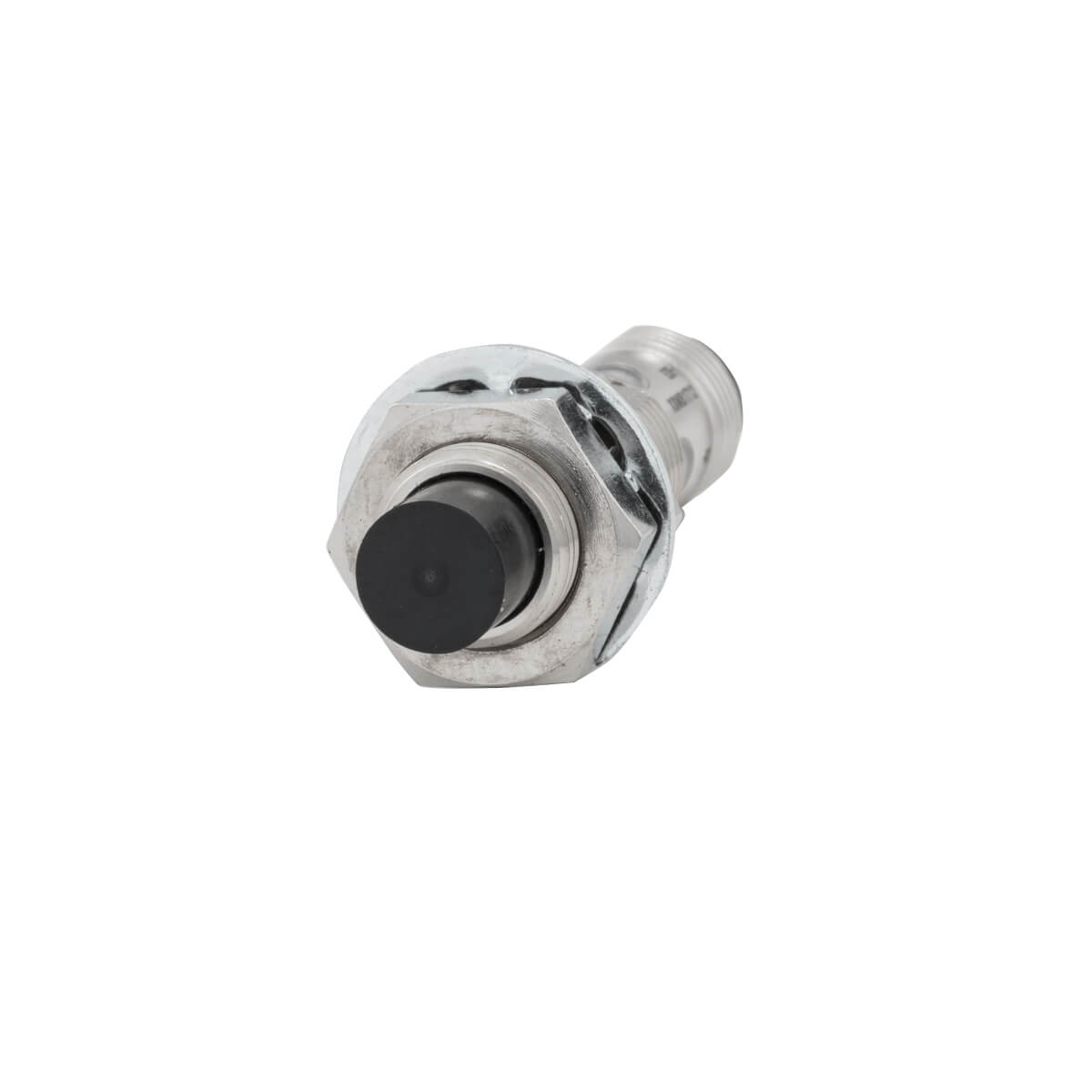
Omron E2E-X8MC312-M1 Inductive Proximity Sensor
| Feature | Value |
|---|---|
| Sensor Type | Inductive Proximity Sensor |
| Series | E2E NEXT |
| Housing Diameter | M8 |
| Mounting Style | Non-flush |
| Sensing Distance | 8 mm |
| Output Type | PNP |
| Operation Mode | Normally Open (NO) |
| Wiring Configuration | 3-wire DC |
| Supply Voltage | 10 to 30 VDC |
| Connection Method | M12 Connector |
| Housing Material | Stainless Steel |
| Response Frequency | 500 Hz |
| Protection Rating | IP67 / IP69K |
| Operating Temperature | -25°C to +70°C |
| Threaded Body Size | M8 |
Industrial automation systems often require dependable object detection technologies capable of operating under challenging environmental conditions. The Omron E2E-X8MC312-M1 Inductive Proximity Sensor is designed to provide non-contact detection of metallic targets while maintaining stable performance in machinery, material handling equipment, and automated production systems.
Its compact M8 housing and extended sensing distance make it suitable for installations where mounting space is limited but reliable detection remains essential. The M12 connector design also supports simplified maintenance and replacement procedures in modern automation environments.
Technical Description
The Omron E2E-X8MC312-M1 Inductive Proximity Sensor belongs to the E2E NEXT series of cylindrical proximity sensors. It is engineered for detecting conductive metallic objects through electromagnetic induction rather than mechanical contact.
The sensor features a non-flush construction, allowing an increased sensing distance of 8 mm. The PNP normally open output can be integrated into PLC systems, industrial controllers, and machine monitoring equipment. Its stainless-steel housing contributes to mechanical durability and resistance to harsh industrial environments.
Protection ratings of IP67 and IP69K allow deployment in locations exposed to water, dust, oil mist, and frequent cleaning procedures.
Working Principle
The Omron E2E-X8MC312-M1 Inductive Proximity Sensor generates an oscillating electromagnetic field at its sensing face. When a metallic object enters this field, eddy currents are induced within the target material.
These currents reduce the energy level of the oscillation circuit. The internal electronics continuously monitor the field characteristics and switch the output when the predefined threshold is reached. This operating method enables reliable target detection without physical wear on the sensing element.
Because there are no moving parts involved in the detection process, long-term operational stability can be maintained even in applications involving frequent switching cycles.
Common Areas of Use
- Automated production lines
- Conveyor transport systems
- Robotic handling stations
- Packaging machinery
- Metal fabrication equipment
- Assembly automation systems
- Machine tool applications
- Industrial positioning systems
The Omron E2E-X8MC312-M1 Inductive Proximity Sensor is commonly installed where accurate metallic object detection is required without introducing mechanical wear or contact-based sensing limitations.
Industrial Application Examples
Robotics and Automation
Robotic workstations frequently use proximity sensors to verify fixture locations, detect tooling positions, and confirm movement sequences before automated operations begin.
Packaging Equipment
Packaging machinery can utilize inductive sensors to monitor actuator positions, machine components, and transfer mechanisms during production cycles.
Metal Processing Facilities
Equipment used in metalworking applications often relies on non-contact sensing technologies to detect workpiece positions and machine states.
Distribution and Logistics Systems
Automated material transport systems can incorporate the sensor for positioning verification and movement control of metallic carriers.
Advantages
- Extended sensing distance within a compact M8 housing
- Non-contact metallic object detection
- M12 connector for simplified installation
- Stainless-steel construction for industrial environments
- IP67 and IP69K protection ratings
- Reduced maintenance associated with mechanical wear
- Suitable for high-cycle automation systems
- Compatible with common industrial control architectures
Sector-Specific Use Cases
In automotive component assembly facilities, the sensor can verify fixture placement before automated fastening operations begin. In pharmaceutical production equipment, it can monitor metallic machine components exposed to routine cleaning processes. In logistics centers, it may be used to confirm carrier positions within conveyor transfer systems.
Engineers seeking additional proximity sensing solutions may explore Omron sensor products for related automation applications.
What Should Be Considered During Product Selection?
- Required sensing range
- Available installation space
- Output type compatibility
- Environmental protection requirements
- Electrical connection preferences
- Target material properties
- Operating temperature conditions
- Machine control architecture
Evaluating these factors helps ensure proper sensor performance and long-term operational reliability within industrial systems.
Frequently Asked Questions
What type of objects can this sensor detect?
The sensor is designed to detect metallic objects through inductive sensing technology.
What is the rated sensing distance?
The rated sensing distance is 8 mm.
Which output configuration is provided?
The sensor uses a PNP normally open output.
What voltage range is supported?
The operating voltage range is 10 to 30 VDC.
Does the sensor require physical contact with the target?
No. Detection occurs through an electromagnetic field without direct contact.
Is the Omron E2E-X8MC312-M1 Inductive Proximity Sensor suitable for washdown environments?
Yes. The IP67 and IP69K protection ratings support operation in demanding industrial conditions.
How is the sensor connected?
The device uses an industrial M12 connector connection.
Where is the Omron E2E-X8MC312-M1 Inductive Proximity Sensor typically used?
It is commonly installed in automated machinery, robotics, conveyors, packaging systems, and industrial production equipment.