
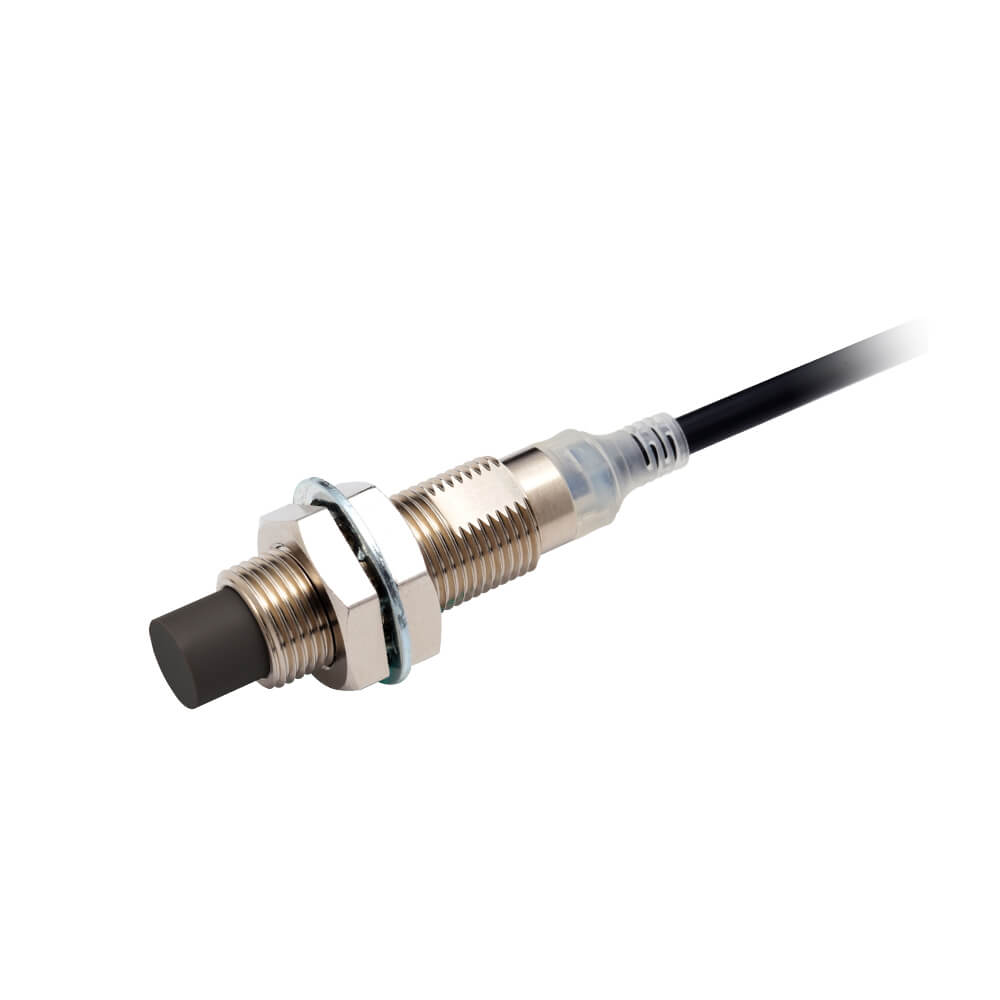
Omron E2E-X5MC112 2M Inductive Proximity Sensor
| Feature | Value |
|---|---|
| Sensor Type | Inductive Proximity Sensor |
| Series | E2E NEXT |
| Housing Size | M12 |
| Mounting Type | Non-flush |
| Sensing Distance | 5 mm |
| Output Type | PNP |
| Operation Mode | Normally Open (NO) |
| Connection Method | 2 m Cable |
| Supply Voltage | 10 to 30 VDC |
| Housing Material | Nickel-plated Brass |
| Protection Rating | IP67 / IP67G / IP69K |
| Cable Material | Oil-resistant PVC |
Technical Description
The Omron E2E-X5MC112 2M Inductive Proximity Sensor is designed for non-contact detection of metallic objects in industrial automation systems. Built with an M12 cylindrical housing and a 5 mm sensing range, the sensor provides reliable detection performance in applications requiring accurate position feedback and object presence monitoring.
The device belongs to the E2E NEXT sensor family and incorporates a PNP normally open output configuration. Its 2-meter integrated cable allows straightforward installation in machinery, conveyors, and automated production equipment.
Omron E2E-X5MC112 2M Working Principle
The sensing face generates a high-frequency electromagnetic field. When a metallic target enters the sensing area, eddy currents are created within the object. These currents influence the oscillation characteristics of the sensor circuit.
The internal electronics detect the resulting changes and switch the output signal. Because the process occurs without physical contact, the Omron E2E-X5MC112 2M Inductive Proximity Sensor can operate continuously with minimal mechanical wear.
Applications
- Assembly line automation
- Metal component positioning
- Conveyor monitoring systems
- Packaging machinery
- Robotic workstations
- Machine tool equipment
- Material handling systems
- Automated transfer lines
Industrial Applications
Manufacturing facilities use the sensor to verify component positions before processing operations. Conveyor systems utilize it for carrier detection and movement verification. Machine builders integrate it into automation equipment requiring reliable metal detection and repeatable performance.
The Omron E2E-X5MC112 2M Inductive Proximity Sensor is also commonly installed in robotic handling systems where positional feedback is required for synchronized movement sequences.
Omron E2E-X5MC112 2M Advantages
- Contactless metal detection
- Compact M12 threaded housing
- 5 mm sensing distance
- PNP normally open output
- High ingress protection ratings
- Oil-resistant cable construction
- Suitable for harsh industrial environments
- Reduced maintenance requirements
Sector-Specific Examples
In electronics manufacturing, the sensor can detect metal fixtures during automated assembly processes. In logistics facilities, it can monitor metallic transport carriers moving through conveyor sections. In machine-building projects, engineers use it to verify actuator positions and moving mechanical components.
For additional industrial sensing technologies, visit Omron sensor products.
Factors to Consider When Selecting a Sensor
- Required sensing distance
- Output type compatibility
- Available mounting space
- Environmental conditions
- Target material characteristics
- Cable length requirements
- Control system interface requirements
- Protection rating requirements
Frequently Asked Questions
What is the sensing distance?
The rated sensing distance is 5 mm.
What type of output does the sensor provide?
The sensor uses a PNP normally open output.
Omron E2E-X5MC112 2M Can the sensor detect non-metallic materials?
No. It is designed specifically for metallic target detection.
What cable length is supplied?
The sensor includes a 2-meter integrated cable.
Omron E2E-X5MC112 2M Is the sensor suitable for washdown environments?
Its IP67, IP67G, and IP69K ratings support demanding industrial conditions.
What voltage range does it support?
The operating voltage range is 10 to 30 VDC.
Where is the Omron E2E-X5MC112 2M Inductive Proximity Sensor typically used?
It is commonly installed in conveyors, packaging systems, robotics, and industrial machinery.
Does the sensor require physical contact with the target?
No. Detection occurs through electromagnetic induction.