
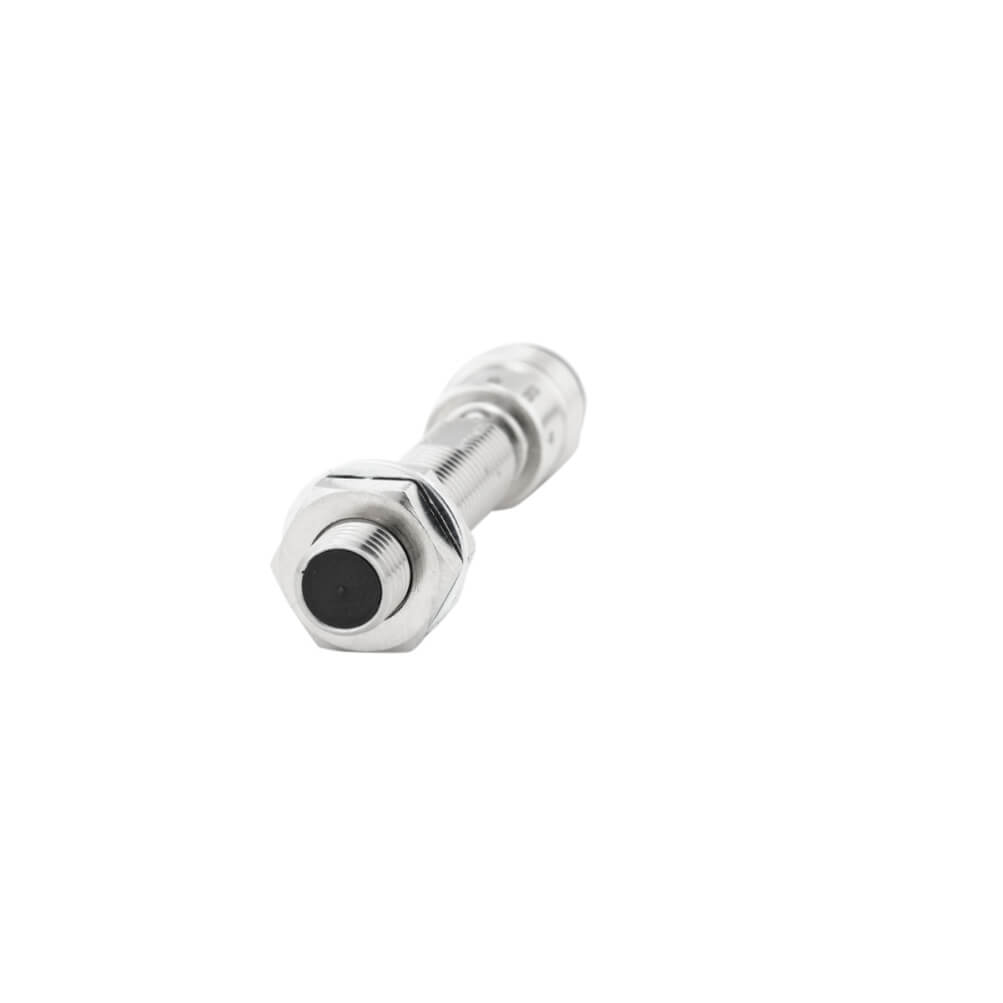
Omron E2E-X2B3DL8-M1 Inductive Proximity Sensor
| Feature | Value |
|---|---|
| Sensor Type | Inductive Proximity Sensor |
| Series | E2E NEXT |
| Housing Size | M8 |
| Sensing Distance | 2 mm |
| Mounting Type | Flush (Shielded) |
| Output Type | NPN |
| Operation Mode | Normally Closed (NC) |
| Supply Voltage | 10 to 30 VDC |
| Connection Method | M8 3-pin Connector |
| Housing Material | Stainless Steel |
| Response Frequency | 1.5 kHz |
| Protection Rating | IP67 / IP69K |
| Operating Temperature | -25°C to +70°C |
| Polarity Protection | Supported |
| Short-Circuit Protection | Supported |
Industrial automation systems frequently require compact sensing devices capable of detecting metallic targets without mechanical contact. The Omron E2E-X2B3DL8-M1 Inductive Proximity Sensor is designed to fulfill this requirement by providing stable detection performance in machinery, material transport systems, and automated manufacturing equipment.
Its compact M8 threaded housing supports installation in confined machine assemblies, while the stainless-steel construction helps withstand demanding industrial environments. As part of the E2E NEXT family, the sensor is developed for reliable operation in applications where durability and repeatable switching behavior are important.
Technical Description
The Omron E2E-X2B3DL8-M1 Inductive Proximity Sensor is a DC-powered inductive sensor designed for metallic object detection. It offers a nominal sensing distance of 2 mm and utilizes a shielded sensing structure, allowing flush mounting inside metallic machine components.
The sensor incorporates an NPN normally closed output configuration and uses an M8 connector interface to simplify installation and maintenance procedures. Integrated protection functions help support long-term operation in industrial control systems.
The Omron E2E-X2B3DL8-M1 Inductive Proximity Sensor is commonly integrated into PLC-based automation systems where accurate proximity detection is required.
Operating Principle
The sensor generates a high-frequency electromagnetic field at the sensing surface. When a conductive metallic target enters the detection zone, eddy currents are induced within the object.
These eddy currents absorb energy from the oscillating field, creating measurable changes in the sensor’s internal circuitry. Once the predefined detection threshold is reached, the output state changes.
Because the sensing process occurs without physical contact, mechanical wear is eliminated and detection consistency can be maintained across high-cycle applications.
Applications
- Machine position monitoring
- Automated transfer equipment
- Metal component detection
- Conveyor automation systems
- Production line control
- Packaging machinery
- Assembly equipment
- Robotic positioning systems
Industrial Applications
Conveyor and Transport Systems
Industrial conveyors use proximity sensors to verify carrier positions, detect transfer points, and monitor mechanical movements throughout the production process.
Robotic Automation
Robotic cells often require compact sensors to confirm fixture alignment and workpiece positioning before automated operations begin.
Machine Tool Equipment
Machine tools use inductive sensing devices to monitor actuator positions, clamping mechanisms, and tooling status indicators.
Packaging and Processing Lines
Packaging machinery benefits from non-contact detection technology when monitoring metallic machine components operating at high cycle rates.
Advantages
- Compact M8 housing design
- Flush mounting capability
- Reliable metallic target detection
- Stainless-steel body construction
- NPN normally closed output configuration
- High environmental protection ratings
- Connector-based electrical connection
- Fast response characteristics
Industry-Specific Usage Examples
In automated warehouse systems, sensors can detect the position of metallic carriers moving between storage zones. In assembly operations, they may verify fixture readiness before automated fastening procedures begin. Manufacturing equipment can use the sensor to monitor moving machine elements and ensure proper sequence execution.
The Omron E2E-X2B3DL8-M1 Inductive Proximity Sensor is also suitable for compact installations where space limitations prevent the use of larger sensing devices.
Selection Considerations
Several factors should be evaluated when choosing an inductive proximity sensor, including sensing distance, target material, electrical output requirements, mounting conditions, and environmental exposure.
The Omron E2E-X2B3DL8-M1 Inductive Proximity Sensor may be appropriate for applications requiring an NPN normally closed output and a shielded sensing design within an M8 housing format.
Engineers evaluating alternative sensing solutions may also review Omron sensor products to compare housing sizes, sensing distances, and electrical configurations.
Frequently Asked Questions
What is the sensing distance of this sensor?
The rated sensing distance is 2 mm.
Which sensing technology is used?
The device uses inductive sensing technology for metallic target detection.
Is flush mounting supported?
Yes. The shielded construction allows flush installation.
What output configuration does the sensor provide?
It features an NPN normally closed output.
What voltage range is required?
The sensor operates from 10 to 30 VDC.
Can the sensor be used in washdown environments?
Its IP67 and IP69K ratings support operation in environments exposed to moisture and cleaning procedures.
What connection type is used?
An M8 connector interface is provided for electrical connection.
What industries commonly use this sensor?
Manufacturing, logistics, packaging, machine building, and automated assembly industries frequently use this type of sensor.
Can the sensor detect non-metallic objects?
The sensor is primarily designed for detecting metallic targets.
Why is stainless steel used for the housing?
Stainless steel provides durability and resistance to corrosion, impact, and industrial contaminants.