
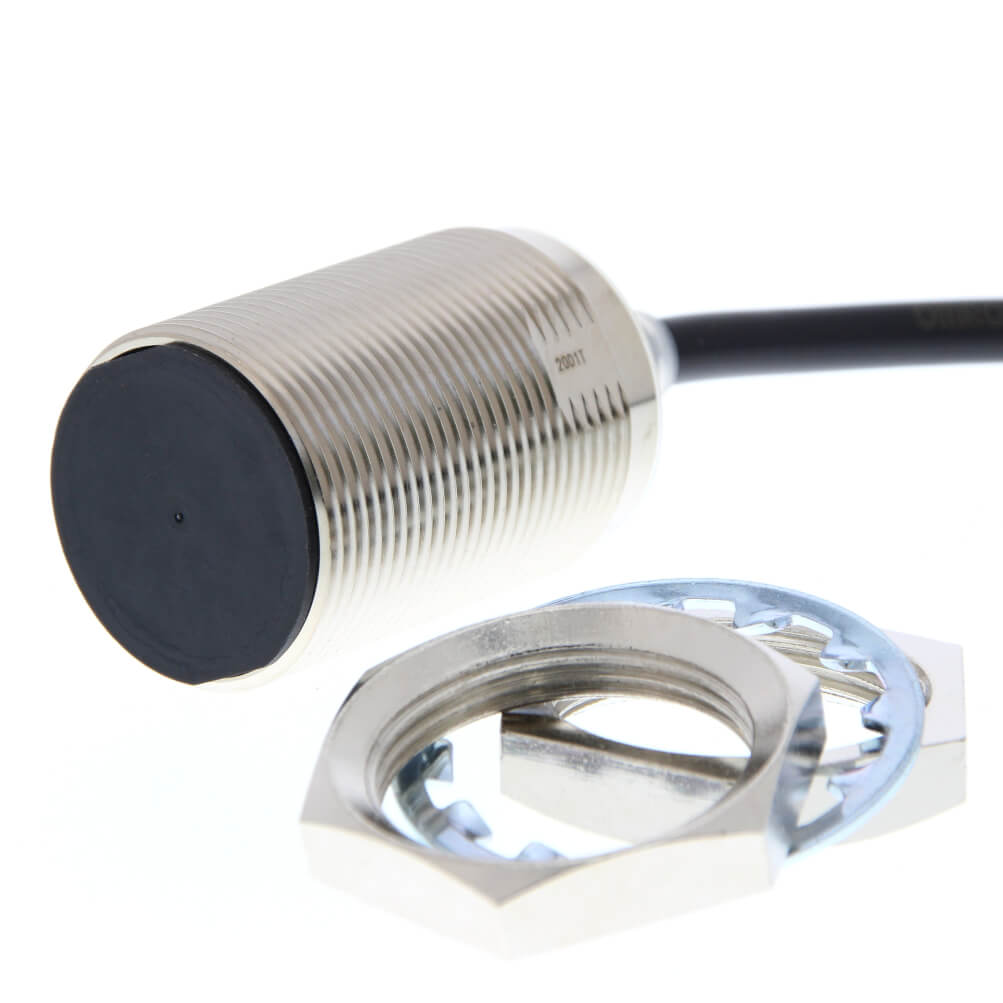
Omron E2E-X23C230 2M Inductive Proximity Sensor
| Feature | Value |
|---|---|
| Sensor Type | Inductive Proximity Sensor |
| Series | E2E NEXT |
| Housing Size | M30 |
| Sensing Distance | 23 mm |
| Mounting Type | Shielded (Quasi-flush) |
| Output Type | NPN, 3-wire |
| Operation Mode | Normally Closed (NC) |
| Supply Voltage | 10 to 30 VDC |
| Response Frequency | 200 Hz |
| Connection Method | 2 m Oil-resistant PVC Cable |
| Housing Material | Nickel-plated Brass |
| Protection Rating | IP67 / IP67G / IP69K |
| Operating Temperature | -25°C to +70°C |
| Overall Length | 60.3 mm |
| Thread Length | 38 mm |
The Omron E2E-X23C230 2M Inductive Proximity Sensor is designed for reliable non-contact detection of metallic targets in industrial automation systems. As part of the E2E NEXT series, this sensor combines an extended sensing distance with a rugged mechanical design suitable for demanding environments. Its M30 nickel-plated brass housing provides durability in applications exposed to vibration, oil, moisture, and mechanical stress.
Technical Description
The Omron E2E-X23C230 2M Inductive Proximity Sensor utilizes electromagnetic induction to detect ferrous and conductive metal objects without physical contact. The sensor features a 23 mm sensing distance and a shielded sensing structure, making it suitable for installations where surrounding metal structures are present.
The device operates with a DC supply voltage ranging from 10 to 30 VDC and provides an NPN normally closed output configuration. A factory-attached 2-meter oil-resistant PVC cable simplifies installation in machinery, production equipment, and automated handling systems.
Operating Principle
The sensing face generates a high-frequency electromagnetic field. When a metallic object enters the detection zone, eddy currents are induced within the target material. These currents alter the oscillator characteristics inside the sensor.
The internal electronic circuitry continuously monitors these changes. Once the predefined threshold is reached, the output state switches, allowing controllers, PLCs, and monitoring systems to detect the presence of the target object.
This non-contact detection method eliminates mechanical wear and enables stable operation even in environments with dust, oil mist, or vibration.
Key Features and Benefits
- 23 mm sensing distance for larger detection margins
- Shielded sensing design for installation near metallic structures
- NPN normally closed output configuration
- Nickel-plated brass housing for mechanical durability
- Oil-resistant PVC cable for industrial environments
- IP67, IP67G, and IP69K environmental protection
- Operating temperature range from -25°C to +70°C
- LED indication for sensor status monitoring
Typical Applications
The Omron E2E-X23C230 2M Inductive Proximity Sensor is commonly used in automated systems where reliable metal detection is required.
- Conveyor position monitoring
- Machine tool automation
- Packaging machinery
- Automated assembly lines
- Material transfer systems
- Robotic workstations
- Industrial gate and actuator position detection
- Metal component counting systems
Industrial Applications
Automotive Manufacturing
The sensor can detect metal fixtures, body panels, and moving mechanical assemblies throughout automated production cells.
Packaging and Logistics
Used for confirming the presence of metal carriers, indexing mechanisms, and transport equipment within high-speed packaging operations.
Machine Building
Integrated into CNC machinery, processing equipment, and industrial machines for end-position monitoring and process verification.
Material Handling Systems
The Omron E2E-X23C230 2M Inductive Proximity Sensor supports pallet transfer systems, lift mechanisms, and automated storage equipment.
Engineering Considerations for Product Selection
When selecting an inductive proximity sensor, engineers should evaluate target material characteristics, mounting conditions, environmental exposure, and control system compatibility.
- Verify the required sensing distance
- Confirm compatibility with NPN control inputs
- Consider available installation space
- Review environmental protection requirements
- Evaluate cable routing and connection methods
- Account for operating temperature conditions
For projects requiring additional inductive sensing solutions, engineers may also review Omron sensor products and related sensing technologies.
Advantages in Industrial Automation
- Non-contact operation minimizes maintenance requirements
- Stable detection under challenging environmental conditions
- Extended sensing distance reduces installation constraints
- Robust housing improves long-term reliability
- Suitable for integration with PLC-based control systems
- High ingress protection for washdown and outdoor applications
The Omron E2E-X23C230 2M Inductive Proximity Sensor is particularly useful in applications where consistent metallic object detection is required over long operating cycles. Its combination of environmental protection and sensing performance makes it suitable for modern industrial automation systems.
Frequently Asked Questions
What type of sensor is the Omron E2E-X23C230 2M Inductive Proximity Sensor?
It is an inductive proximity sensor designed for non-contact detection of metallic objects.
What is the sensing distance?
The nominal sensing distance is 23 mm.
Does the sensor require physical contact with the target?
No. Detection occurs through an electromagnetic field without touching the target.
What output configuration does the sensor provide?
The sensor uses a 3-wire NPN normally closed output.
What supply voltage is required?
The operating voltage range is 10 to 30 VDC.
Is the sensor suitable for harsh industrial environments?
Yes. The housing and sealing ratings support operation in demanding industrial conditions.
What protection ratings are available?
The sensor is rated IP67, IP67G, and IP69K.
Where is the Omron E2E-X23C230 2M Inductive Proximity Sensor commonly used?
It is frequently used in manufacturing lines, packaging equipment, material handling systems, machine tools, and automated production machinery.