
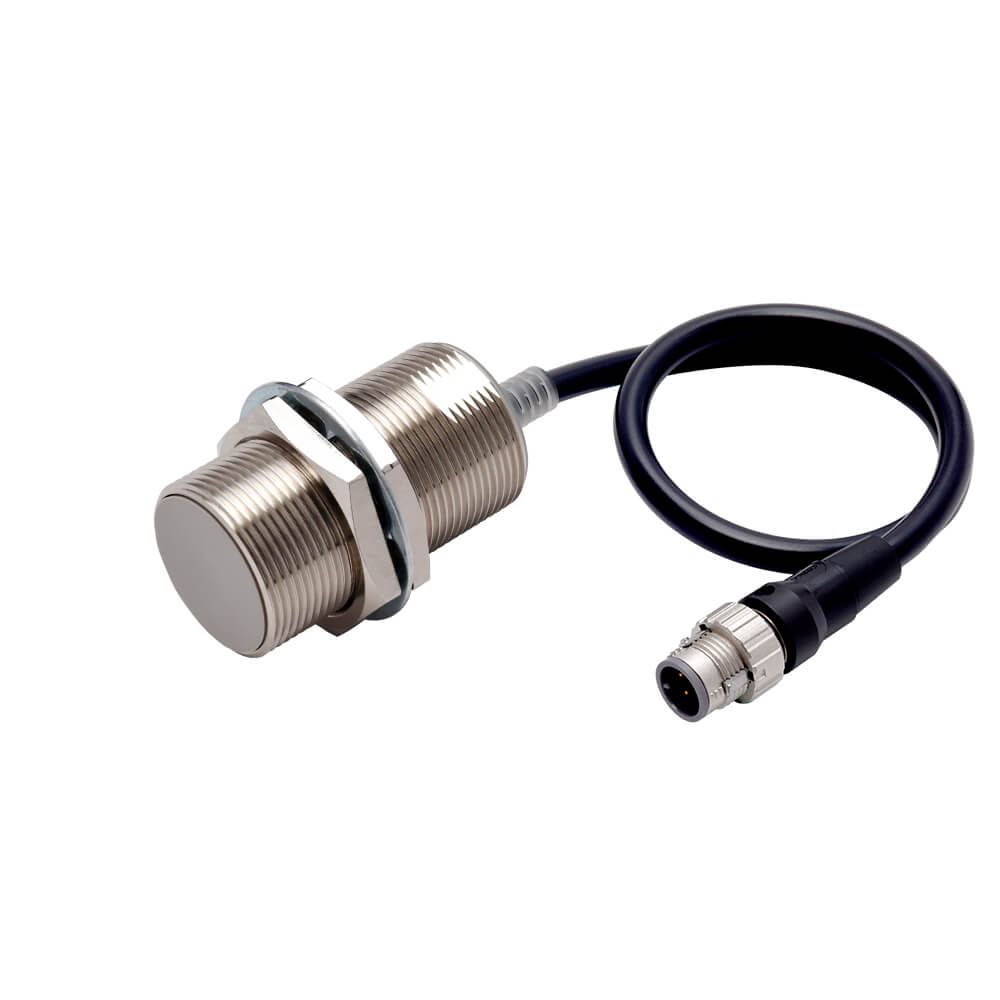
Omron E2E-X15B1TL30-M1TJ 0.3M Inductive Proximity Sensor
| Feature | Value |
|---|---|
| Sensor Type | Inductive Proximity Sensor |
| Series | E2E NEXT |
| Sensing Distance | 15 mm |
| Housing Size | M30 |
| Mounting Type | Quasi-flush (Shielded) |
| Output Type | PNP NO, IO-Link |
| Supply Voltage | 10 to 30 VDC |
| Connection Method | M12 Smartclick Pigtail Connector |
| Cable Length | 0.3 m |
| Housing Material | Nickel-Plated Brass |
| Communication | IO-Link COM3 (230.4 kbps) |
| Protection Rating | IP67 / IP67G / IP69K |
| Operating Temperature | -25°C to +70°C |
| Response Frequency | 250 Hz |
Technical Overview
The Omron E2E-X15B1TL30-M1TJ 0.3M Inductive Proximity Sensor is designed for reliable metallic object detection in industrial automation systems. Built within the E2E NEXT family, this sensor combines a 15 mm sensing distance with advanced IO-Link communication capabilities, allowing detailed process monitoring and diagnostic access. Its M30 nickel-plated brass housing provides mechanical durability for demanding production environments.
With a shielded sensing design and a compact 0.3-meter Smartclick pigtail connection, the device is suitable for installations where space optimization and simplified wiring are important. The sensor supports PNP normally open switching and high-speed IO-Link COM3 communication for integration into modern Industry 4.0 architectures.
How the Sensor Operates
The Omron E2E-X15B1TL30-M1TJ 0.3M Inductive Proximity Sensor generates an electromagnetic field around its sensing face. When a metallic target enters this field, eddy currents are induced within the object. These currents alter the oscillation characteristics of the sensor circuit, enabling accurate target detection.
In addition to conventional switching output, the integrated IO-Link interface provides access to operational data, sensor status information, and configuration parameters. This communication capability supports predictive maintenance and system diagnostics within automated manufacturing environments.
Key Application Areas
- Automated assembly equipment
- Material handling systems
- Packaging machinery
- Conveyor monitoring
- Machine tool positioning systems
- Automotive manufacturing cells
- Industrial robotics
- Metal processing equipment
Industrial Applications
In automotive production facilities, the Omron E2E-X15B1TL30-M1TJ 0.3M Inductive Proximity Sensor can monitor fixture positions and verify the presence of metallic components during assembly operations. Its long sensing range allows installation with increased mechanical clearance.
Packaging equipment manufacturers frequently integrate this sensor into transfer systems to detect machine elements and metal carriers. The IP69K protection rating supports operation in washdown environments where equipment is regularly cleaned.
In logistics automation, the sensor can be used for position confirmation of metal conveyor parts, lift mechanisms, and automated sorting equipment. IO-Link communication allows centralized monitoring of sensor health across large installations.
Advantages of the Sensor
- 15 mm sensing distance for flexible installation
- Integrated IO-Link COM3 communication
- High ingress protection up to IP69K
- Nickel-plated brass housing for mechanical durability
- PNP normally open output configuration
- Shielded sensing design for controlled detection zones
- Smartclick connector for efficient installation
- Diagnostic and parameterization support through IO-Link
Sector-Specific Usage Examples
Automotive Manufacturing
Used for monitoring tooling positions, fixture verification, and metal component presence detection throughout production lines.
Food and Beverage Processing
Suitable for machinery exposed to frequent cleaning procedures due to its high environmental protection ratings.
Warehouse Automation
Supports position sensing of transfer mechanisms, elevators, and metal-guided transport systems.
Machine Building
Integrated into OEM equipment for position feedback and process control functions.
Selection Considerations
When selecting an inductive proximity sensor, engineers should evaluate sensing distance requirements, available mounting space, output configuration, environmental protection ratings, and communication needs. The Omron E2E-X15B1TL30-M1TJ 0.3M Inductive Proximity Sensor is particularly suitable for applications requiring both conventional switching functionality and digital communication through IO-Link.
Connector type, cable routing constraints, operating temperature range, and machine washdown requirements should also be reviewed during system design.
Integration with Automation Systems
The Omron E2E-X15B1TL30-M1TJ 0.3M Inductive Proximity Sensor can be integrated with PLCs, IO-Link masters, industrial controllers, machine monitoring platforms, and distributed I/O architectures. The availability of process data enables advanced maintenance strategies and improved visibility into sensor operating conditions.
Omron E2E-X15B1TL30-M1TJ 0.3M For additional sensing technologies and related products, see Omron sensor products.
Omron E2E-X15B1TL30-M1TJ 0.3M Frequently Asked Questions
What type of sensor is this product?
It is an inductive proximity sensor designed for non-contact detection of metallic targets.
What is the sensing distance?
The rated sensing distance is 15 mm.
Does the sensor support IO-Link?
Yes. It includes IO-Link COM3 communication with a baud rate of 230.4 kbps.
What output configuration does it use?
The sensor provides a PNP normally open switching output.
Can it operate in washdown environments?
Yes. The housing is rated up to IP69K, making it suitable for demanding cleaning conditions.
What materials can it detect?
The sensor is intended for metallic object detection through inductive sensing technology.
What connection method is provided?
An M12 Smartclick pigtail connector with a 0.3-meter cable is included.
What industries commonly use this sensor?
Automotive, packaging, logistics, machine building, robotics, and metal processing industries frequently deploy this model.
Why choose an IO-Link-enabled sensor?
IO-Link enables remote diagnostics, parameter management, device identification, and enhanced maintenance capabilities.
How often does the sensor require maintenance?
Inductive sensors typically require minimal maintenance, although periodic inspection of mounting integrity and cable condition is recommended.