
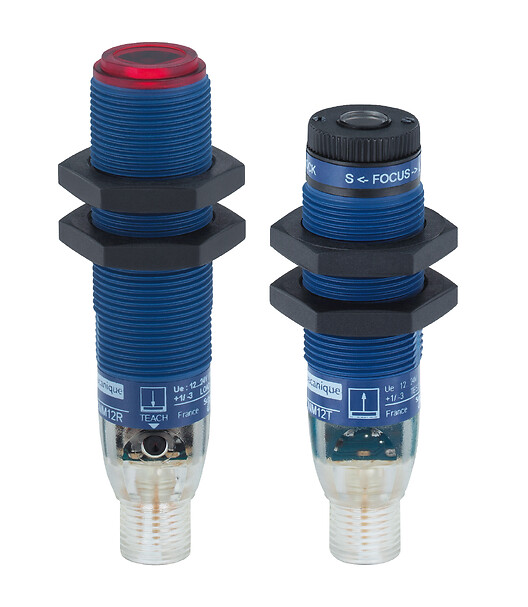
Telemecanique XUBLAPCNM12 Photoelectric Sensor Technical Guide
The Telemecanique XUBLAPCNM12 photoelectric sensor is designed for industrial environments where accurate object detection, reliable signal output, and long sensing distance are essential. As part of the Telemecanique XU photoelectric sensor family, this model is commonly associated with applications that require precise beam-based detection across production lines, conveying systems, packaging machinery, and automated handling equipment.
According to technical product references, the XUBLAPCNM12 is a photoelectric sensor with a long detection range, DC supply compatibility, and PNP output configuration. It is often identified as a laser photoelectric sensor using a thru-beam detection principle, which makes it suitable for applications where the object must interrupt a light beam between emitter and receiver. This approach is highly effective when the target object may vary in color, surface finish, or reflectivity.
What Is the Telemecanique XUBLAPCNM12 Photoelectric Sensor?
The Telemecanique XUBLAPCNM12 photoelectric sensor is an industrial detection device used to identify the presence or absence of objects without physical contact. Unlike mechanical switches, a photoelectric sensor works by transmitting a light beam and monitoring how that beam is received. In a thru-beam configuration, the transmitter and receiver are positioned opposite each other. When an object passes between them, the beam is interrupted and the sensor output changes state.
This makes the XUBLAPCNM12 especially useful in automation systems where contact-free sensing improves speed, reduces mechanical wear, and supports continuous operation. Its laser-based sensing concept can also help improve alignment and detection accuracy in demanding environments.
Main Technical Characteristics
The XUBLAPCNM12 is typically described as a Telemecanique photoelectric sensor with a sensing range of up to 100 m, a 10 to 30 VDC supply voltage, and PNP NO/NC output capability. The M12 connection format provides a practical interface for industrial wiring, allowing the sensor to be integrated into standard automation architectures.
Its long sensing capability is one of its most important technical advantages. A long-range photoelectric sensor allows engineers to design wider detection zones, monitor large conveyor paths, or install sensing points where mechanical constraints prevent short-distance mounting. The PNP output is widely used in modern DC control systems, especially with PLC input modules that expect sourcing sensor signals.
Industrial Applications
The Telemecanique XUBLAPCNM12 photoelectric sensor can be used in many industrial processes where reliable object detection is required. Typical applications include conveyor monitoring, pallet detection, material handling, packaging systems, automated sorting, and machine safety support functions where object presence information is needed by a control system.
Because the sensing principle is contactless, the sensor is also useful where moving objects must not be touched or slowed down. This can include cartons, containers, machine parts, trays, panels, and other production materials. The long sensing range makes it valuable in installations where the emitter and receiver need to be mounted far apart.
Why Thru-Beam Detection Matters
Thru-beam photoelectric sensing is often selected when detection reliability is more important than compact single-body installation. Since the receiver directly monitors the transmitted beam, the system can detect objects based on beam interruption rather than relying on reflected light from the target. This reduces sensitivity to object color and surface reflectivity.
For example, glossy, dark, transparent, or irregularly shaped objects can sometimes be difficult for diffuse sensors. A thru-beam system such as the XUBLAPCNM12 can provide a more stable detection concept when the mechanical layout allows opposite-side mounting.
Installation Considerations
When installing the XUBLAPCNM12, proper alignment is critical. The transmitter and receiver should be positioned so that the beam path is stable and free from unnecessary obstruction. In dusty or high-vibration environments, mounting brackets should be secured carefully, and optical surfaces should be checked during preventive maintenance routines.
The M12 connector format supports straightforward replacement and wiring standardization. In control panel design, engineers should confirm the sensor supply voltage, output type, PLC input compatibility, and cable routing before installation. The sensing distance should also be validated under real operating conditions.
Useful Reference
Telemecanique XUBLAPCNM12 For more information about Telemecanique, review compatible industrial sensor categories and related automation components.
Telemecanique XUBLAPCNM12 FAQ
What type of device is the Telemecanique XUBLAPCNM12?
The Telemecanique XUBLAPCNM12 is a photoelectric sensor designed for industrial object detection. It is commonly associated with long-range thru-beam sensing applications where a light beam is interrupted by the target object.
What is the main benefit of using the XUBLAPCNM12?
The key benefit is reliable non-contact detection over a long distance. This makes it suitable for conveyor systems, packaging lines, material handling equipment, and automation processes where mechanical contact is not desirable.
Is the XUBLAPCNM12 suitable for PLC systems?
Yes. The model is commonly referenced with a DC supply range and PNP output configuration, which makes it compatible with many PLC-based automation systems. The final wiring should always be checked against the machine design and input module requirements.
What does thru-beam detection mean?
Thru-beam detection uses separate transmitting and receiving elements. The sensor detects an object when that object interrupts the beam between the two units. This method is often chosen for high detection reliability.
Where is this sensor typically used?
It is typically used in industrial automation, conveyor monitoring, product counting, object presence detection, packaging machinery, and automated handling systems where long-distance sensing is required.
Why is a photoelectric sensor preferred over a mechanical switch?
A photoelectric sensor detects objects without contact. This reduces wear, supports faster operation, and helps protect delicate or moving products from unnecessary mechanical force.