
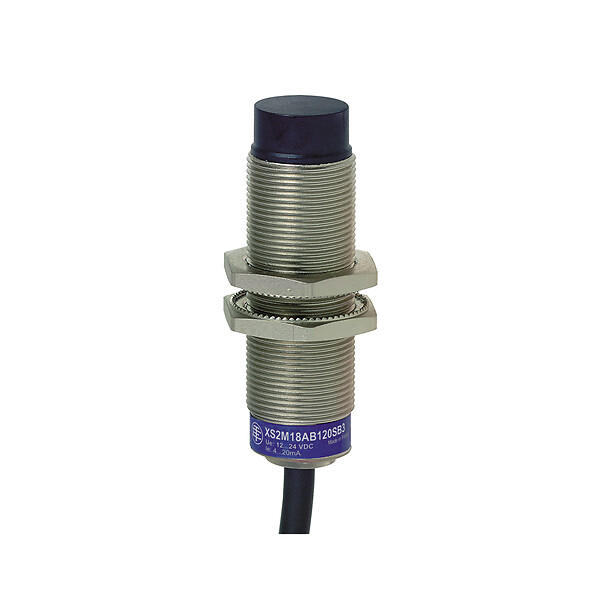
Telemecanique XS618B4PBL2 Inductive Proximity Sensor Guide
The Telemecanique XS618B4PBL2 inductive proximity sensor is an M18 cylindrical sensor developed for non-contact detection of metallic objects in industrial automation. It is part of the Telemecanique XS6 general-purpose inductive sensor range and is designed for applications where reliable metal detection, durable construction, and simple wiring are required.
This sensor is particularly useful in machine control systems where the normal signal state must be closed until a target is detected. With its PNP normally closed output, the XS618B4PBL2 can support applications that require a sourcing output with inverse switching behavior compared with normally open versions.
Telemecanique XS618B4PBL2 Technical Characteristics
The XS618B4PBL2 uses an M18 threaded cylindrical housing and has a nominal sensing distance of 12 mm. It is non-flush mountable, meaning it should be installed with adequate clearance around the sensing face to avoid interference from nearby metal. The housing is built for industrial use and is suitable for fixed mounting in machinery and equipment.
The sensor operates on a 12 to 48 V DC supply and uses a 3-wire DC circuit. Its output type is PNP normally closed. This means the output is active in the normal state and changes when a metallic target is detected. The switching capacity is up to 200 mA DC, and the sensor includes overload and short-circuit protection. Reverse polarity protection is also part of the DC supply design.
The XS618B4PBL2 is supplied with a 2-meter cable. This cable connection can be practical where a direct wired installation is preferred or where reducing connector interfaces is desirable. Its IP68 and IP69K protection ratings support use in dusty, wet, and washdown-prone environments.
Where the XS618B4PBL2 Is Used
The Telemecanique XS618B4PBL2 inductive proximity sensor can be used for metal part detection, machine guarding feedback, actuator position confirmation, conveyor monitoring, tool presence detection, and process control sequences. In many installations, normally closed sensors are chosen where the system logic benefits from a default active signal.
Its non-contact detection principle helps reduce mechanical wear and supports stable operation in repetitive machine cycles. For more information about Telemecanique, engineers can compare related XS6 models and other industrial sensing components.
Mounting Considerations
Because this model is non-flush mountable, it should not be installed fully surrounded by metal. If nearby metal is too close to the sensing face or side wall, the sensor may lose range or switch unexpectedly. Correct spacing is especially important when several sensors are mounted near each other.
The 12 mm nominal sensing distance is based on standard target conditions. In real applications, the effective range depends on the target material. Ferrous metals such as steel usually provide stronger detection than non-ferrous materials such as aluminum, copper, or brass. Testing under actual operating conditions is the best way to confirm reliable performance.
Frequently Asked Questions
What is the Telemecanique XS618B4PBL2?
It is an M18 inductive proximity sensor designed to detect metallic targets without physical contact.
What output type does the XS618B4PBL2 use?
The XS618B4PBL2 uses a PNP normally closed output. This makes it suitable for control systems that require a sourcing signal in the normal state.
What is the sensing distance?
The nominal sensing distance is 12 mm. Actual performance can change depending on target material, target size, mounting conditions, and surrounding metal.
Does this model have a connector?
No. The XS618B4PBL2 is supplied with a 2-meter cable, which allows direct wiring into a control panel, junction box, or machine harness.
Is the XS618B4PBL2 suitable for wet environments?
Yes. The sensor has IP68 and IP69K protection ratings, making it suitable for many industrial areas exposed to moisture, dust, or cleaning processes.
Is this sensor flush mountable?
No. It is non-flush mountable and requires proper clearance from surrounding metal to avoid reduced range or false switching.
When should a normally closed sensor be selected?
A normally closed sensor is often selected when the control system expects an active signal under normal conditions and a change of state when the target condition occurs.