
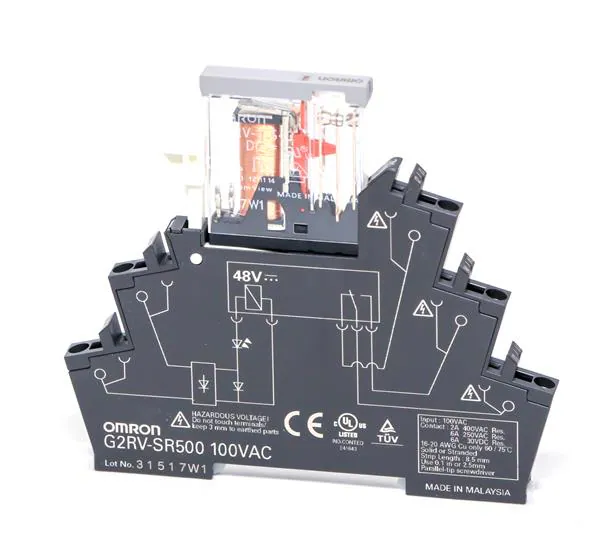
Omron G2RV-SR500 12VDC Relay Socket Technical Overview
The Omron G2RV-SR500 12VDC relay socket is a compact slim I/O relay developed for industrial control circuits that use 12 VDC input signals. It combines Omron’s low-profile relay socket structure with Push-In Plus terminal technology, making it practical for dense automation panels.
This model is part of the standard G2RV-SR500 range. It does not include the AP microload contact structure and does not include a latching lever. Its main value is reliable electromechanical switching in a narrow footprint, especially where multiple relay channels must be installed in one cabinet.
Important Technical Specifications
The 12 VDC model has a rated current of approximately 27.9 mA and approximate power consumption of 300 mW. It uses an SPDT contact arrangement and belongs to the 6.2 mm class slim relay family. Standard G2RV-SR500 contact ratings include 6 A at 250 VAC resistive load and 6 A at 30 VDC resistive load.
The Push-In Plus terminal system is designed for easier wiring, especially during repetitive control panel assembly. The integrated socket structure also reduces the need for separate socket selection, helping maintain consistent panel design across relay channels.
Practical Engineering Use
The Omron G2RV-SR500 12VDC relay socket is suitable for low-voltage control systems, machine interface circuits, PLC-related switching, signal isolation, and auxiliary control functions. Its 12 VDC input rating makes it useful in applications powered by low-voltage control supplies.
For more about Omron automation and relay categories, visit Omron industrial relay products.
FAQ
What is the input voltage of Omron G2RV-SR500 12VDC?
The rated input voltage is 12 VDC, making it suitable for low-voltage DC control circuits.
How much power does this relay consume?
The 12 VDC version has approximate power consumption of 300 mW.
Is this a microload relay?
No. This is the standard G2RV-SR500 model. Microload versions use the AP designation.
Where is this relay commonly used?
It is commonly used in control panels, PLC interface circuits, machine automation systems, and signal isolation applications.