
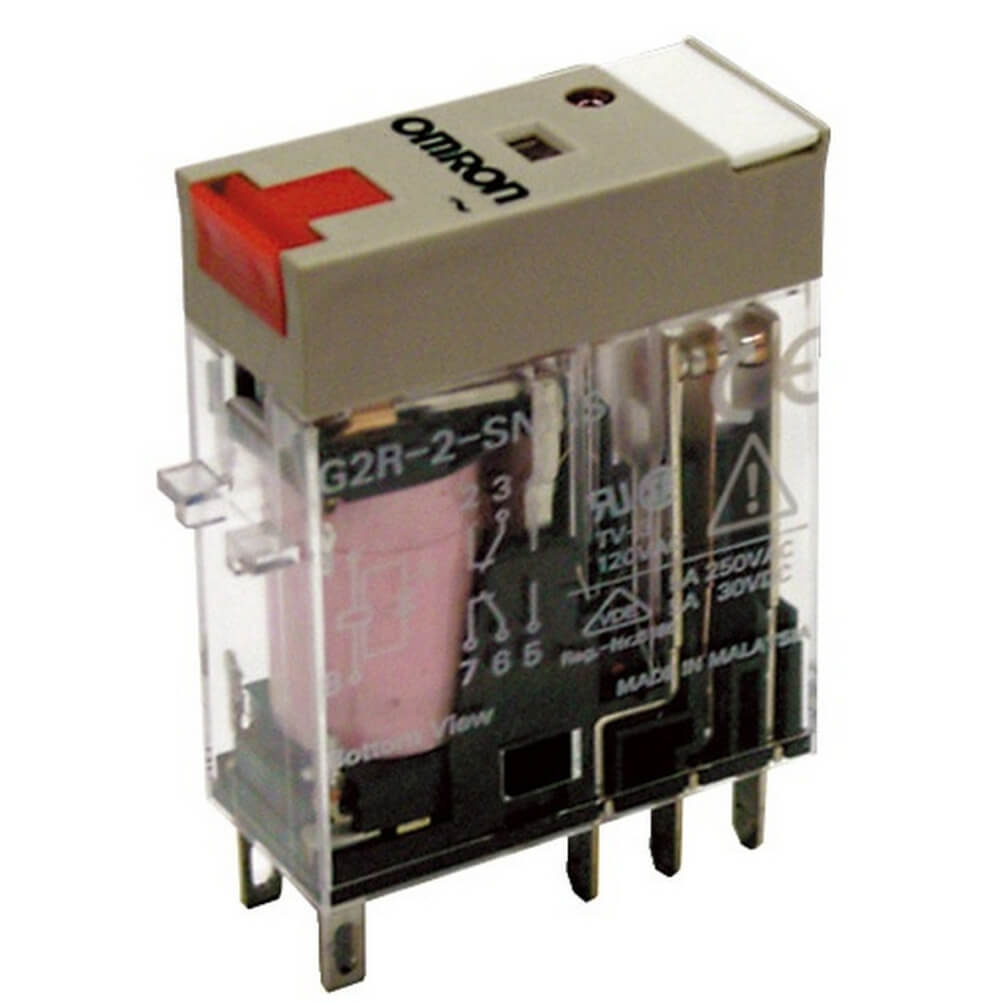
Omron G2R-2-SN-AP3 230VAC (S) Relay Socket: Technical Overview
The Omron G2R-2-SN-AP3 230VAC (S) relay socket is a plug-in industrial relay developed for AC control circuits, machine panels, and automation systems that require reliable signal switching. With a 230 VAC coil, it is often used in control environments where mains-level control voltage is already present in the cabinet.
Technical Structure
This relay is built with a DPDT contact configuration, allowing two circuits to be controlled through one relay. The 5 A rated carry current supports many common control and interface loads. The AP3 version is associated with gold-plated contacts, which can be helpful in low-level signal switching where stable contact performance is important.
Why Gold-Plated Contacts Matter
Gold-plated contacts are valuable in applications where the switched signal may be relatively small. In such circuits, contact quality can directly affect reliability. The Omron G2R-2-SN-AP3 230VAC (S) relay socket is therefore a strong fit for interface circuits, automation signals, alarm circuits, and panel logic where clean switching is preferred.
Installation and Maintenance Benefits
The plug-in design helps reduce service time. Instead of removing wiring, maintenance teams can replace the relay from the socket. The transparent case and visual indication features also support faster inspection inside crowded panels. These details may look small, but they make a real difference during fault finding and planned maintenance.
For more technical details about Omron relays, you can review related Omron product categories.
FAQ
What is Omron G2R-2-SN-AP3 230VAC (S) used for?
It is used for AC control circuits, industrial panels, automation interfaces, and relay logic applications.
What is the coil voltage?
The coil voltage is 230 VAC, so it should be selected only for circuits designed around that voltage.
Does this relay have gold-plated contacts?
Yes. The AP3 version is known for gold-plated contact construction, which supports stable switching in suitable signal applications.
Is it a latching relay?
No. It is generally used as a non-latching plug-in relay, meaning the contacts change state when the coil is energized and return when coil power is removed.
Why choose a plug-in relay instead of a PCB relay?
A plug-in relay is easier to replace in a control panel. It is preferred where maintenance access and modular wiring are important.