
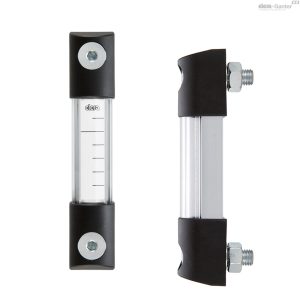
Elesa+Ganter 114165 HCK.176-ZN-M12-FKM-PC-P-EHT-NO-80-NO Electrical Level Indicator
The Elesa+Ganter 114165 electrical level indicator is an HCK.176 column level indicator for industrial oil reservoirs, hydraulic units, and machine systems requiring both local visual reading and electrical level status. The 176 mm centre distance gives operators a practical viewing range, while the M12 connection supports standard tank installation.
NO-80-NO Contact Arrangement
This model includes a normally open contact logic associated with level monitoring. The “80” reference indicates a switching point configuration within the indicator design. In real applications, this helps the control system detect a defined low-level condition and respond through an alarm, warning light, PLC input, or preventive shutdown routine.
Construction Details
The product code shows the main technical structure clearly: ZN for zinc-plated steel fasteners, M12 for the connection size, FKM for the sealing O-ring, PC for the transparent polycarbonate tube, and P for the polycarbonate front shield. The EHT version is selected where higher temperature resistance is important for the float and sensing arrangement.
Where It Fits Best
The Elesa+Ganter 114165 HCK.176-ZN-M12-FKM-PC-P-EHT-NO-80-NO electrical level indicator is well suited for lubrication tanks, hydraulic oil reservoirs, compact power packs, and industrial machines where a low oil level must be detected before damage occurs. To explore the brand category, visit Elesa+Ganter.
Elesa+Ganter 114165 FAQ
What does NO mean?
NO means normally open. The contact closes when the defined minimum level condition is reached.
What does the 176 mm size represent?
It represents the centre distance of the mounting points, an important dimension for tank preparation.
Is FKM better than standard rubber seals?
FKM is preferred when higher temperature and oil resistance are required compared with basic sealing materials.
Why is electrical monitoring useful?
It helps machines react automatically to a low-level condition instead of relying only on manual inspection.