
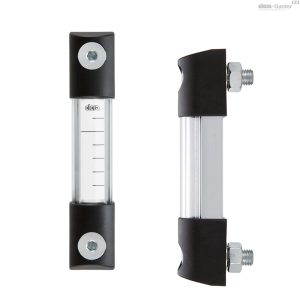
Elesa+Ganter 113603-NP-KN Electrical Level Indicator
The Elesa+Ganter 113603-NP-KN electrical level indicator, coded HCK.127-A4-M12-NBR-PC-NP-80-NC-KN, is a technical oil level monitoring component for industrial reservoirs. It is designed for applications where a visible fluid column and electrical signal integration are both needed, but where the installation does not require front tube protection.
Technical Design Overview
The HCK.127 structure provides a 127 mm hole centre distance, while the M12 thread supports a robust mechanical interface. NBR sealing rings are used for oil-focused applications, and the polycarbonate tube allows the operator to view the level directly. The A4 reference indicates stainless steel hardware, which is useful in industrial areas where corrosion resistance and long-term mechanical reliability are priorities.
The NP configuration means the unit is supplied without front protection. This can be appropriate in compact machine layouts, enclosed hydraulic stations, or systems where the indicator is installed behind an existing guard. The “80-NC” marking defines the electrical version with 80°C monitoring logic and normally closed contact behavior.
Why the KN Variant Matters
The KN suffix is important when installation geometry is limited. Connector orientation can influence cable routing, service access, and panel organization. Selecting the correct KN version helps reduce unnecessary bending of cables and supports a cleaner, more reliable installation.
For product family context, review Elesa+Ganter level indicator components.
Elesa+Ganter 113603-NP-KN FAQ
What is Elesa+Ganter 113603-NP-KN used for?
It is used to monitor oil level in tanks and reservoirs while also providing an electrical signal for machine control or alarm systems.
What does the full code mean?
HCK.127 indicates the level indicator series and 127 mm fixing distance. A4 refers to stainless hardware, M12 to the mounting thread, NBR to sealing material, PC to the tube, NP to no front protection, 80 to the temperature setting, NC to normally closed contact, and KN to connector arrangement.
Is it suitable for exposed locations?
Because it is an NP version without front protection, it is better suited to protected or enclosed areas rather than locations with frequent mechanical contact.
Why combine visual and electrical monitoring?
Visual inspection gives technicians immediate confirmation, while electrical monitoring allows the machine or control system to react automatically to status changes.