
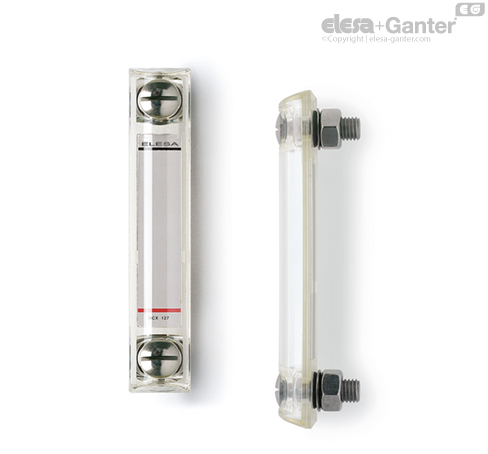
Elesa+Ganter 111349 HCX.76-VT-M10 Level Indicator
Technical Overview
The Elesa+Ganter 111349 level indicator, listed as HCX.76-VT-M10, is a transparent column level indicator for hydraulic reservoirs and industrial fluid tanks. It is designed to provide clear visual monitoring of fluid level while offering strong resistance to oils, solvents, hydrocarbons, petrol, naphtha, and phosphoric esters. The transparent polyamide-based technopolymer body supports easy reading even from side positions.
Materials and Construction
The HCX.76-VT-M10 version uses glass-fibre reinforced polyamide-based SUPER-technopolymer screws, AISI 304 stainless steel nuts and washers, and an NBR packing ring. The contrast screen is made of white lacquered aluminium and is protected from direct contact with the fluid. The component is ultrasonically welded to help ensure sealing reliability.
Dimensions and Ratings
This model has a 76 mm centre distance, M10 fixing thread, 107 mm total length, 40 mm e dimension, 10.5 mm mounting hole diameter, and 4 Nm maximum tightening torque. The maximum continuous working temperature is 90°C with oil. For HCX/VT versions with SUPER-technopolymer screws, maximum working pressure is 5 bar at 20°C and 2 bar at 90°C.
Application Areas
The Elesa+Ganter 111349 HCX.76-VT-M10 level indicator is suitable for oil tanks, hydraulic reservoirs, lubrication units, and industrial equipment where visual level control is needed. Thanks to its technopolymer screw design, it is also useful in corrosion-resistance applications where stainless steel screws are not required. For more information about Elesa+Ganter products, visit Elesa+Ganter.
FAQ
What is the Elesa+Ganter 111349 HCX.76-VT-M10 used for?
It is used to visually monitor fluid level in reservoirs, tanks, hydraulic units, and lubrication systems.
What is the body material?
The body is made of transparent polyamide-based technopolymer.
What is the maximum working pressure?
For HCX/VT versions, the maximum working pressure is 5 bar at 20°C and 2 bar at 90°C.
What should be avoided during use?
Contact with alcohol or detergents containing alcohol should be avoided, as these may affect the technopolymer body.